Shen Hong-Lei, He Jing, Lin Fei
Department of Anesthesiology, Guangxi Medical University Cancer Hospital, Nanning, Guangxi Zhuang Autonomous Region, China.
Front Med (Lausanne). 2025 Jun 9;12:1546292. doi: 10.3389/fmed.2025.1546292. eCollection 2025.
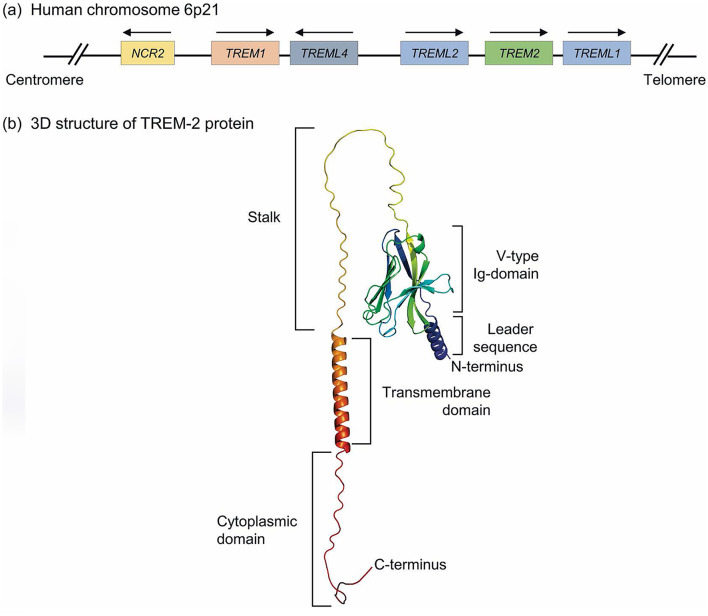
Sepsis emerges as a formidable and life-threatening condition, born from an unregulated immune response to infection, presenting a significant challenge to global health. A notable complication of sepsis is acute lung injury (ALI), marked by profound hypoxia, rampant inflammation, and the accumulation of fluid within the pulmonary system. ALI harbors the potential to escalate into acute respiratory distress syndrome (ARDS), thereby exacerbating the severity of sepsis. The triggering receptor expressed on myeloid cells 2 (TREM2), predominantly situated within various myeloid cell types, plays a pivotal role in the modulation of neurodegeneration, inflammation, neoplasms, and other pathologies. Recent investigations have illuminated TREM2's considerable involvement in septic lung injury; however, the precise mechanisms and therapeutic implications within this context demand further scrutiny. This article endeavors to elucidate the intricate interplay between sepsis, lung injury, and TREM2's role in immune modulation. It will furnish an overview of the TREM2 signaling pathway's functions and mechanisms in both physiological and septic lung injury scenarios, while also evaluating the current status and advancements in TREM2-targeted therapies.
脓毒症是一种由对感染的免疫反应失控引发的严重且危及生命的病症,对全球健康构成重大挑战。脓毒症的一个显著并发症是急性肺损伤(ALI),其特征为严重缺氧、炎症肆虐以及肺部系统内液体蓄积。ALI有可能恶化为急性呼吸窘迫综合征(ARDS),从而加剧脓毒症的严重程度。髓系细胞触发受体2(TREM2)主要位于各种髓系细胞类型中,在神经退行性变、炎症、肿瘤及其他病理过程的调节中发挥关键作用。近期研究表明TREM2在脓毒症肺损伤中有着重要作用;然而,在此背景下其确切机制和治疗意义仍需进一步研究。本文旨在阐明脓毒症、肺损伤以及TREM2在免疫调节中的作用之间的复杂相互作用。它将概述TREM2信号通路在生理和脓毒症肺损伤情况下的功能及机制,同时评估针对TREM2的治疗方法的现状和进展。