Valerianova Anna, Mlcek Mikulas, Grus Tomas, Malik Jan, Kittnar Otomar
3rd Department of Internal Medicine, General University Hospital in Prague, 1st Faculty of Medicine, Charles University, Prague, Czechia.
Institute of Physiology, 1st Faculty of Medicine, Charles University, Prague, Czechia.
Front Physiol. 2022 Apr 27;13:881658. doi: 10.3389/fphys.2022.881658. eCollection 2022.
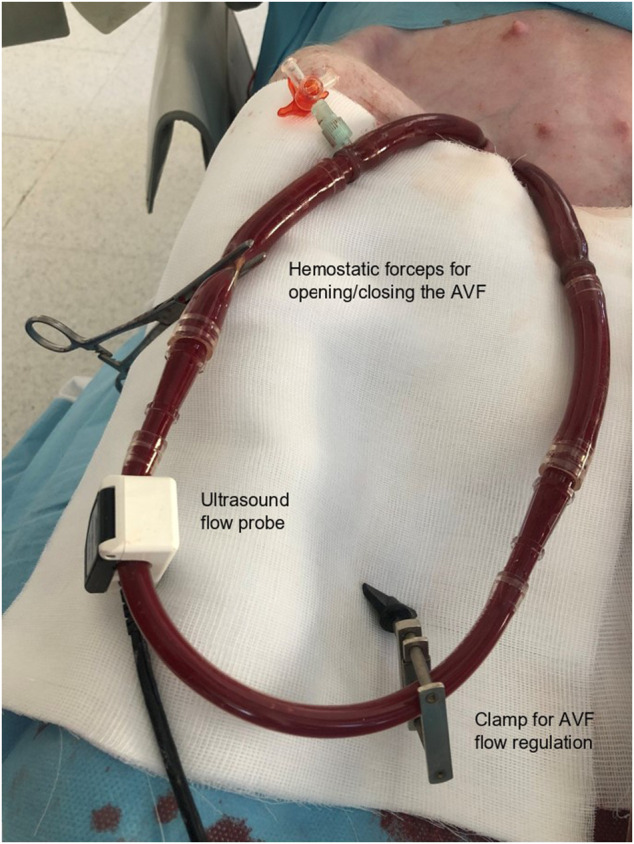
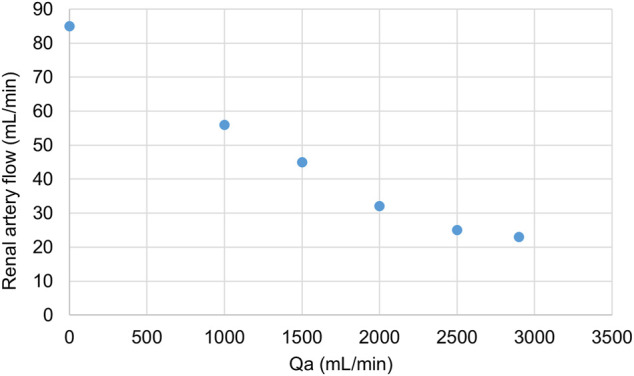
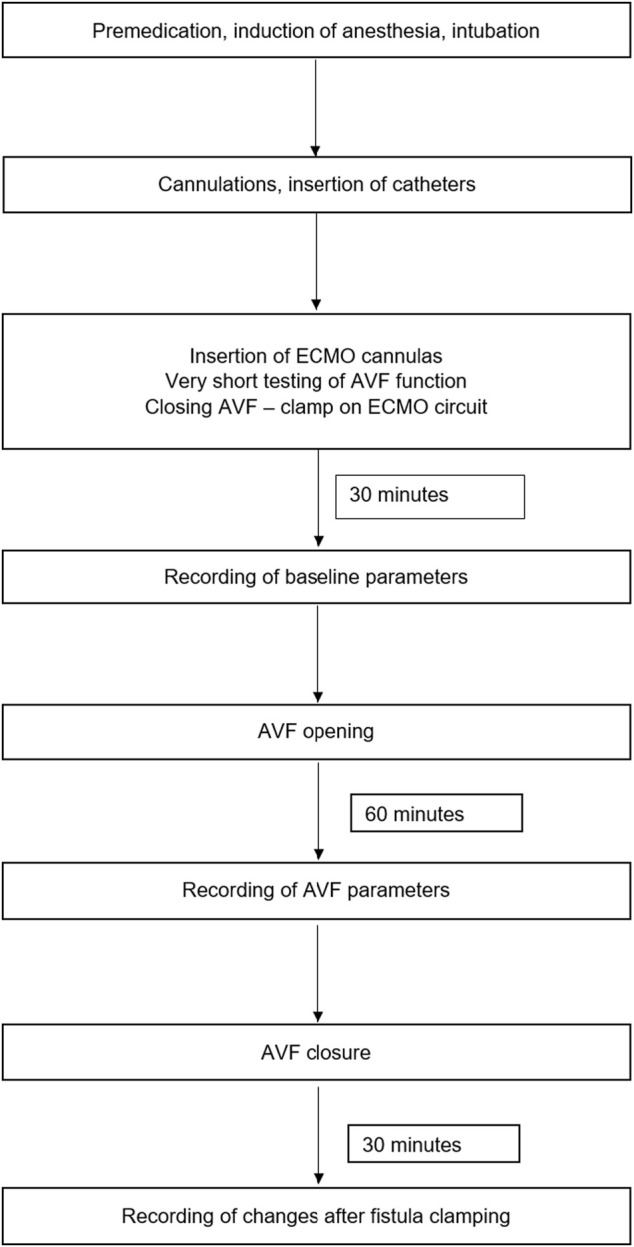
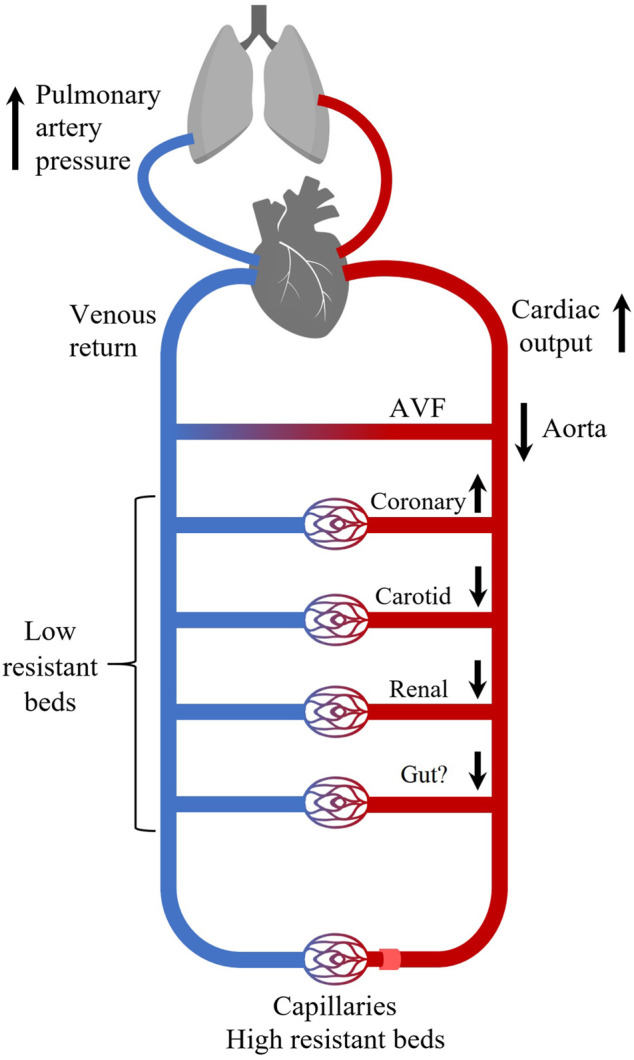
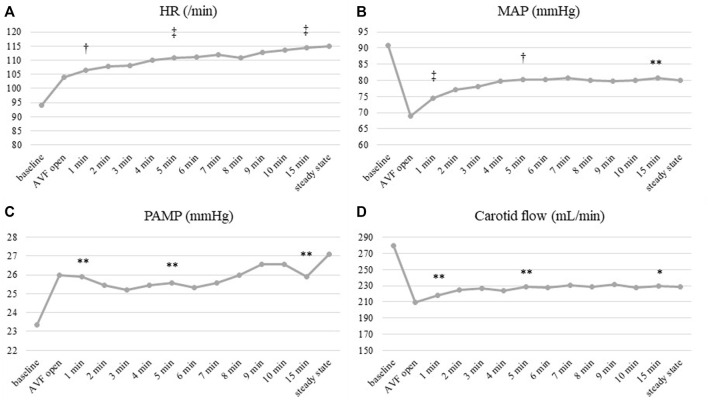
Arteriovenous fistulas (AVF) represent a low resistant circuit. It is known that their opening leads to decreased systemic vascular resistance, increased cardiac output and other hemodynamic changes. Possible competition of AVF and perfusion of other organs has been observed before, however the specific impact of AVF has not been elucidated yet. Previous animal models studied long-term changes associated with a surgically created high flow AVF. The aim of this study was to create a simple AVF model for the analysis of acute hemodynamic changes. Domestic female pigs weighing 62.6 ± 5.2 kg were used. All the experiments were held under general anesthesia. The AVF was created using high-diameter ECMO cannulas inserted into femoral artery and vein. Continuous hemodynamic monitoring was performed throughout the protocol. Near-infrared spectroscopy sensors, flow probes and flow wires were inserted to study brain and heart perfusion. AVF blood flow was 2.1 ± 0.5 L/min, which represented around 23% of cardiac output. We observed increase in cardiac output (from 7.02 ± 2.35 L/min to 9.19 ± 2.99 L/min, = 0.0001) driven dominantly by increased heart rate, increased pulmonary artery pressure, and associated right ventricular work. Coronary artery flow velocity rose. On the contrary, carotid artery flow and brain and muscle tissue oxygenation measured by NIRS decreased significantly. Our new non-surgical AVF model is reproducible and demonstrated an acute decrease of brain and muscle perfusion.
动静脉瘘(AVF)代表一种低阻力循环。已知其开放会导致体循环血管阻力降低、心输出量增加以及其他血流动力学变化。此前已观察到动静脉瘘与其他器官灌注之间可能存在竞争,但动静脉瘘的具体影响尚未阐明。以往的动物模型研究了与手术创建的高流量动静脉瘘相关的长期变化。本研究的目的是创建一个简单的动静脉瘘模型来分析急性血流动力学变化。使用体重为62.6±5.2千克的雌性家猪。所有实验均在全身麻醉下进行。通过将大口径体外膜肺氧合(ECMO)插管插入股动脉和静脉来创建动静脉瘘。在整个实验过程中进行连续的血流动力学监测。插入近红外光谱传感器、流量探头和血流导线以研究脑和心脏灌注。动静脉瘘血流量为2.1±0.5升/分钟,约占心输出量的23%。我们观察到心输出量增加(从7.02±2.35升/分钟增至9.19±2.99升/分钟, = 0.0001),主要由心率增加、肺动脉压升高以及相关的右心室做功增加所致。冠状动脉血流速度上升。相反,通过近红外光谱测量的颈动脉血流以及脑和肌肉组织氧合显著下降。我们新的非手术动静脉瘘模型具有可重复性,并显示出脑和肌肉灌注的急性减少。