Nie Lan-Bi, Liang Qin-Li, Wang Meng, Du Rui, Zhang Meng-Yuan, Elsheikha Hany M, Zhu Xing-Quan
State Key Laboratory of Veterinary Etiological Biology, Key Laboratory of Veterinary Parasitology of Gansu Province, Lanzhou Veterinary Research Institute, Chinese Academy of Agricultural Sciences, Lanzhou, People's Republic of China.
College of Animal Science and Technology, Jilin Agricultural University, Changchun, People's Republic of China.
PLoS Negl Trop Dis. 2022 May 16;16(5):e0010431. doi: 10.1371/journal.pntd.0010431. eCollection 2022 May.
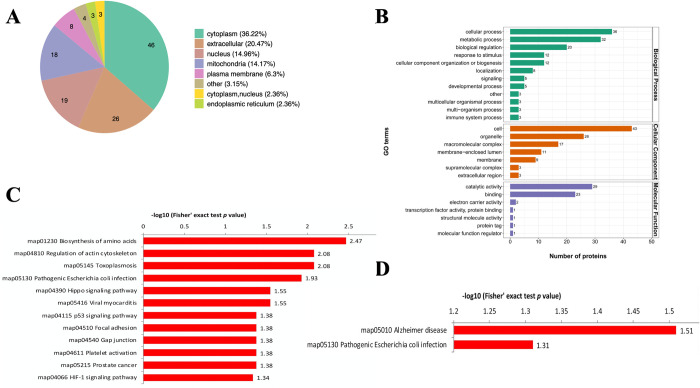
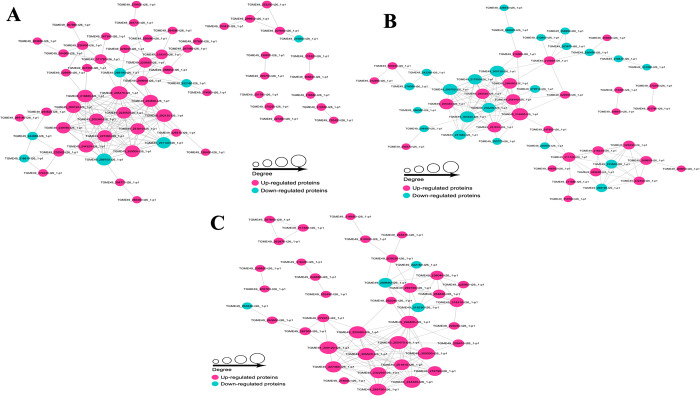
Lysine malonylation is a post-translational modification (PTM), which regulates many cellular processes. Limited information is available about the level of lysine malonylation variations between Toxoplasma gondii strains of distinct genetic lineages. Yet, insights into such variations are needed to understand the extent to which lysine malonylation contributes to the differences in the virulence and repertoire of virulence factors between T. gondii genotypes. In this study, we profiled lysine malonylation in T. gondii using quantitative liquid chromatography-tandem mass spectrometry (LC-MS/MS) and immuno-affinity purification. This analysis was performed on three T. gondii strains with distinctive pathogenicity in mice, including RH strain (type I), PRU strain (type II), and VEG strain (type III). In total, 111 differentially malonylated proteins and 152 sites were upregulated, and 17 proteins and 17 sites were downregulated in RH strain versus PRU strain; 50 proteins and 59 sites were upregulated, 50 proteins and 53 sites were downregulated in RH strain versus VEG strain; and 72 proteins and 90 sites were upregulated, and 7 proteins and 8 sites were downregulated in VEG strain versus PRU strain. Differentially malonylated proteins were involved in key processes, such as those mediating the regulation of protein metabolism, stress response, glycolysis, and actin cytoskeleton. These results reveal an association between lysine malonylation and intra-species virulence differences in T. gondii and offer a new resource for elucidating the contribution of lysine malonylation to energy metabolism and virulence in T. gondii.
赖氨酸丙二酰化是一种翻译后修饰(PTM),可调节多种细胞过程。关于不同遗传谱系的弓形虫菌株之间赖氨酸丙二酰化变化水平的信息有限。然而,需要深入了解这种变化,以了解赖氨酸丙二酰化在多大程度上导致了弓形虫不同基因型之间毒力和毒力因子库的差异。在本研究中,我们使用定量液相色谱-串联质谱(LC-MS/MS)和免疫亲和纯化技术对弓形虫中的赖氨酸丙二酰化进行了分析。该分析针对在小鼠中具有不同致病性的三种弓形虫菌株进行,包括RH株(I型)、PRU株(II型)和VEG株(III型)。与PRU株相比,RH株中共有111种差异丙二酰化蛋白和152个位点上调,17种蛋白和17个位点下调;与VEG株相比,RH株中有50种蛋白和59个位点上调,50种蛋白和53个位点下调;与PRU株相比,VEG株中有72种蛋白和90个位点上调,7种蛋白和8个位点下调。差异丙二酰化蛋白参与了关键过程,如介导蛋白质代谢调控、应激反应、糖酵解和肌动蛋白细胞骨架的过程。这些结果揭示了赖氨酸丙二酰化与弓形虫种内毒力差异之间的关联,并为阐明赖氨酸丙二酰化对弓形虫能量代谢和毒力的贡献提供了新的资源。