Nagashima Yoshitaka, Nishimura Yusuke, Eguchi Kaoru, Yamaguchi Junya, Haimoto Shoichi, Ohka Fumiharu, Takayasu Masakazu, Saito Ryuta
Department of Neurosurgery, Nagoya University School of Medicine, Nagoya, Japan.
Department of Neurosurgery, National Hospital Organization Nagoya Medical Center, Nagoya, Japan.
Neurospine. 2022 Jun;19(2):262-271. doi: 10.14245/ns.2244168.084. Epub 2022 May 16.
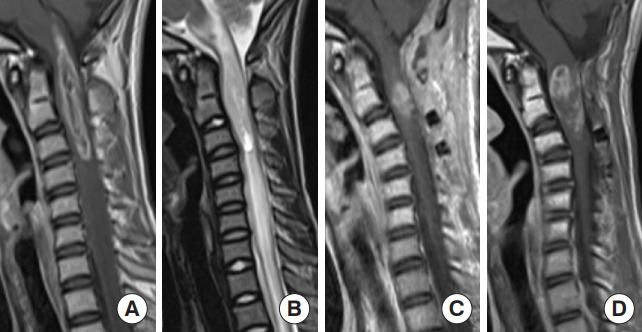
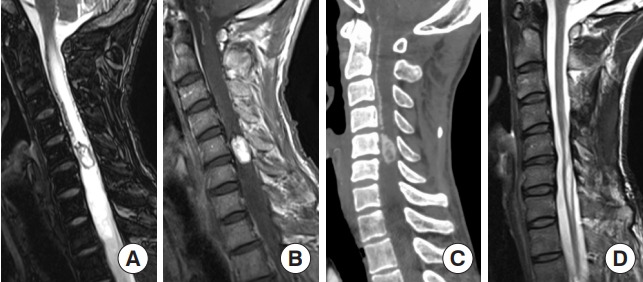
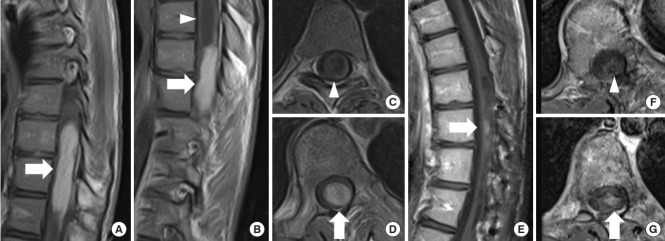
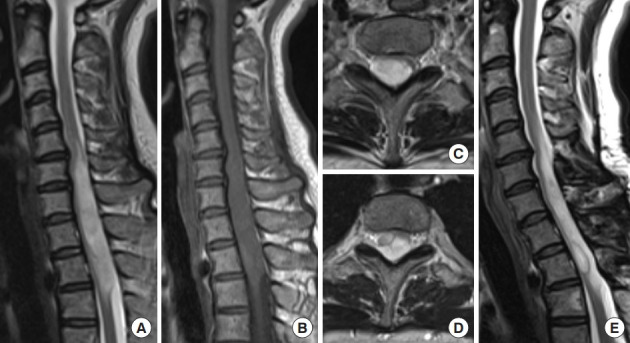
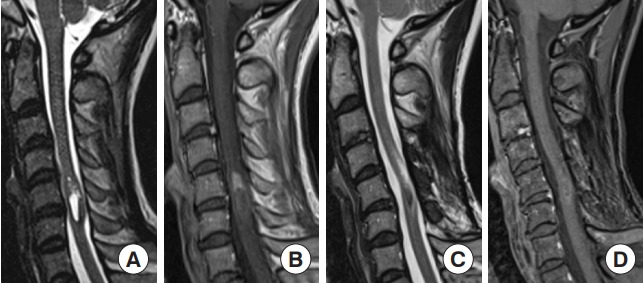
The study of genetic alterations and molecular biology in central nervous system (CNS) tumors has improved the accuracy of estimations of patient prognosis and tumor categorization. Therefore, the updated 2021 World Health Organization (WHO) classification includes various diagnostic genes, molecules, and pathways for diagnosis, as well as histological findings. These findings are expected both to have diagnostic applications and to facilitate new targeted therapies that target tumor-specific genetic changes and molecular biology. Intramedullary spinal cord tumors (IMSCTs) are rare CNS tumors that are difficult to treat because they occur in eloquent areas. Although the genetic underpinnings of IMSCTs remain unclear compared to their intracranial counterparts, the genetic characteristics of these tumors are gradually being revealed. Here, we describe the major changes in the new 2021 WHO classification and review the major types of IMSCTs, with an emphasis on their clinical features and genetic alterations.
对中枢神经系统(CNS)肿瘤的基因改变和分子生物学研究提高了患者预后评估和肿瘤分类的准确性。因此,2021年更新的世界卫生组织(WHO)分类包括用于诊断的各种诊断基因、分子和通路,以及组织学发现。这些发现有望既具有诊断应用价值,又能促进针对肿瘤特异性基因变化和分子生物学的新型靶向治疗。脊髓髓内肿瘤(IMSCTs)是罕见的中枢神经系统肿瘤,由于其发生在功能明确的区域,因此难以治疗。尽管与颅内肿瘤相比,IMSCTs的遗传基础仍不清楚,但这些肿瘤的遗传特征正逐渐被揭示。在此,我们描述2021年WHO新分类中的主要变化,并回顾IMSCTs的主要类型,重点关注其临床特征和基因改变。