Li Ze-Peng, Liu Lu-Lu, Liu Hao, Tan Jing-Hua, Li Xue-Lin, Xu Zhun, Ouyang Zhi-Hua, Wang Cheng, Yan Yi-Guo, Xue Jing-Bo
Department of Spine Surgery, The First Affiliated Hospital, Hengyang Medical School, University of South China, China.
Global Spine J. 2024 Jan;14(1):113-121. doi: 10.1177/21925682221096061. Epub 2022 May 17.
Retrospective study.
To analyze the causes of and factors influencing early recurrence after TELD performed in the treatment of lumbar disc herniation.
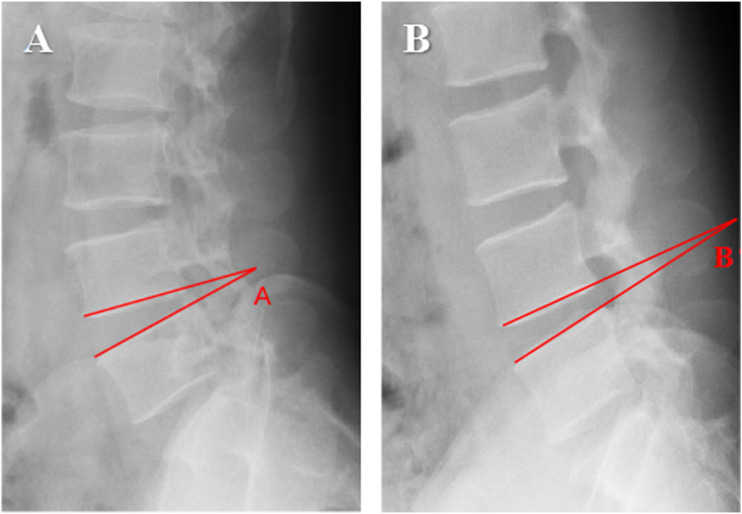
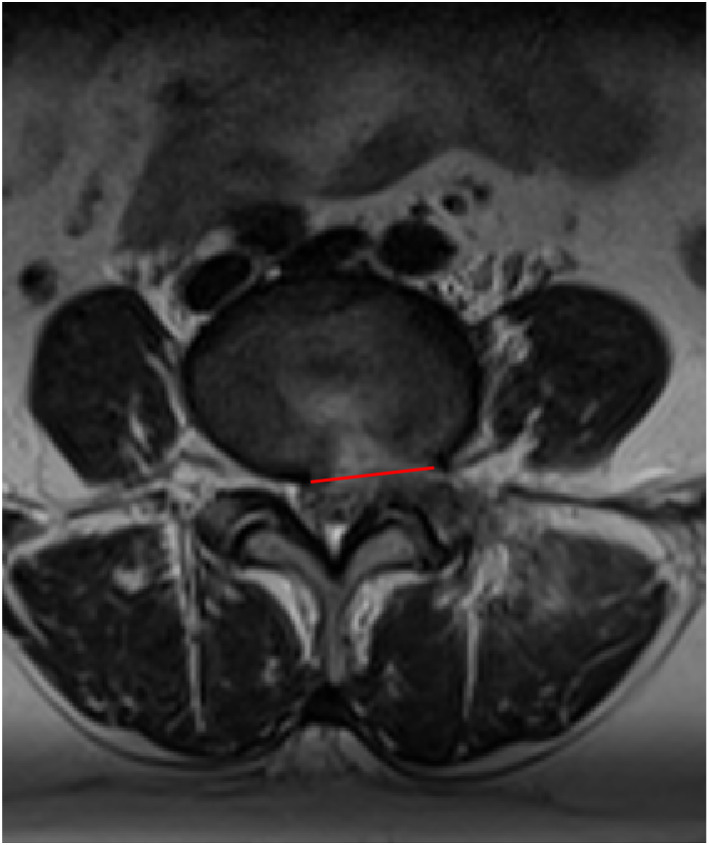
We included 285 patients with single-segment lumbar disc herniation treated using transforaminal endoscopy lumbar discectomy TELD from January 2017 to December 2019 at the First Affiliated Hospital of the University of South China. Patients were classified into early recurrence and non-early recurrence groups based on clinical symptoms and MRI reexamination. Imaging data (eg, disc height index (DHI), Pfirrman grades, base width, postoperative annulus-fibrosus tear size, cross-sectional area of the foramen (CSAF), etc.)were analyzed, and multivariate, binomial logistic regression was utilized to determine which factors were associated with early recurrence after TELD.
A total of 285 patients completed surgery and clinical follow-up, during which 19 patients relapsed within 6 months postsurgery, for an early recurrence rate of 6.7%. There were statistically significant differences between DHI, Pfirrman grades, base width, postoperative annulus-fibrosus tear size, herniation sites, CSAF and Modic changes between the early recurrence and non-early recurrence groups (P < .05). On multivariate logistic regression,the degree of disc degeneration (OR = .747, P = .037), CSAF (OR = 5.255, P = .006), degree of Modic change (OR = 1.831, P = .018) and base width of the herniation (OR = 4.942, P = .003) were significantly correlated with early recurrence after TELD.
Postoperative annulus-fibrosus tear size, DHI, and location of the disc herniation were associated with early recurrence after TELD. Increased base width of the herniation, severe disc degeneration, decreased CSAF and Modic change were risk factors for early recurrence after TELD.
回顾性研究。
分析经椎间孔内镜下腰椎间盘切除术(TELD)治疗腰椎间盘突出症后早期复发的原因及影响因素。
纳入2017年1月至2019年12月在南华大学第一附属医院采用经椎间孔内镜下腰椎间盘切除术(TELD)治疗的285例单节段腰椎间盘突出症患者。根据临床症状和MRI复查将患者分为早期复发组和非早期复发组。分析影像学数据(如椎间盘高度指数(DHI)、Pfirrman分级、基底宽度、术后纤维环撕裂大小、椎间孔截面积(CSAF)等),并采用多变量二项逻辑回归分析确定哪些因素与TELD术后早期复发相关。
共285例患者完成手术及临床随访,其中19例在术后6个月内复发,早期复发率为6.7%。早期复发组与非早期复发组在DHI、Pfirrman分级、基底宽度、术后纤维环撕裂大小、突出部位、CSAF和Modic改变方面存在统计学差异(P<0.05)。多变量逻辑回归分析显示,椎间盘退变程度(OR = 0.747,P = 0.037)、CSAF(OR = 5.255,P = 0.006)、Modic改变程度(OR = 1.831,P = 0.018)和突出基底宽度(OR = 4.942,P = 0.003)与TELD术后早期复发显著相关。
术后纤维环撕裂大小、DHI和椎间盘突出位置与TELD术后早期复发相关。突出基底宽度增加、严重椎间盘退变、CSAF减小和Modic改变是TELD术后早期复发的危险因素。