Malla RamaRao, Marni Rakshmitha, Chakraborty Anindita, Kamal Mohammad Amjad
Cancer Biology Lab, Department of Biochemistry and Bioinformatics, Institute of Science, Gandhi Institute of Technology and Management, Visakhapatnam, 530045, India.
Radiation Biology, UGC-DAE-CSR, Kolkata Centre, Kolkata, 700098, India.
J Pharm Anal. 2022 Apr;12(2):221-231. doi: 10.1016/j.jpha.2021.11.004. Epub 2021 Nov 10.
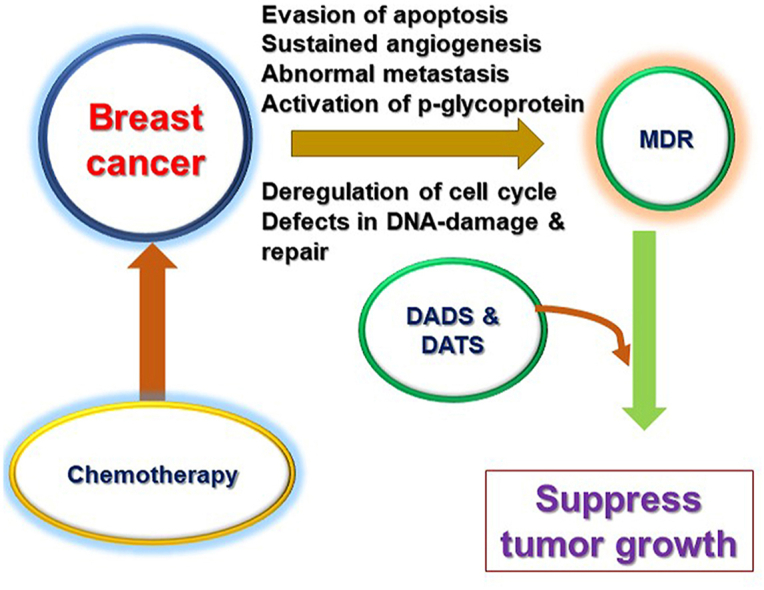
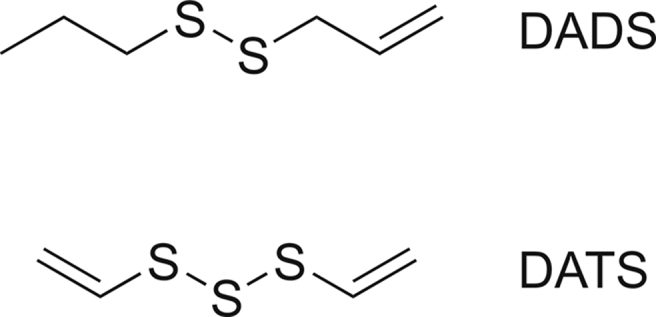
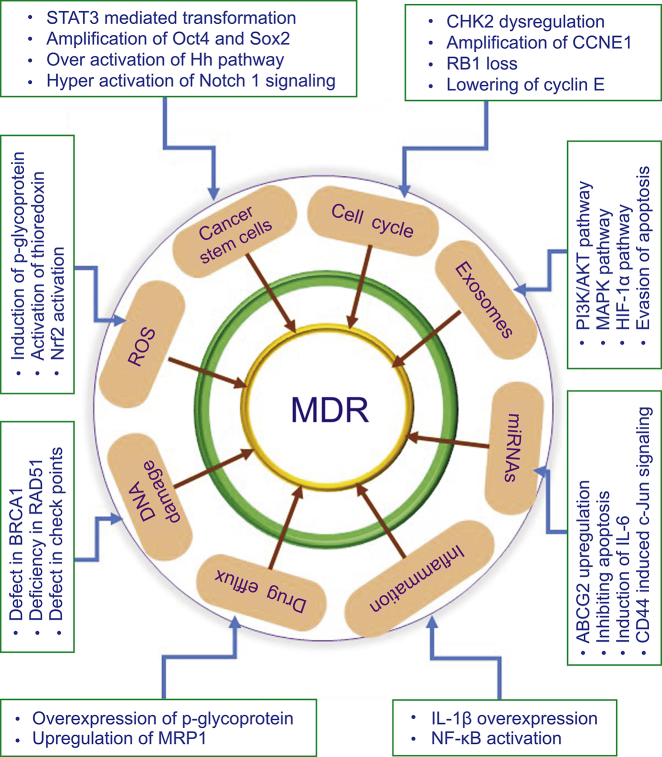
Breast cancer is one of the leading causes of cancer-related deaths in women worldwide. It is a cancer that originates from the mammary ducts and involves mutations in multiple genes. Recently, the treatment of breast cancer has become increasingly challenging owing to the increase in tumor heterogeneity and aggressiveness, which gives rise to therapeutic resistance. Epidemiological, population-based, and hospital-based case-control studies have demonstrated an association between high intake of certain vegetables and a reduced risk in the development of breast cancer. Diallyl disulfide (DADS) and diallyl trisulfide (DATS) are the main allyl sulfur compounds present in garlic, and are known to exhibit anticancer activity as they interfere with breast cancer cell proliferation, tumor metastasis, and angiogenesis. The present review highlights multidrug resistance mechanisms and their signaling pathways in breast cancer. This review discusses the potential anticancer activities of DADS and DATS, with emphasis on drug resistance in triple-negative breast cancer (TNBC). Understanding the anticancer activities of DADS and DATS provides insights into their potential in targeting drug resistance mechanisms of TNBC, especially in clinical studies.
乳腺癌是全球女性癌症相关死亡的主要原因之一。它是一种起源于乳腺导管且涉及多个基因突变的癌症。近年来,由于肿瘤异质性和侵袭性增加导致治疗耐药性,乳腺癌的治疗变得越来越具有挑战性。流行病学、基于人群和基于医院的病例对照研究表明,某些蔬菜的高摄入量与乳腺癌发病风险降低之间存在关联。二烯丙基二硫化物(DADS)和二烯丙基三硫化物(DATS)是大蒜中存在的主要烯丙基硫化合物,已知它们具有抗癌活性,因为它们会干扰乳腺癌细胞增殖、肿瘤转移和血管生成。本综述重点介绍了乳腺癌中的多药耐药机制及其信号通路。本综述讨论了DADS和DATS的潜在抗癌活性,重点是三阴性乳腺癌(TNBC)中的耐药性。了解DADS和DATS的抗癌活性有助于深入了解它们在靶向TNBC耐药机制方面的潜力,尤其是在临床研究中。