BS. Anhui Medical University - Wuxi Clinical College - 904th Hospital of Joint Logistic Support Force of PLA - Department of Neurology - Wuxi, China.
BS. Anhui Medical University - Wuxi Clinical College - 904th Hospital of Joint Logistic Support Force of PLA - Department of Nursing - Wuxi, China.
Acta Cir Bras. 2022 May 13;37(3):e370301. doi: 10.1590/acb370301. eCollection 2022.
Spontaneous intracerebral hemorrhage (ICH) is a major public health problem with a huge economic burden worldwide. Ulinastatin (UTI), a serine protease inhibitor, has been reported to be anti-inflammatory, immune regulation, and organ protection by reducing reactive oxygen species production, and inflammation. Necroptosis is a programmed cell death mechanism that plays a vital role in neuronal cell death after ICH. However, the neuroprotection of UTI in ICH has not been confirmed, and the potential mechanism is unclear. The present study aimed to investigate the neuroprotection and potential molecular mechanisms of UTI in ICH-induced EBI in a C57BL/6 mouse model.
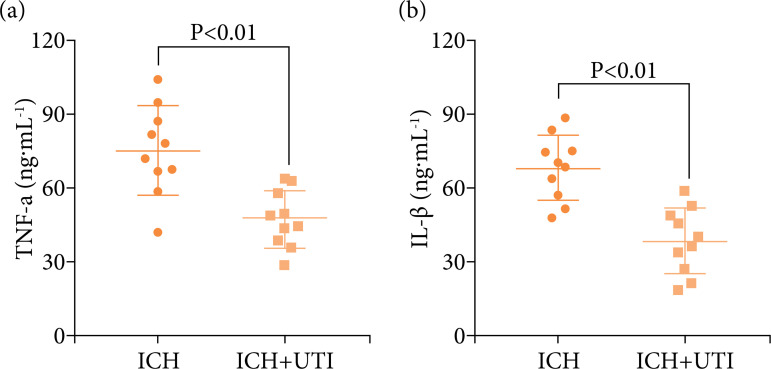
The neurological score, brain water content, neuroinflammatory cytokine levels, and neuronal damage were evaluated. The anti-inflammation effectiveness of UTI in ICH patients also was evaluated.
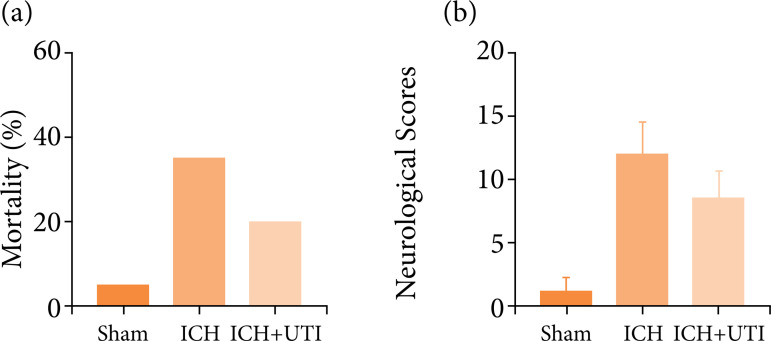
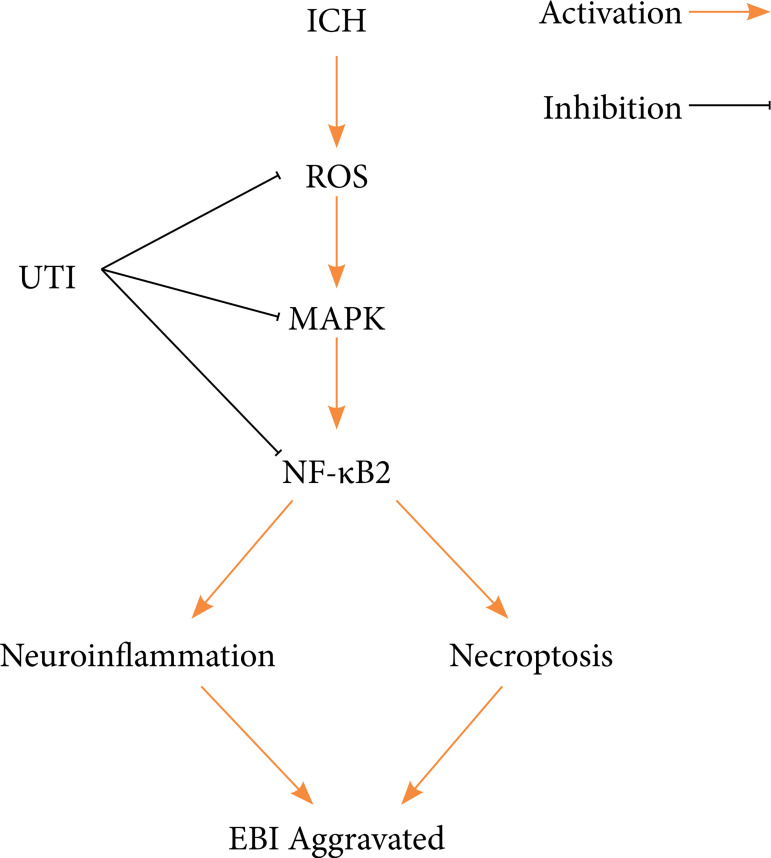
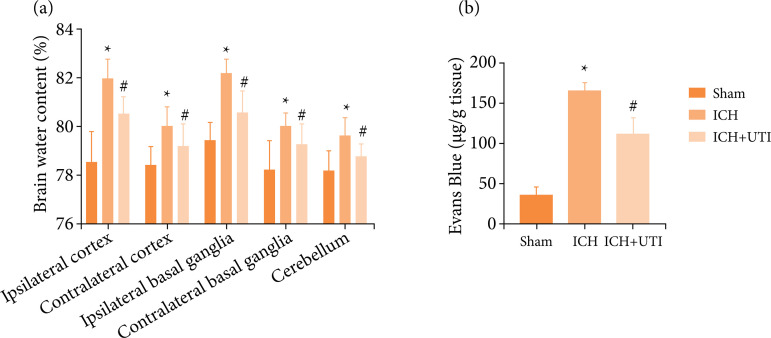
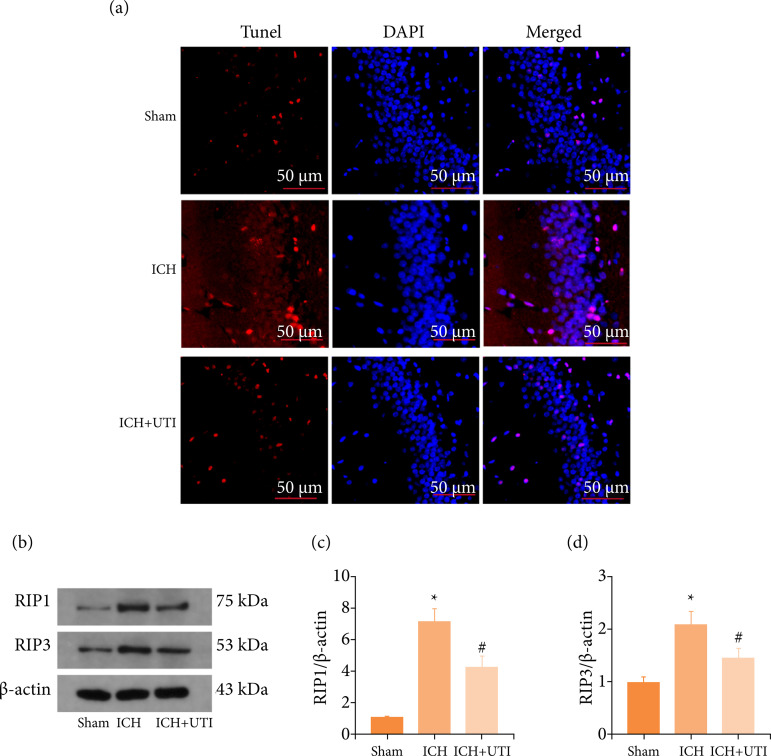
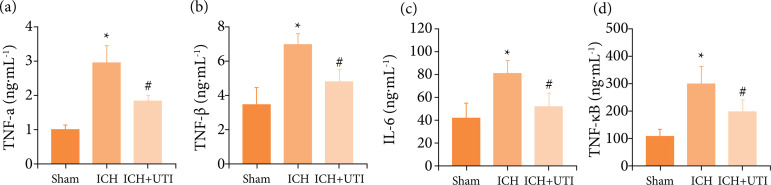
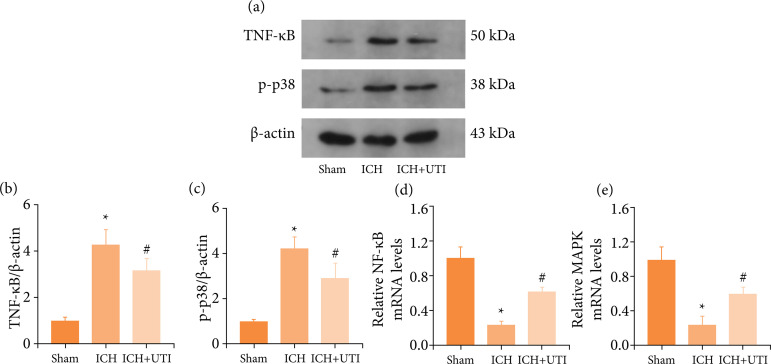
UTI treatment markedly increased the neurological score, alleviate the brain edema, decreased the inflammatory cytokine TNF-α, interleukin‑1β (IL‑1β), IL‑6, NF‑κB levels, and RIP1/RIP3, which indicated that UTI-mediated inhibition of neuroinflammation, and necroptosis alleviated neuronal damage after ICH. UTI also can decrease the inflammatory cytokine of ICH patients. The neuroprotective capacity of UTI is partly dependent on the MAPK/NF-κB signaling pathway.
UTI improves neurological outcomes in mice and reduces neuronal death by protecting against neural neuroinflammation, and necroptosis.
自发性脑出血(ICH)是一个全球性的重大公共卫生问题,给全世界带来了巨大的经济负担。尿胰蛋白酶抑制剂(UTI)是一种丝氨酸蛋白酶抑制剂,据报道,它通过减少活性氧的产生和炎症发挥抗炎、免疫调节和器官保护作用。坏死性凋亡是一种程序性细胞死亡机制,在 ICH 后神经元细胞死亡中发挥着重要作用。然而,UTI 在 ICH 中的神经保护作用尚未得到证实,其潜在机制尚不清楚。本研究旨在探讨 UTI 在 C57BL/6 小鼠 ICH 后血脑屏障损伤模型中的神经保护作用及其潜在的分子机制。
评估神经功能评分、脑含水量、神经炎症细胞因子水平和神经元损伤情况。还评估了 UTI 在 ICH 患者中的抗炎效果。
UTI 治疗明显提高了神经功能评分,减轻了脑水肿,降低了炎症细胞因子 TNF-α、白细胞介素-1β(IL-1β)、IL-6、NF-κB 水平和 RIP1/RIP3,表明 UTI 介导的神经炎症抑制和坏死性凋亡减轻了 ICH 后的神经元损伤。UTI 还可以降低 ICH 患者的炎症细胞因子。UTI 的神经保护能力部分依赖于 MAPK/NF-κB 信号通路。
UTI 通过保护神经炎症和坏死性凋亡,改善了小鼠的神经功能预后,减少了神经元死亡。