Grupo Inmunovirología, Facultad de Medicina, Universidad de Antioquia, Medellín, Colombia.
Grupo de Investigaciones Biomédicas Uniremington, Programa de Medicina, Facultad de Ciencias de la Salud, Corporación Universitaria Remington, Medellín, Colombia.
Front Immunol. 2022 May 2;13:879036. doi: 10.3389/fimmu.2022.879036. eCollection 2022.
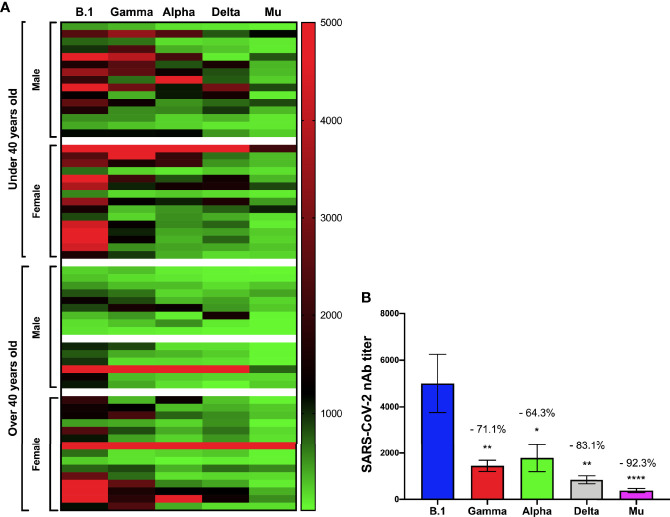
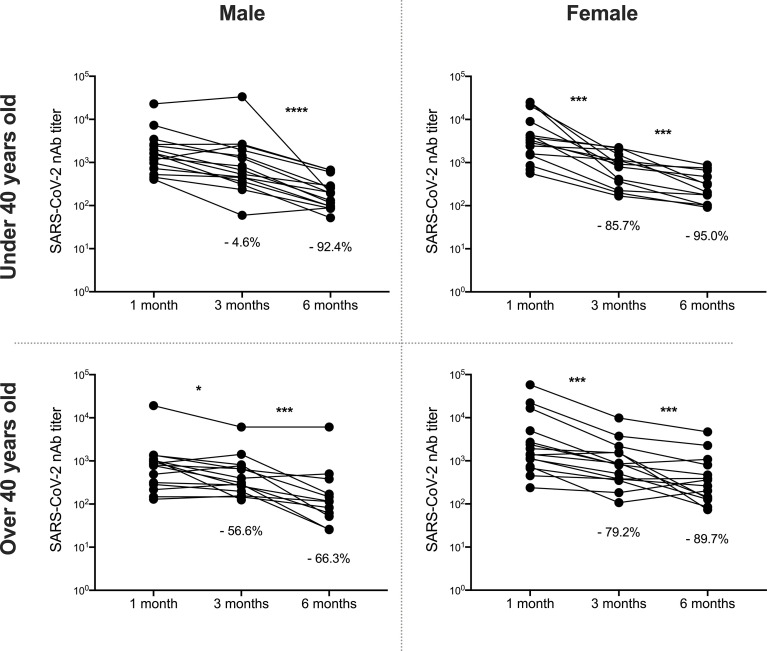
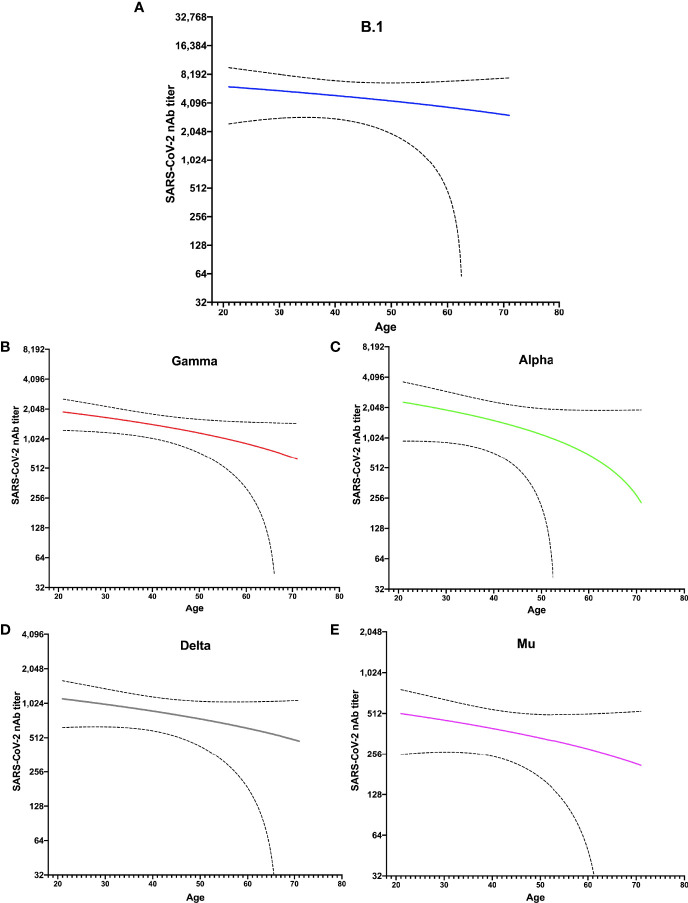
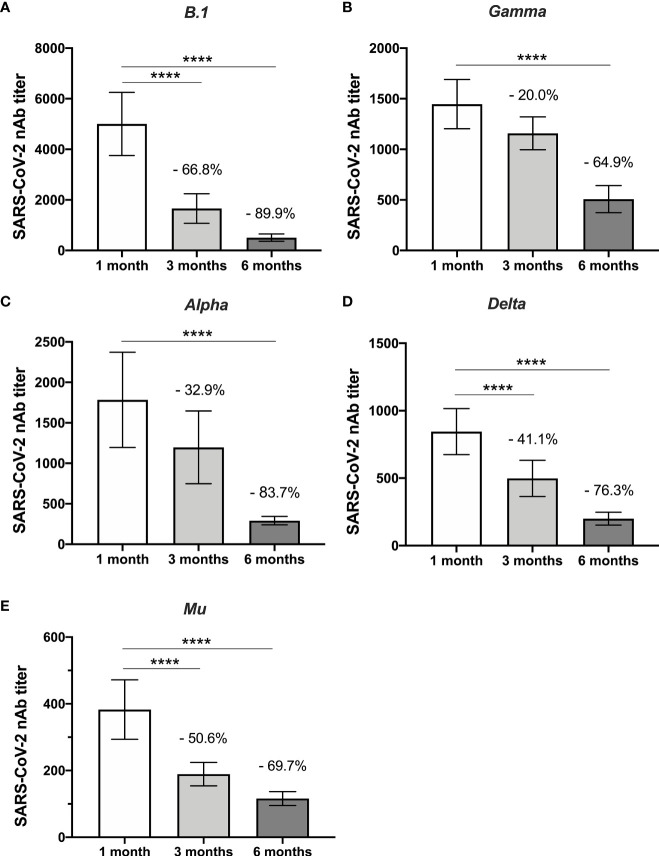
SARS-CoV-2 vaccines have shown very high effectiveness in real-world scenarios. However, there is compelling evidence for a fast-paced waning of immunity. The increasing number of new variants that could alter the severity, transmissibility, and potential to evade the immune response raised significant concern. Therefore, elucidating changes in the humoral immune response against viral variants induced by vaccines over time is crucial for improving immunization protocols. We carried out a 6-month longitudinal prospective study in which 60 individuals between 21 and 71 years of age who have received the complete scheme of the BNT162b2 vaccine were followed to determine titers of serum neutralizing activity. The neutralizing capacity was measured at one, three, and six-months post-vaccination by plaque reduction neutralization assay using SARS-CoV-2 B.1 (D614G) and the Gamma, Alpha, Delta, and Mu variants. Data were analyzed using GraphPad 5.0. Neutralizing activity against five different SARS-CoV-2 variants was detected in the serum samples of all vaccinated participants to a different extent after one month, with a progressive decrease according to age and gender. Overall, after one month of vaccination, the neutralizing titer was lower for all evaluated variants when compared to B.1, most remarkable against Delta and Mu, with a reduction of 83.1% and 92.3%, respectively. In addition, the Titer at 3- or 6-months follow-up decreased dramatically for all variants. Our results support the decaying of serum neutralizing activity, both over time and across SARS-CoV-2 variants, being more significant in older men. Since Delta and Mu appear to evade the neutralizing activity, these and further new variants of immune escape mutations should be considered for novel vaccine formulations.
SARS-CoV-2 疫苗在真实场景中表现出非常高的有效性。然而,有确凿的证据表明,免疫作用迅速减弱。越来越多的新变体可能改变疾病的严重程度、传染性和逃避免疫反应的能力,这引起了人们的极大关注。因此,阐明疫苗诱导的针对病毒变体的体液免疫反应随时间的变化对于改进免疫接种方案至关重要。我们进行了一项为期 6 个月的纵向前瞻性研究,其中 60 名年龄在 21 至 71 岁之间的个体已接受 BNT162b2 疫苗的完整接种方案,以确定血清中和活性的滴度。通过使用 SARS-CoV-2 B.1(D614G)和 Gamma、Alpha、Delta 和 Mu 变体进行蚀斑减少中和测定,在接种后 1、3 和 6 个月测量中和能力。使用 GraphPad 5.0 分析数据。在接种后一个月,所有接种参与者的血清样本中均检测到针对五种不同 SARS-CoV-2 变体的不同程度的中和活性,且中和活性随着年龄和性别而逐渐降低。总体而言,与 B.1 相比,所有评估的变体在接种一个月后,中和滴度均降低,Delta 和 Mu 降低最为明显,分别降低了 83.1%和 92.3%。此外,所有变体在 3 或 6 个月随访时的滴度均显著下降。我们的结果支持血清中和活性随时间推移和跨越 SARS-CoV-2 变体的衰减,在老年男性中更为显著。由于 Delta 和 Mu 似乎逃避了中和活性,因此应该考虑这些变体以及其他具有免疫逃逸突变的新变体,用于新型疫苗制剂。