Torres-Sangiao Eva, Giddey Alexander Dyason, Leal Rodriguez Cristina, Tang Zhiheng, Liu Xiaoyun, Soares Nelson C
Clinical Microbiology Lab, University Hospital Marqués de Valdecilla, Santander, Spain.
Instituto de Investigación Sanitaria Marqués de Valdecilla (IDIVAL), Santander, Spain.
Front Med (Lausanne). 2022 May 2;9:850374. doi: 10.3389/fmed.2022.850374. eCollection 2022.
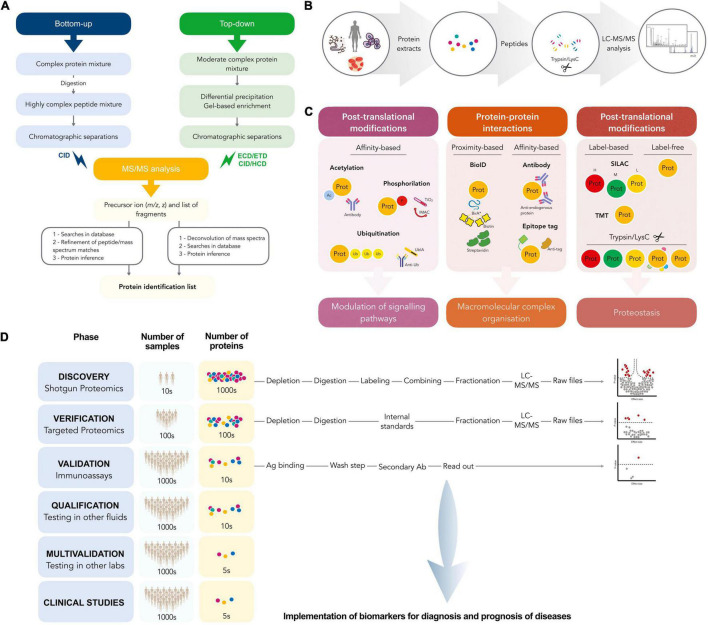
The profound effects of and distress caused by the global COVID-19 pandemic highlighted what has been known in the health sciences a long time ago: that bacteria, fungi, viruses, and parasites continue to present a major threat to human health. Infectious diseases remain the leading cause of death worldwide, with antibiotic resistance increasing exponentially due to a lack of new treatments. In addition to this, many pathogens share the common trait of having the ability to modulate, and escape from, the host immune response. The challenge in medical microbiology is to develop and apply new experimental approaches that allow for the identification of both the microbe and its drug susceptibility profile in a time-sensitive manner, as well as to elucidate their molecular mechanisms of survival and immunomodulation. Over the last three decades, proteomics has contributed to a better understanding of the underlying molecular mechanisms responsible for microbial drug resistance and pathogenicity. Proteomics has gained new momentum as a result of recent advances in mass spectrometry. Indeed, mass spectrometry-based biomedical research has been made possible thanks to technological advances in instrumentation capability and the continuous improvement of sample processing and workflows. For example, high-throughput applications such as SWATH or Trapped ion mobility enable the identification of thousands of proteins in a matter of minutes. This type of rapid, in-depth analysis, combined with other advanced, supportive applications such as data processing and artificial intelligence, presents a unique opportunity to translate knowledge-based findings into measurable impacts like new antimicrobial biomarkers and drug targets. In relation to the Research Topic "Proteomic Approaches to Unravel Mechanisms of Resistance and Immune Evasion of Bacterial Pathogens," this review specifically seeks to highlight the synergies between the powerful fields of modern proteomics and microbiology, as well as bridging translational opportunities from biomedical research to clinical practice.
细菌、真菌、病毒和寄生虫仍然对人类健康构成重大威胁。传染病仍是全球主要死因,由于缺乏新的治疗方法,抗生素耐药性呈指数级增长。除此之外,许多病原体都有一个共同特征,即能够调节并逃避宿主免疫反应。医学微生物学面临的挑战是开发并应用新的实验方法,以便能在对时间敏感的情况下鉴定出微生物及其药敏谱,同时阐明它们的生存和免疫调节分子机制。在过去三十年里,蛋白质组学有助于更好地理解导致微生物耐药性和致病性的潜在分子机制。由于质谱技术的最新进展,蛋白质组学获得了新的发展动力。事实上,得益于仪器能力的技术进步以及样品处理和工作流程的不断改进,基于质谱的生物医学研究成为可能。例如,SWATH或捕获离子淌度等高通量应用能够在几分钟内鉴定出数千种蛋白质。这种快速、深入的分析,再结合其他先进的支持性应用,如数据处理和人工智能,为将基于知识的研究成果转化为可衡量的影响,如新的抗菌生物标志物和药物靶点,提供了独特的机会。关于“蛋白质组学方法揭示细菌病原体耐药性和免疫逃逸机制”这一研究主题,本综述特别旨在突出现代蛋白质组学和微生物学这两个强大领域之间的协同作用,以及架起从生物医学研究到临床实践的转化机会。