• 文献检索
  • 文档翻译
  • 深度研究
  • 学术资讯
  • Suppr Zotero 插件Zotero 插件
  • 邀请有礼
  • 套餐&价格
  • 历史记录
应用&插件
Suppr Zotero 插件Zotero 插件浏览器插件Mac 客户端Windows 客户端微信小程序
定价
高级版会员购买积分包购买API积分包
服务
文献检索文档翻译深度研究API 文档MCP 服务
关于我们
关于 Suppr公司介绍联系我们用户协议隐私条款
关注我们

Suppr 超能文献

核心技术专利:CN118964589B侵权必究
粤ICP备2023148730 号-1Suppr @ 2026

文献检索

告别复杂PubMed语法,用中文像聊天一样搜索,搜遍4000万医学文献。AI智能推荐,让科研检索更轻松。

立即免费搜索

文件翻译

保留排版,准确专业,支持PDF/Word/PPT等文件格式,支持 12+语言互译。

免费翻译文档

深度研究

AI帮你快速写综述,25分钟生成高质量综述,智能提取关键信息,辅助科研写作。

立即免费体验

评估和比较不同机器学习算法在预测学生表现方面的性能。

Assessment and Evaluation of Different Machine Learning Algorithms for Predicting Student Performance.

机构信息

Department of Computer Science, College of Science, Northern Border University, Arar, Saudi Arabia.

Faculty of Computing and Informatics, Universiti Malaysia Sabah (UMS), Labuan, Malaysia.

出版信息

Comput Intell Neurosci. 2022 May 9;2022:4151487. doi: 10.1155/2022/4151487. eCollection 2022.

DOI:10.1155/2022/4151487
PMID:35586111
原文链接:https://pmc.ncbi.nlm.nih.gov/articles/PMC9110122/
Abstract

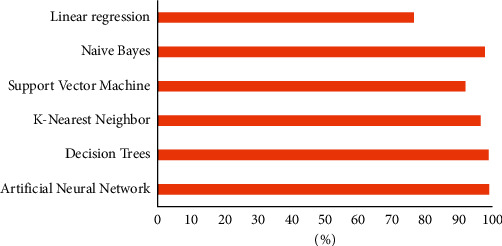
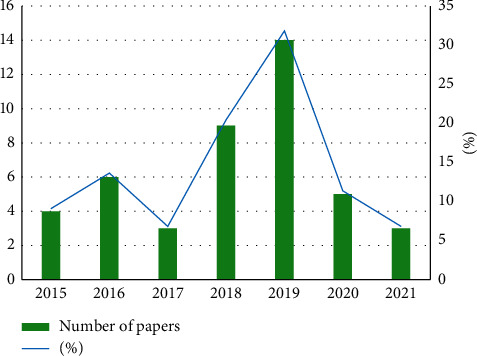
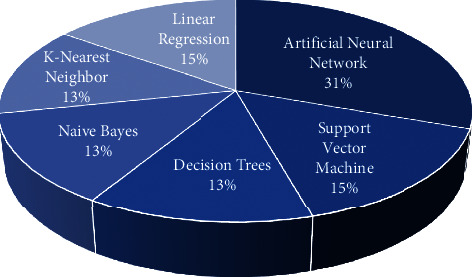
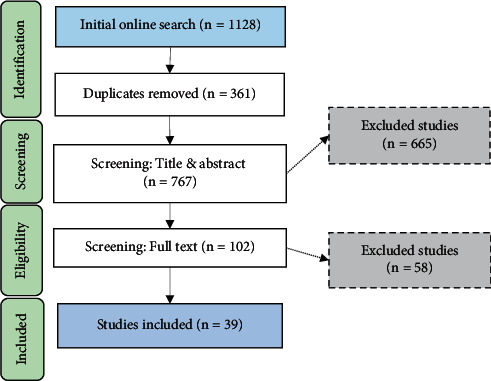
Student performance is crucial to the success of tertiary institutions. Especially, academic achievement is one of the metrics used in rating top-quality universities. Despite the large volume of educational data, accurately predicting student performance becomes more challenging. The main reason for this is the limited research in various machine learning (ML) approaches. Accordingly, educators need to explore effective tools for modelling and assessing student performance while recognizing weaknesses to improve educational outcomes. The existing ML approaches and key features for predicting student performance were investigated in this work. Related studies published between 2015 and 2021 were identified through a systematic search of various online databases. Thirty-nine studies were selected and evaluated. The results showed that six ML models were mainly used: decision tree (DT), artificial neural networks (ANNs), support vector machine (SVM), K-nearest neighbor (KNN), linear regression (LinR), and Naive Bayes (NB). Our results also indicated that ANN outperformed other models and had higher accuracy levels. Furthermore, academic, demographic, internal assessment, and family/personal attributes were the most predominant input variables (e.g., predictive features) used for predicting student performance. Our analysis revealed an increasing number of research in this domain and a broad range of ML algorithms applied. At the same time, the extant body of evidence suggested that ML can be beneficial in identifying and improving various academic performance areas.

摘要

学生表现对高等院校的成功至关重要。特别是,学业成绩是评价顶尖大学的指标之一。尽管有大量的教育数据,但准确预测学生表现变得更加具有挑战性。主要原因是各种机器学习 (ML) 方法的研究有限。因此,教育工作者需要探索有效的工具来建模和评估学生表现,同时认识到弱点以提高教育成果。本研究调查了预测学生表现的现有 ML 方法和关键特征。通过对各种在线数据库进行系统搜索,确定了 2015 年至 2021 年期间发表的相关研究。选择并评估了 39 项研究。结果表明,主要使用了六种 ML 模型:决策树 (DT)、人工神经网络 (ANNs)、支持向量机 (SVM)、K-最近邻 (KNN)、线性回归 (LinR) 和朴素贝叶斯 (NB)。我们的结果还表明,ANN 优于其他模型,具有更高的准确度水平。此外,学术、人口统计学、内部评估以及家庭/个人属性是用于预测学生表现的最主要的输入变量(例如,预测特征)。我们的分析揭示了该领域研究的数量不断增加,以及应用的广泛的 ML 算法。同时,现有的证据表明,ML 可以有助于识别和改善各个学术表现领域。
https://cdn.ncbi.nlm.nih.gov/pmc/blobs/f7fb/9110122/96625e83d1fe/CIN2022-4151487.005.jpg
https://cdn.ncbi.nlm.nih.gov/pmc/blobs/f7fb/9110122/d987d459ea4e/CIN2022-4151487.001.jpg
https://cdn.ncbi.nlm.nih.gov/pmc/blobs/f7fb/9110122/db472943e79a/CIN2022-4151487.002.jpg
https://cdn.ncbi.nlm.nih.gov/pmc/blobs/f7fb/9110122/e38d1a7d4792/CIN2022-4151487.003.jpg
https://cdn.ncbi.nlm.nih.gov/pmc/blobs/f7fb/9110122/165f668ff0f2/CIN2022-4151487.004.jpg
https://cdn.ncbi.nlm.nih.gov/pmc/blobs/f7fb/9110122/96625e83d1fe/CIN2022-4151487.005.jpg
https://cdn.ncbi.nlm.nih.gov/pmc/blobs/f7fb/9110122/d987d459ea4e/CIN2022-4151487.001.jpg
https://cdn.ncbi.nlm.nih.gov/pmc/blobs/f7fb/9110122/db472943e79a/CIN2022-4151487.002.jpg
https://cdn.ncbi.nlm.nih.gov/pmc/blobs/f7fb/9110122/e38d1a7d4792/CIN2022-4151487.003.jpg
https://cdn.ncbi.nlm.nih.gov/pmc/blobs/f7fb/9110122/165f668ff0f2/CIN2022-4151487.004.jpg
https://cdn.ncbi.nlm.nih.gov/pmc/blobs/f7fb/9110122/96625e83d1fe/CIN2022-4151487.005.jpg

相似文献

1
Assessment and Evaluation of Different Machine Learning Algorithms for Predicting Student Performance.评估和比较不同机器学习算法在预测学生表现方面的性能。
Comput Intell Neurosci. 2022 May 9;2022:4151487. doi: 10.1155/2022/4151487. eCollection 2022.
2
Predicting students' academic progress and related attributes in first-year medical students: an analysis with artificial neural networks and Naïve Bayes.预测医学一年级学生的学业进展和相关属性:使用人工神经网络和朴素贝叶斯进行分析。
BMC Med Educ. 2024 Jan 19;24(1):74. doi: 10.1186/s12909-023-04918-6.
3
Comparison of machine learning approaches for radioisotope identification using NaI(TI) gamma-ray spectrum.基于 NaI(TI) 伽马射线能谱的放射性同位素识别的机器学习方法比较。
Appl Radiat Isot. 2022 Aug;186:110212. doi: 10.1016/j.apradiso.2022.110212. Epub 2022 Apr 14.
4
Prospects and Challenges of Using Machine Learning for Academic Forecasting.使用机器学习进行学术预测的前景与挑战
Comput Intell Neurosci. 2022 Jun 17;2022:5624475. doi: 10.1155/2022/5624475. eCollection 2022.
5
A Machine Learning Approach to Predictive Modelling of Student Performance.机器学习在学生表现预测模型中的应用
F1000Res. 2021 Nov 11;10:1144. doi: 10.12688/f1000research.73180.2. eCollection 2021.
6
Construction accident narrative classification: An evaluation of text mining techniques.建筑事故叙述分类:文本挖掘技术评估
Accid Anal Prev. 2017 Nov;108:122-130. doi: 10.1016/j.aap.2017.08.026. Epub 2017 Sep 1.
7
Machine learning algorithms for predicting COVID-19 mortality in Ethiopia.用于预测埃塞俄比亚 COVID-19 死亡率的机器学习算法。
BMC Public Health. 2024 Jun 28;24(1):1728. doi: 10.1186/s12889-024-19196-0.
8
Development, comparison, and internal validation of prediction models to determine the visual prognosis of patients with open globe injuries using machine learning approaches.运用机器学习方法开发、比较和内部验证预测模型,以确定开放性眼球损伤患者的视觉预后。
BMC Med Inform Decis Mak. 2024 May 21;24(1):131. doi: 10.1186/s12911-024-02520-4.
9
Application of supervised machine learning algorithms in the classification of sagittal gait patterns of cerebral palsy children with spastic diplegia.监督机器学习算法在痉挛性双瘫脑瘫儿童矢状面步态模式分类中的应用。
Comput Biol Med. 2019 Mar;106:33-39. doi: 10.1016/j.compbiomed.2019.01.009. Epub 2019 Jan 16.
10
Developing robust arsenic awareness prediction models using machine learning algorithms.利用机器学习算法开发稳健的砷意识预测模型。
J Environ Manage. 2018 Apr 1;211:125-137. doi: 10.1016/j.jenvman.2018.01.044. Epub 2018 Feb 4.

引用本文的文献

1
A secured accreditation and equivalency certification using Merkle mountain range and transformer based deep learning model for the education ecosystem.一种使用基于默克尔山脉和变压器的深度学习模型的安全认证和等效性认证,用于教育生态系统。
Sci Rep. 2025 Jul 2;15(1):22511. doi: 10.1038/s41598-025-06789-x.
2
Predicting student success in MOOCs: a comprehensive analysis using machine learning models.预测学生在大规模开放在线课程中的学习成果:基于机器学习模型的综合分析
PeerJ Comput Sci. 2024 Aug 23;10:e2221. doi: 10.7717/peerj-cs.2221. eCollection 2024.
3
Investigating response behavior through TF-IDF and Word2vec text analysis: A case study of PISA 2012 problem-solving process data.

本文引用的文献

1
Customer relationship management systems (CRMS) in the healthcare environment: A systematic literature review.医疗环境中的客户关系管理系统(CRMS):一项系统的文献综述。
Comput Stand Interfaces. 2020 Aug;71:103442. doi: 10.1016/j.csi.2020.103442. Epub 2020 Apr 10.
2
Predicting Academic Performance of Students Using a Hybrid Data Mining Approach.使用混合数据挖掘方法预测学生的学业成绩。
J Med Syst. 2019 Apr 30;43(6):162. doi: 10.1007/s10916-019-1295-4.
3
Preferred reporting items for systematic reviews and meta-analyses: the PRISMA Statement.
通过TF-IDF和Word2vec文本分析研究反应行为:以2012年国际学生评估项目(PISA)解决问题过程数据为例
Heliyon. 2024 Aug 10;10(16):e35945. doi: 10.1016/j.heliyon.2024.e35945. eCollection 2024 Aug 30.
4
Feature Signature Discovery for Autism Detection: An Automated Machine Learning Based Feature Ranking Framework.自闭症检测的特征特征发现:一种基于自动化机器学习的特征排序框架。
Comput Intell Neurosci. 2023 Jan 4;2023:6330002. doi: 10.1155/2023/6330002. eCollection 2023.
系统评价与Meta分析的首选报告项目:PRISMA声明。
Open Med. 2009;3(3):e123-30. Epub 2009 Jul 21.
4
Synthesising qualitative and quantitative evidence: a review of possible methods.综合定性和定量证据:对可能方法的综述
J Health Serv Res Policy. 2005 Jan;10(1):45-53. doi: 10.1177/135581960501000110.