Key Laboratory of Combinatorial Biosynthesis and Drug Discovery, Ministry of Education, School of Pharmaceutical Sciences, Wuhan University, Wuhan, China.
Department of Critical Care Medicine, Zhongnan Hospital of Wuhan University; Clinical Research Center of Hubei Critical Care Medicine, Wuhan, China.
Front Cell Infect Microbiol. 2022 May 2;12:882661. doi: 10.3389/fcimb.2022.882661. eCollection 2022.
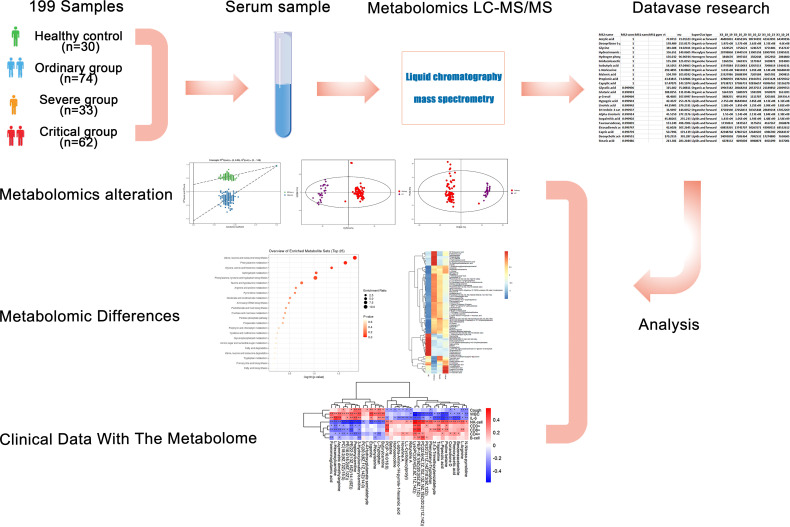
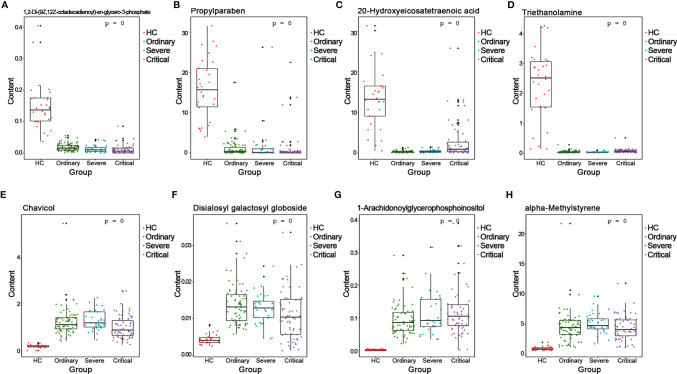
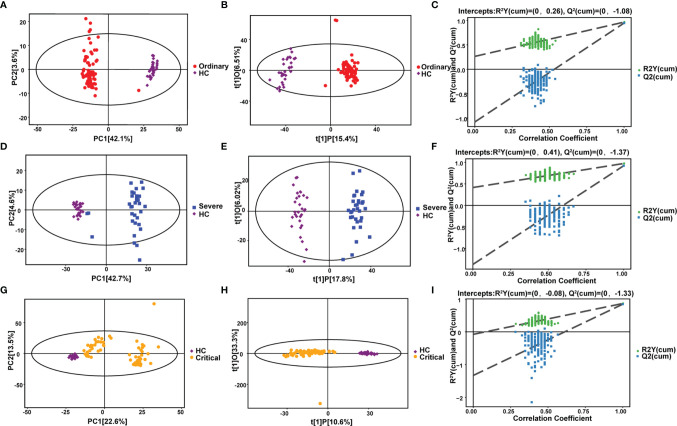
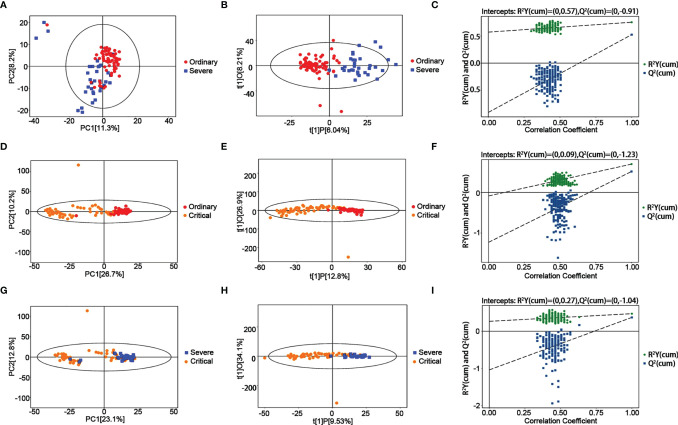
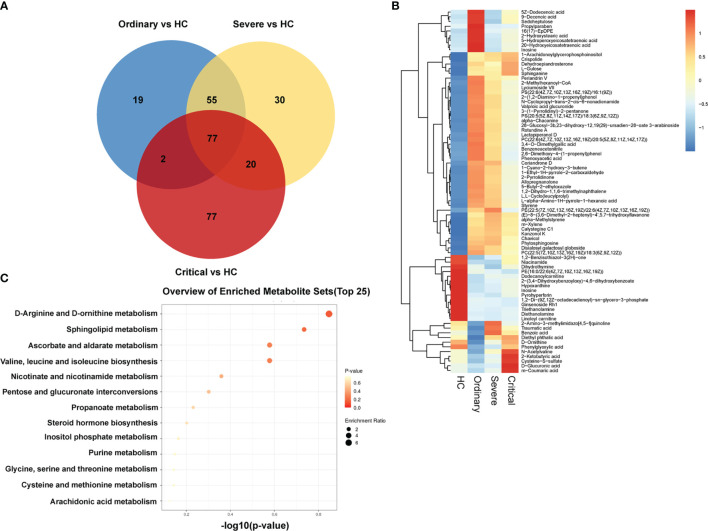
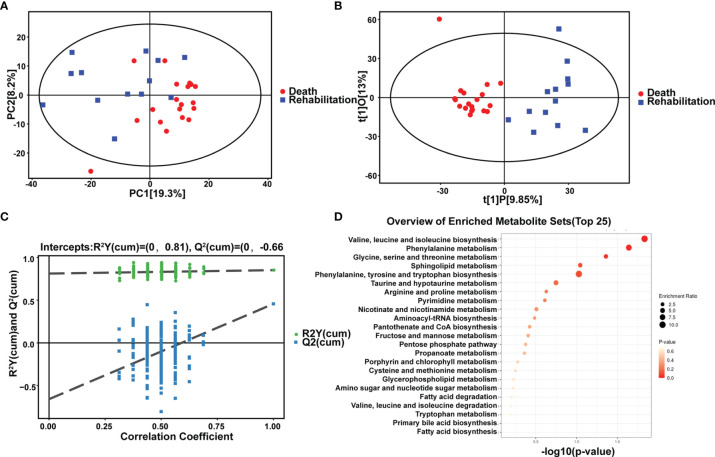
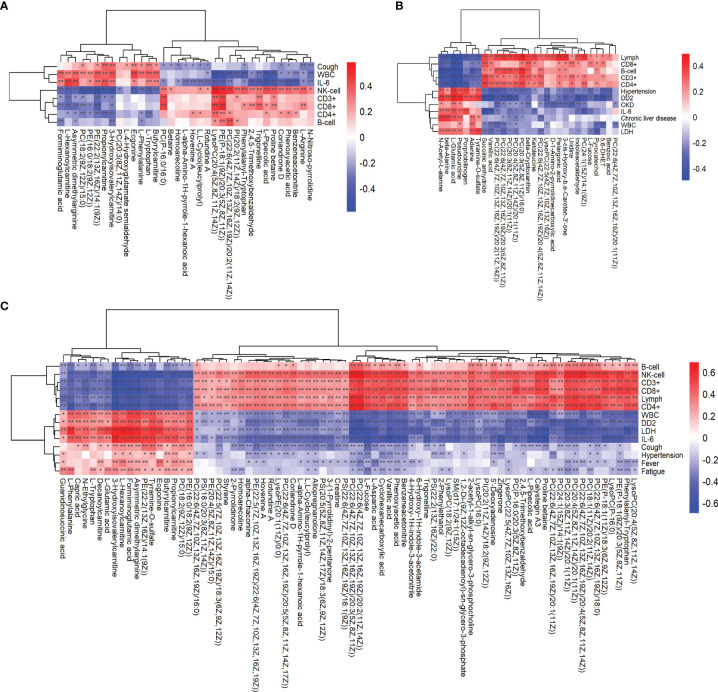
We have witnessed the 2-year-long global rampage of COVID-19 caused by the wide spread of severe acute respiratory syndrome coronavirus 2 (SARS-CoV-2). However, knowledge about biomarkers of the entire COVID-19 process is limited. Identification of the systemic features of COVID-19 will lead to critical biomarkers and therapeutic targets for early intervention and clinical disease course prediction. Here, we performed a comprehensive analysis of clinical measurements and serum metabolomics in 199 patients with different stages of COVID-19. In particular, our study is the first serum metabolomic analysis of critical rehabilitation patients and critical death patients. We found many differential metabolites in the comparison of metabolomic results between ordinary, severe, and critical patients and uninfected patients. Through the metabolomic results of COVID-19 patients in various stages, and critical rehabilitation patients and critical death patients, we identified a series of differential metabolites as biomarkers, a separate queue and precise distinction, and predicted COVID-19 verification. These differentially expressed metabolites, included 1,2-di-(9Z,12Z-octadecadienoyl)-sn-glycero-3-phosphate, propylparaben, 20-hydroxyeicosatetraenoic acid, triethanolamine, chavicol, disialosyl galactosyl globoside, 1-arachidonoylglycerophosphoinositol, and alpha-methylstyrene, all of which have been identified for the first time as biomarkers in COVID-19 progression. These biomarkers are involved in many pathological and physiological pathways of COVID-19, for example, immune responses, platelet degranulation, and metabolism which might result in pathogenesis. Our results showed valuable information about metabolites obviously altered in COVID-19 patients with different stages, which could shed light on the pathogenesis as well as serve as potential therapeutic agents of COVID-19.
我们见证了由严重急性呼吸系统综合征冠状病毒 2(SARS-CoV-2)广泛传播引起的长达 2 年的全球 COVID-19 大流行。然而,对于 COVID-19 整个过程的生物标志物的了解有限。确定 COVID-19 的系统特征将为早期干预和临床疾病过程预测提供关键的生物标志物和治疗靶点。在这里,我们对 199 例不同阶段 COVID-19 患者的临床测量和血清代谢组学进行了全面分析。特别是,我们的研究是对重症康复患者和重症死亡患者进行的首次血清代谢组学分析。我们在普通、重症和危重症患者与未感染者的代谢组学结果比较中发现了许多差异代谢物。通过对各阶段 COVID-19 患者、重症康复患者和重症死亡患者的代谢组学结果进行分析,我们确定了一系列差异代谢物作为生物标志物,进行了单独队列和精确区分,并预测了 COVID-19 的验证。这些差异表达的代谢物,包括 1,2-二-(9Z,12Z-十八碳二烯酰基)-sn-甘油-3-磷酸、丙基对羟基苯甲酸酯、20-羟基二十碳四烯酸、三乙醇胺、黄樟素、二唾液酰基半乳糖神经酰胺、1-花生四烯酰基甘油磷酸肌醇和α-甲基苯乙烯,均首次被鉴定为 COVID-19 进展中的生物标志物。这些生物标志物涉及 COVID-19 的许多病理和生理途径,例如免疫反应、血小板脱颗粒和代谢,这可能导致发病机制。我们的结果显示了不同阶段 COVID-19 患者中明显改变的代谢物的有价值信息,这可能为发病机制提供启示,并可作为 COVID-19 的潜在治疗剂。