The Irish Longitudinal Study on Ageing (TILDA), Trinity College Dublin, Dublin, Ireland.
The Irish Longitudinal Study on Ageing (TILDA), Trinity College Dublin, Dublin, Ireland.
Arch Gerontol Geriatr. 2022 Sep-Oct;102:104719. doi: 10.1016/j.archger.2022.104719. Epub 2022 May 10.
The COVID-19 pandemic in 2020 resulted in the older population being asked to remain at home and avoid other people outside their household. This could have implications for both receipt and provision of informal caring.
To determine if informal care provision by older carers changed during the first wave of the COVID-19 pandemic from pre-pandemic care and if this was associated with a change in mental health and well-being of carers.
Longitudinal nationally representative study of community dwelling adults from The Irish Longitudinal Study on Ageing (TILDA) (Waves 3-COVID-Wave 6).
We studied a cohort of 3670 adults aged ≥60 in Ireland during the COVID-19 pandemic (July-November 2020) and compared with previous data collections from the same cohort between 2014-2018. Independent variables were caregiving status and caregiving intensity, outcome measures included depressive symptoms (CES-D8), Perceived Stress (PSS4) and Quality of life (CASP12). Mixed models adjusting for socio-demographics and physical health were estimated.
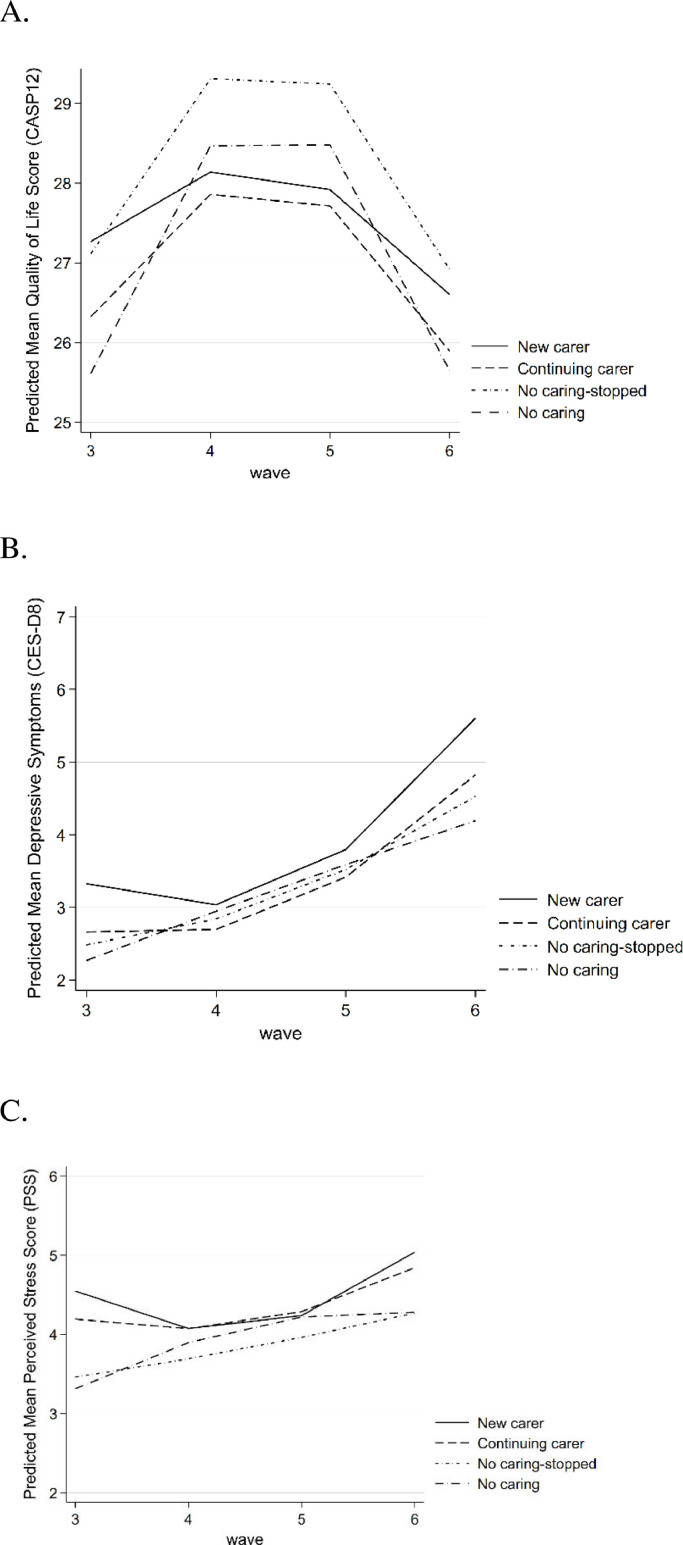
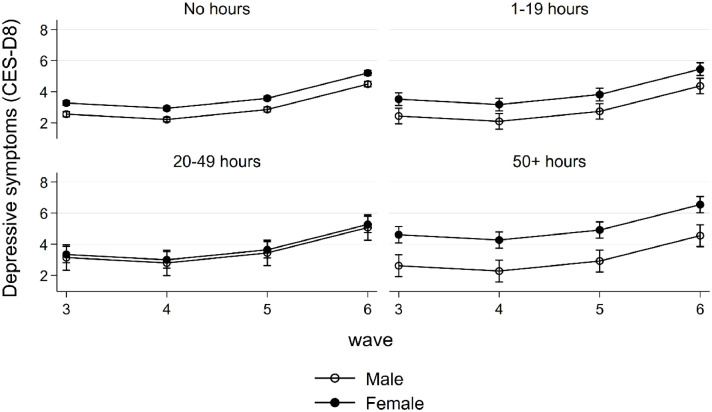
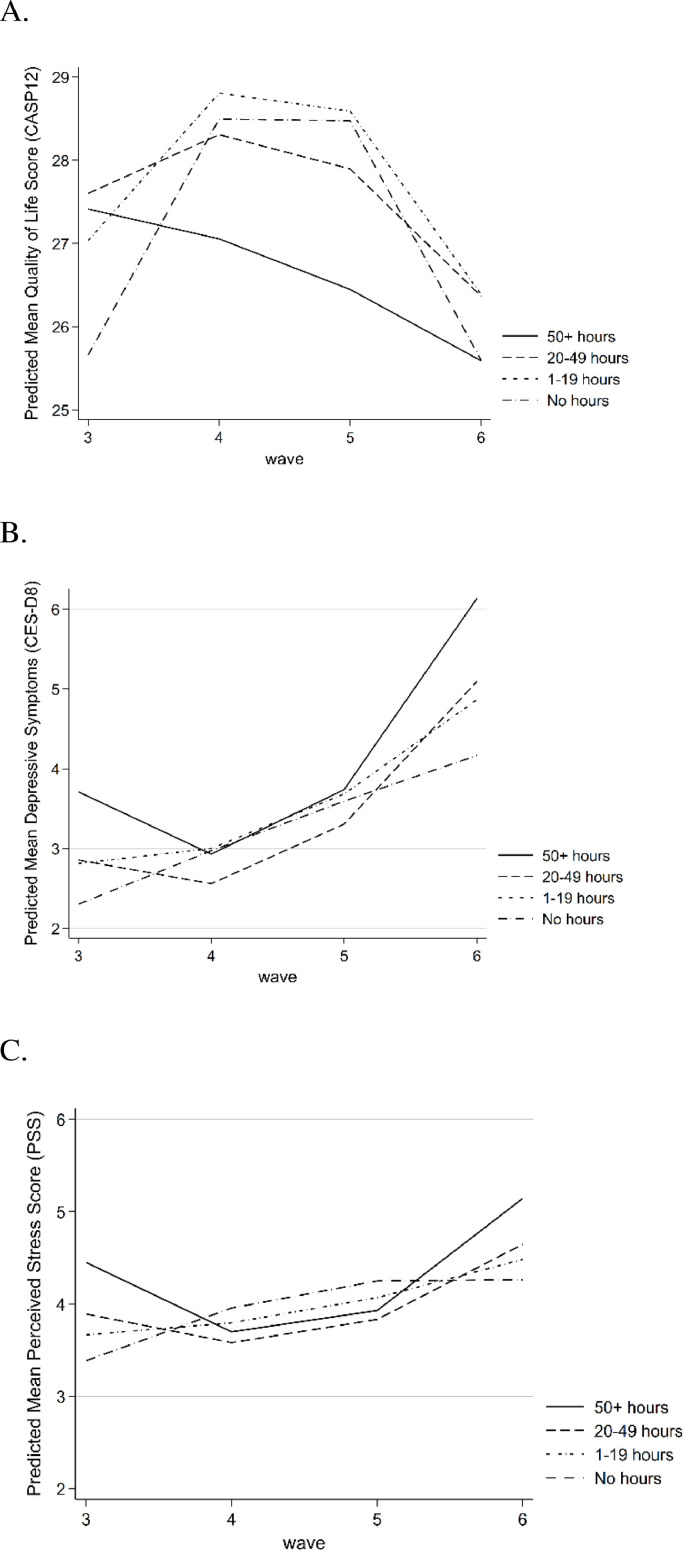
Caregiving increased from 8.2% (2014) to 15.4% (2020). Depression, and stress scores increased while quality of life decreased for all participants. Carers reported poorer mental health, and higher caring hours were associated with increased depression and stress and decreased quality of life scores on average, and increased depression was higher for women.
Informal caregiving increased during the pandemic and family caregivers reported increased adverse mental health and well-being and this continued throughout the early months of the pandemic. The disproportionate burden of depression was highest in women providing higher caring hours.
2020 年的 COVID-19 大流行导致老年人群体被要求待在家中并避免与家庭以外的人接触。这可能会对非正式护理的提供和接收产生影响。
确定在 COVID-19 大流行的第一波期间,老年护理人员提供的非正式护理是否发生了变化,与护理人员的心理健康和幸福感变化是否相关。
对来自爱尔兰老龄化纵向研究(TILDA)(第 3 波-COVID 波-第 6 波)的社区居住成年人进行的纵向全国代表性研究。
我们研究了在 COVID-19 大流行期间(2020 年 7 月至 11 月)年龄≥60 岁的 3670 名成年人的队列,并将其与来自同一队列的先前数据收集(2014-2018 年)进行了比较。自变量为照顾者的身份和照顾强度,结果指标包括抑郁症状(CES-D8)、感知压力(PSS4)和生活质量(CASP12)。采用混合模型对社会人口统计学和身体健康因素进行了调整。
照顾者的比例从 2014 年的 8.2%增加到 2020 年的 15.4%。所有参与者的抑郁和压力评分均增加,生活质量均下降。护理人员报告的心理健康状况较差,平均而言,照顾时间增加与抑郁、压力增加和生活质量得分下降有关,而女性的抑郁增加幅度更高。
在大流行期间,非正式护理增加,家庭护理人员报告称他们的心理健康和幸福感恶化,这种情况在大流行的早期几个月持续存在。提供较高照顾时间的女性的抑郁负担不成比例地最高。