Hama Amin Renas Raouf, Aziz Tavga Ahmed
Department of Pharmacology and Toxicology, College of Pharmacy, University of Sulaimani, Sulaimani, Iraq.
J Inflamm Res. 2022 May 11;15:2911-2923. doi: 10.2147/JIR.S365090. eCollection 2022.
The present study was designed to evaluate the possible gastroprotective effects of different doses of azilsartan in ethanol-induced gastric ulcers in rats.
Forty-eight male adult Wistar rats were used and allocated randomly into four groups: negative control treated with distilled water, positive control treated with ethanol, lansoprazole treated group, and azilsartan (1mg, 5mg, and 10mg/kg) treated group. The treatment protocol was for 15 days, and all the groups except for the negative control group received 1mL of ethanol on the last day 1hr before scarification. Gastric content was collected for measuring the volume, free acidity, and pH. The stomach was used for measuring the gastric lesion area and ulcer index. Blood samples were collected for measuring serum hydroxyproline, gastrin, CRP, TNF-α, MDA, and TAOC. Gastric tissues were sent for histopathological examinations.
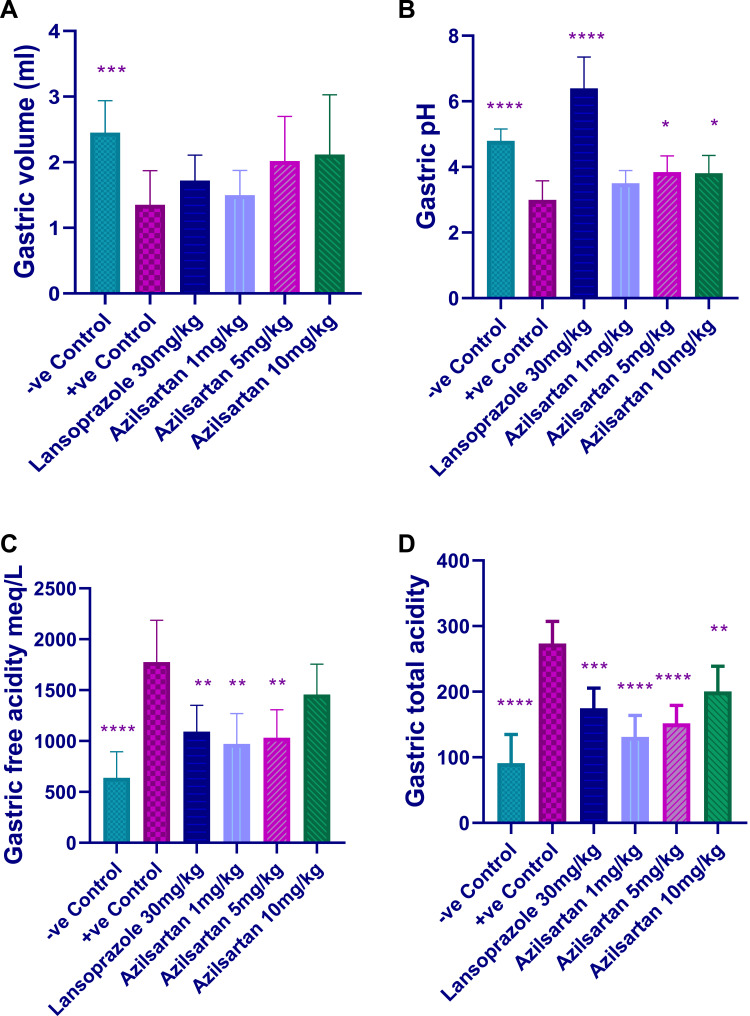
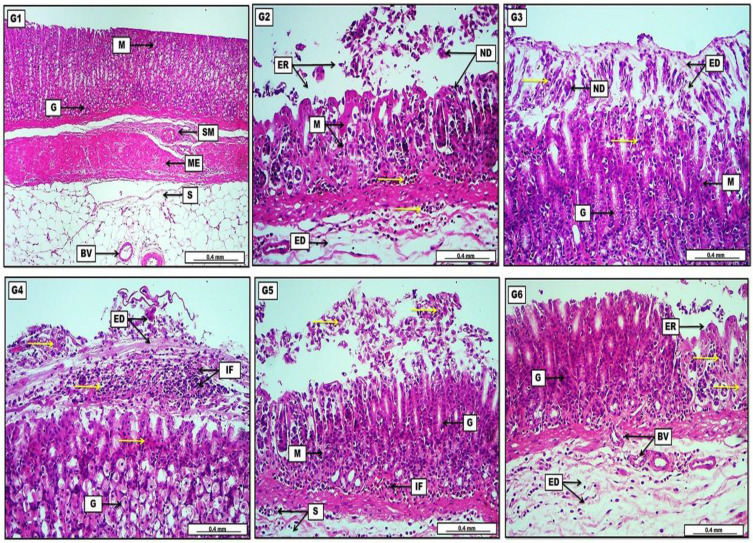
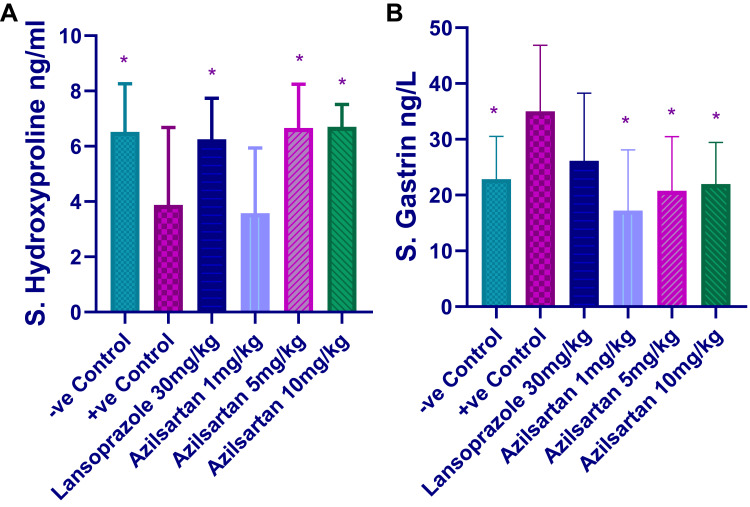
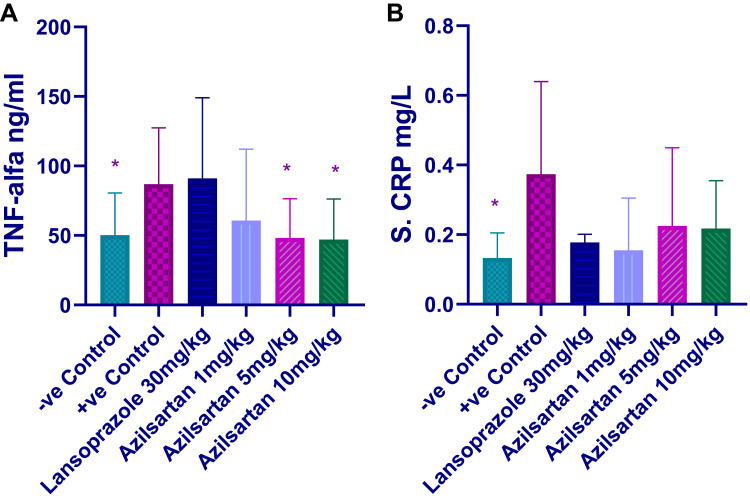
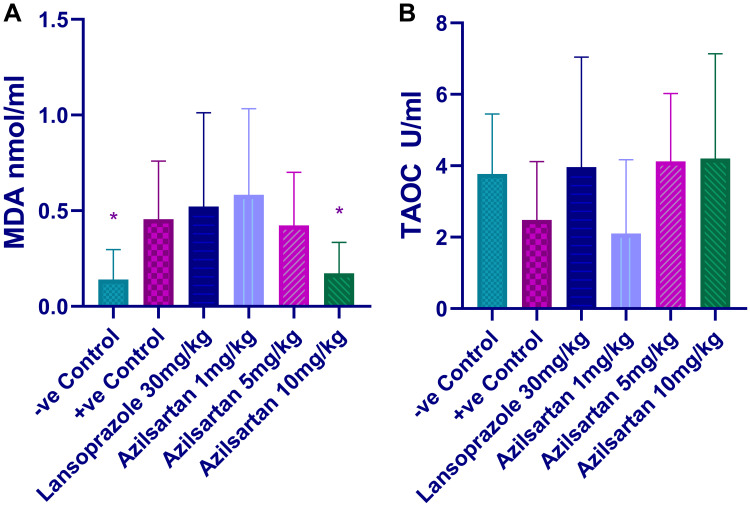
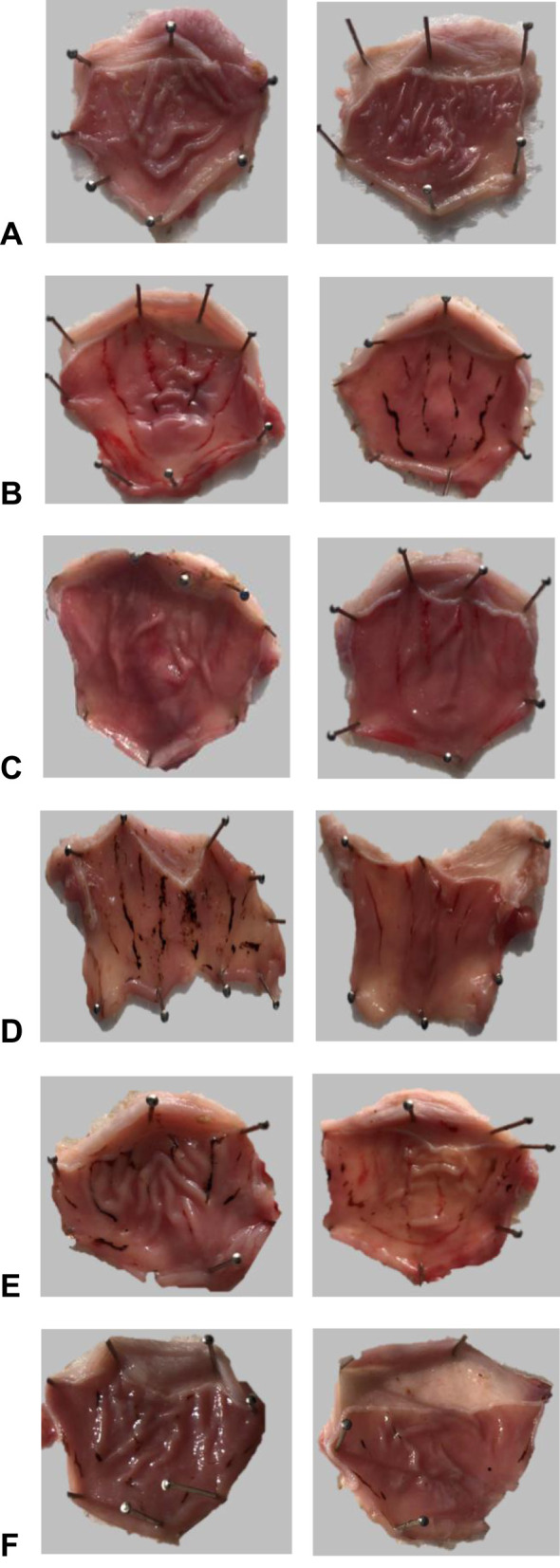
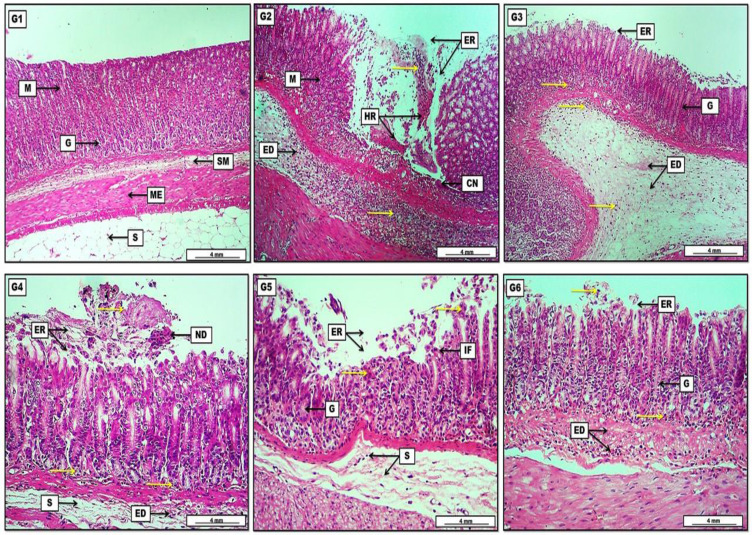
Ethanol administration significantly increased gastric lesion, gastric ulcer index, and gastric acidity. Ethanol also decreased serum levels of hydroxyproline and TAOC and increased serum gastrin, CRP, TNF-α, and MDA. Azilsartan 10mg/kg was able to decrease the lesion by 43.6% and increase gastric pH and significantly decreased MDA level. Both 5mg/kg and 10mg/kg azilsartan have successfully restored the level of hydroxyproline, gastrin, and TNF-α. The histopathological finding showed gastroprotection by azilsartan in a dose-dependent manner.
The study revealed that azilsartan possesses a gastroprotective effect. The proposed mechanisms could be increased blood flow to the stomach, antioxidant capacity, and anti-inflammatory activity along with restoring hydroxyproline and gastrin levels. These findings suggest azilsartan as a promising candidate to be tested in a clinical setting.
本研究旨在评估不同剂量阿齐沙坦对乙醇诱导的大鼠胃溃疡的可能胃保护作用。
使用48只成年雄性Wistar大鼠,随机分为四组:用蒸馏水治疗的阴性对照组、用乙醇治疗的阳性对照组、兰索拉唑治疗组和阿齐沙坦(1mg、5mg和10mg/kg)治疗组。治疗方案为15天,除阴性对照组外,所有组在处死前1小时的最后一天接受1mL乙醇。收集胃内容物以测量体积、游离酸度和pH值。使用胃来测量胃损伤面积和溃疡指数。采集血样以测量血清羟脯氨酸、胃泌素、CRP、TNF-α、MDA和TAOC。将胃组织送去进行组织病理学检查。
给予乙醇显著增加了胃损伤、胃溃疡指数和胃酸度。乙醇还降低了血清羟脯氨酸和TAOC水平,并增加了血清胃泌素、CRP、TNF-α和MDA水平。10mg/kg阿齐沙坦能够使损伤减少43.6%,增加胃pH值,并显著降低MDA水平。5mg/kg和10mg/kg阿齐沙坦均成功恢复了羟脯氨酸、胃泌素和TNF-α的水平。组织病理学结果显示阿齐沙坦具有剂量依赖性的胃保护作用。
该研究表明阿齐沙坦具有胃保护作用。其可能的机制包括增加胃血流量、抗氧化能力和抗炎活性,同时恢复羟脯氨酸和胃泌素水平。这些发现表明阿齐沙坦是一种有前景的候选药物,有待在临床环境中进行测试。