Department of Pharmacology and Therapeutics, Faculty of Pharmacy, Pharos University in Alexandria, Alexandria, Egypt.
Department of Clinical Pharmacy, Faculty of Pharmacy, Kafrelsheikh University, Kafrelsheikh, Egypt.
Neurochem Res. 2022 Aug;47(8):2345-2356. doi: 10.1007/s11064-022-03624-x. Epub 2022 May 20.
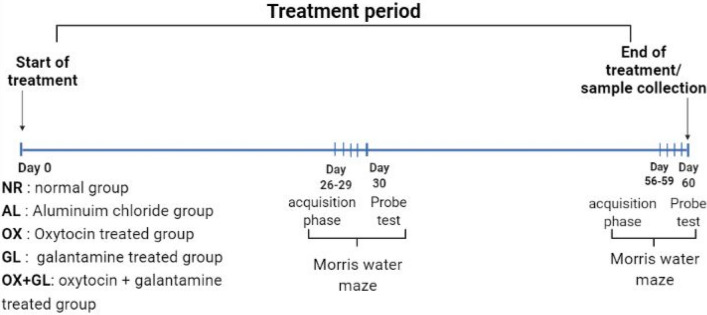
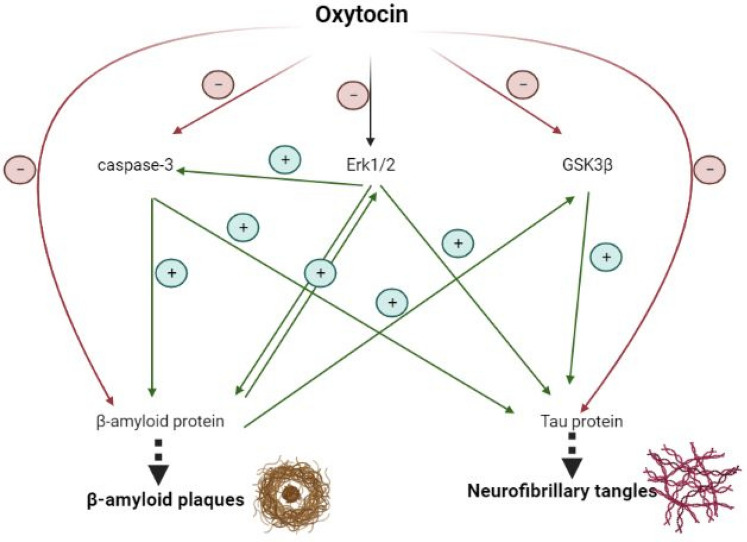
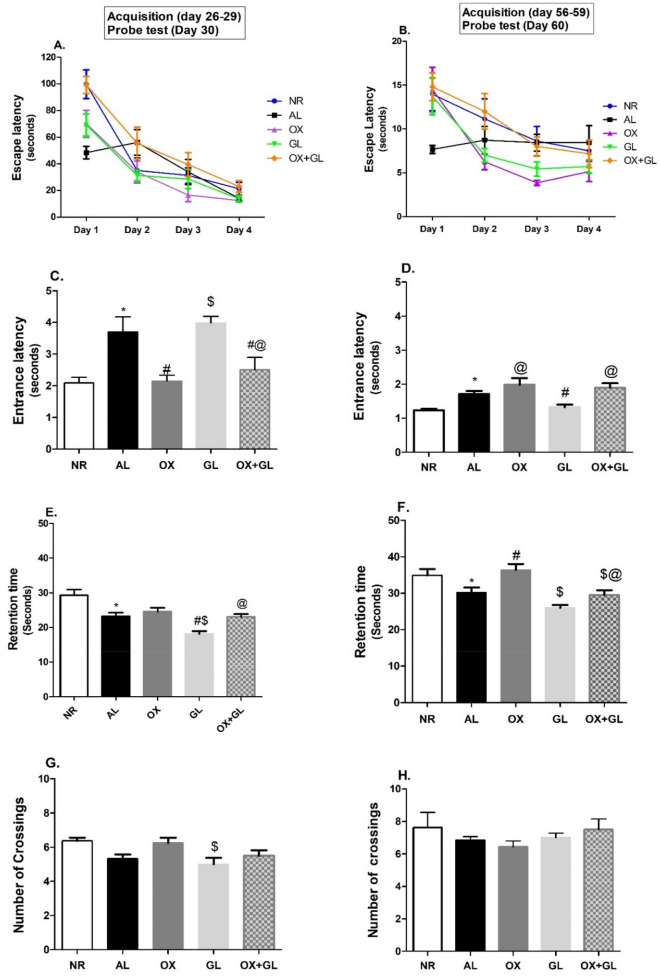
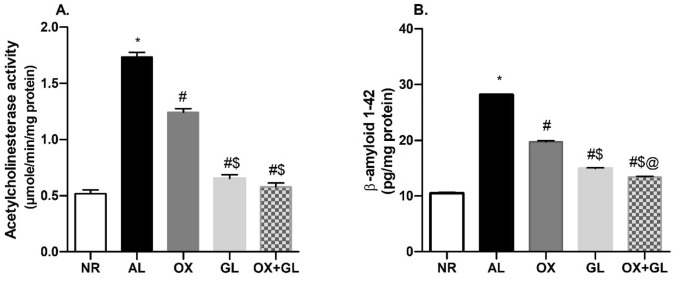
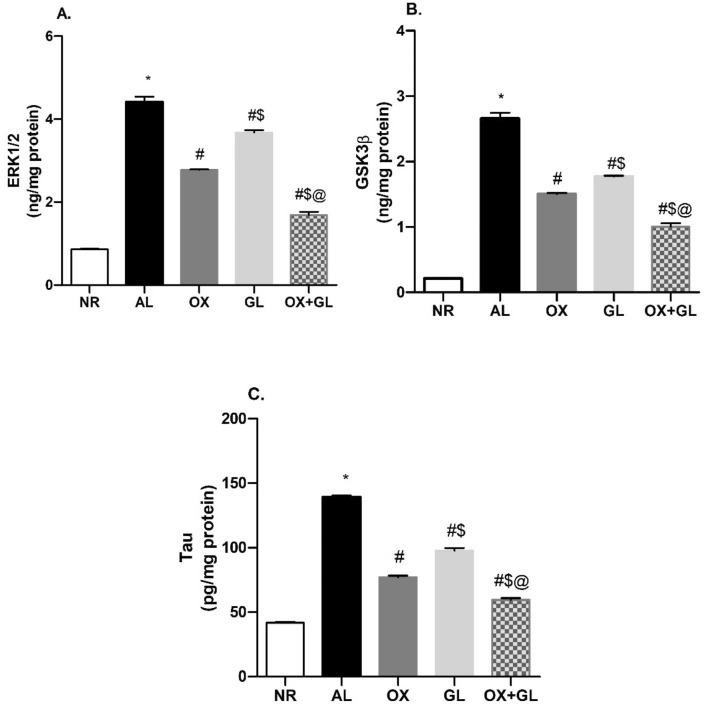
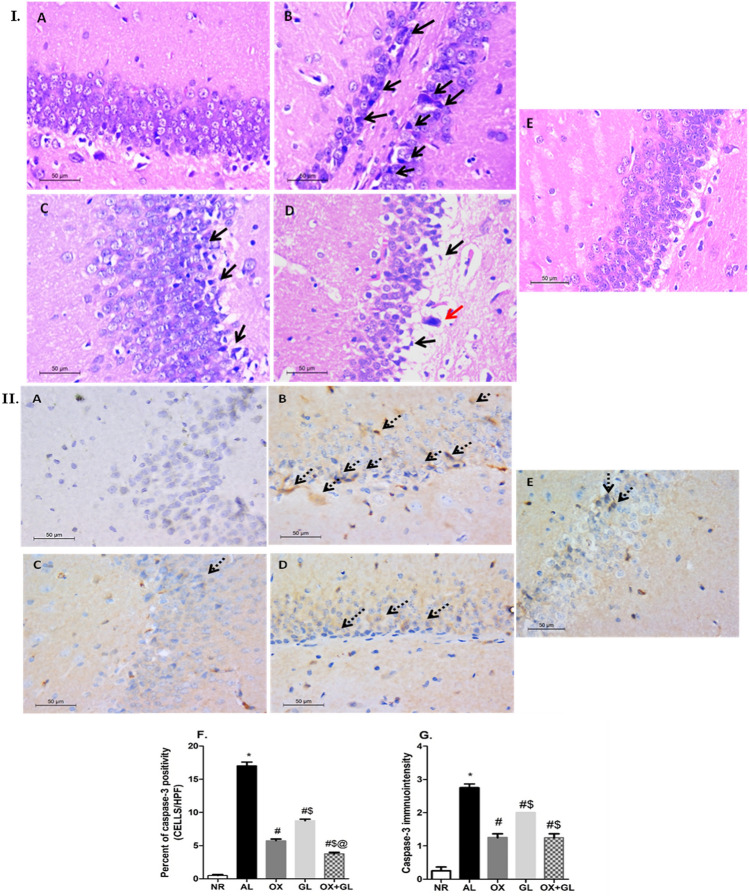
Oxytocin is a neuropeptide hormone that plays an important role in social bonding and behavior. Recent studies indicate that oxytocin could be involved in the regulation of neurological disorders. However, its role in modulating cognition in Alzheimer's disease (AD) has never been explored. Hence, the present study aims to investigate the potential of chronic intranasal oxytocin in halting memory impairment & AD pathology in aluminum chloride-induced AD in female rats. Morris water maze was used to assess cognitive dysfunction in two-time points throughout the treatment period. In addition, neuroprotective effects of oxytocin were examined by assessing hippocampal acetylcholinesterase activity, β-amyloid 1-42 protein, and Tau levels. In addition, ERK1/2, GSK3β, and caspase-3 levels were assessed as chief neurobiochemical mediators in AD. Hippocampi histopathological changes were also evaluated. These findings were compared to the standard drug galantamine alone and combined with oxytocin. Results showed that oxytocin restored cognitive functions and improved animals' behavior in the Morris test. This was accompanied by a significant decline in acetylcholinesterase activity, 1-42 β-amyloid and Tau proteins levels. Hippocampal ERK1/2 and GSK3β were also reduced, exceeding galantamine effects, thus attenuating AD pathological hallmarks formation. Determination of caspase-3 revealed low cytoplasmic positivity, indicating the ceasing of neuronal death. Histopathological examination confirmed these findings, showing restored hippocampal cells structure. Combined galantamine and oxytocin treatment showed even better biochemical and histopathological profiles. It can be thus concluded that oxytocin possesses promising neuroprotective potential in AD mediated via restoring cognition and suppressing β-amyloid, Tau accumulation, and neuronal death.
催产素是一种神经肽激素,在社交联系和行为中起着重要作用。最近的研究表明,催产素可能参与调节神经紊乱。然而,它在调节阿尔茨海默病(AD)认知中的作用尚未被探索。因此,本研究旨在探讨慢性鼻内给予催产素是否能阻止氯化铝诱导的雌性大鼠 AD 中的记忆障碍和 AD 病理。 Morris 水迷宫用于在治疗期间的两个时间点评估认知功能障碍。此外,通过评估海马乙酰胆碱酯酶活性、β-淀粉样蛋白 1-42 蛋白和 Tau 水平来检查催产素的神经保护作用。此外,还评估了 AD 中的主要神经生物化学介质 ERK1/2、GSK3β 和 caspase-3 水平。还评估了海马组织病理学变化。将这些发现与单独使用标准药物加兰他敏和加兰他敏联合催产素进行比较。结果表明,催产素恢复了认知功能,改善了 Morris 测试中动物的行为。这伴随着乙酰胆碱酯酶活性、1-42β-淀粉样蛋白和 Tau 蛋白水平的显著下降。海马 ERK1/2 和 GSK3β 也减少了,超过了加兰他敏的作用,从而减轻了 AD 病理特征的形成。 caspase-3 的测定显示细胞质阳性率低,表明神经元死亡停止。组织病理学检查证实了这些发现,显示海马细胞结构得到恢复。加兰他敏和催产素联合治疗显示出更好的生化和组织病理学特征。因此,可以得出结论,催产素通过恢复认知、抑制β-淀粉样蛋白、Tau 积累和神经元死亡,具有治疗 AD 的有前途的神经保护潜力。