Deparetment of Nursing, College of Medicine and Health Science, South Nation, Nationality and People Region, Mizan Tepi University, Mizan, Ethiopia.
Deparetment of Midwifery, College of Medicine and Health Science, South Nation, Nationality and People Region, Mizan Tepi University, Mizan, Ethiopia.
BMC Pregnancy Childbirth. 2022 May 20;22(1):425. doi: 10.1186/s12884-022-04753-5.
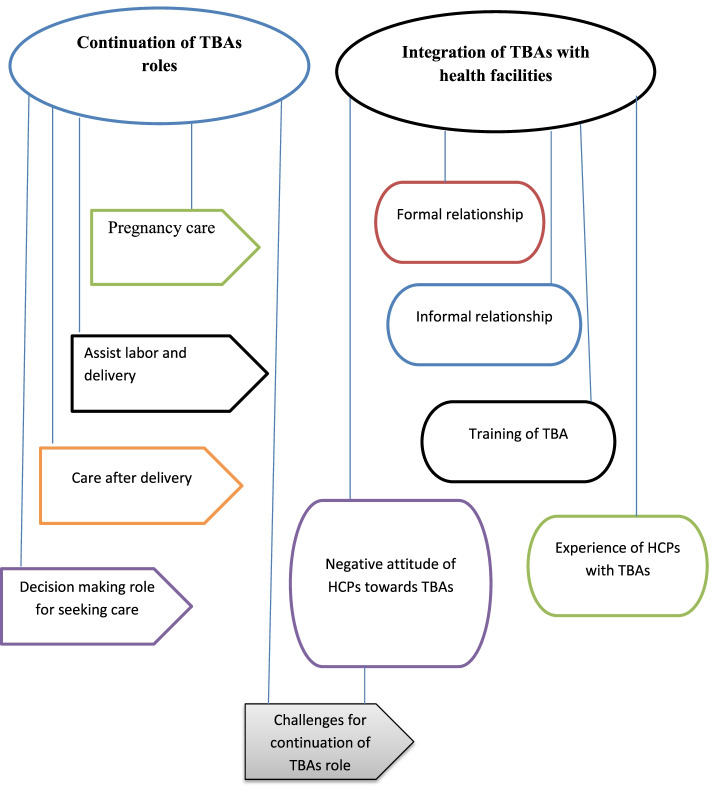
Mothers in rural Ethiopian communities prefer giving birth at home. In developing countries, traditional birth attendants play an important role in reducing the maternal mortality rate. In Ethiopia, however, their role during pregnancy, childbirth, the postnatal period, and their integration with health professionals is not clearly defined. This study aimed to explore the role of traditional birth attendants in feto-maternal care during pregnancy, childbirth, and the postnatal period, and integration with health professionals in the West Omo Zone, southern Ethiopia.
A qualitative descriptive design was used with triangulation of methods and data sources. We conducted in-depth interviews with traditional birth attendants, key informant interviews with health care professionals and community or religious leaders, and two focus group discussions with multiparous pregnant women. Each interview and focus group discussion was tape-recorded and the data obtained were transcribed and translated into English for analysis. The analysis was done based on thematic analysis framework.
Traditional birth attendants stated that they used herbal remedies to treat nausea and vomiting, decrease pain during labor, and increase pregnant women's desire to push. The absence of incentives for their work, shortage of logistics, and lack of training was mentioned as challenges to the continuity of their roles. All study participants explained the importance of training traditional birth attendants on maternal and child health in rural communities. However, health care professionals reported that few traditional birth attendants advised mothers about traditional practices such as milk tooth extraction and uvulectomy.
Traditional birth attendants continued their roles despite the existing challenges. There was no integration between TBA and the formal health care system. The need for training traditional birth attendants has been emphasized by all study participants and its impact on reducing feto-maternal death was recognized by health care professionals. Therefore, the federal ministry of health should works better for the development of TBAs to scale up their skills across all regions in the country.
农村埃塞俄比亚社区的母亲更喜欢在家分娩。在发展中国家,传统助产妇在降低产妇死亡率方面发挥着重要作用。然而,在埃塞俄比亚,她们在怀孕期间、分娩期间和产后的作用以及与卫生专业人员的融合情况并没有明确界定。本研究旨在探讨传统助产妇在胎儿-产妇护理方面的作用,以及她们在怀孕期间、分娩期间和产后与卫生专业人员的融合情况,以及在埃塞俄比亚南部西奥莫地区的融合情况。
采用定性描述设计,方法和数据源三角测量。我们对传统助产妇进行了深入访谈,对卫生保健专业人员和社区或宗教领袖进行了关键人物访谈,并对多胎孕妇进行了两次焦点小组讨论。每次访谈和焦点小组讨论都进行了录音,并将获得的数据转录为英文进行分析。分析是基于主题分析框架进行的。
传统助产妇表示,她们使用草药来治疗恶心和呕吐、减轻分娩时的疼痛以及增加孕妇的分娩意愿。工作没有激励、后勤物资短缺和缺乏培训被认为是她们角色连续性的挑战。所有研究参与者都解释了在农村社区培训传统助产妇进行母婴健康的重要性。然而,卫生保健专业人员报告说,很少有传统助产妇建议母亲进行传统做法,如拔牙和割舌系带。
尽管存在现有挑战,传统助产妇仍继续履行其职责。传统助产妇和正规医疗体系之间没有融合。所有研究参与者都强调了培训传统助产妇的必要性,卫生保健专业人员也认识到这对降低胎儿-产妇死亡的影响。因此,联邦卫生部应努力为传统助产妇的发展做出更好的工作,在全国所有地区扩大她们的技能。