Ogata Taiki, Hashiguchi Hironori, Hori Koyu, Hirobe Yuki, Ono Yumi, Sawada Hiroyuki, Inaba Akira, Orimo Satoshi, Miyake Yoshihiro
Department of Computer Science, Tokyo Institute of Technology, Yokohama, Japan.
Department of Computational Intelligence and System Science, Tokyo Institute of Technology, Yokohama, Japan.
Front Physiol. 2022 May 4;13:726677. doi: 10.3389/fphys.2022.726677. eCollection 2022.
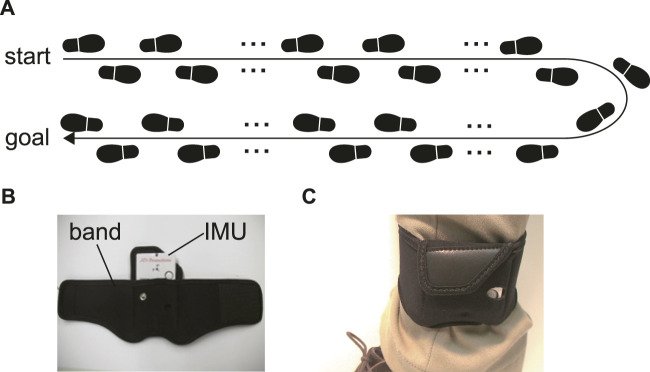
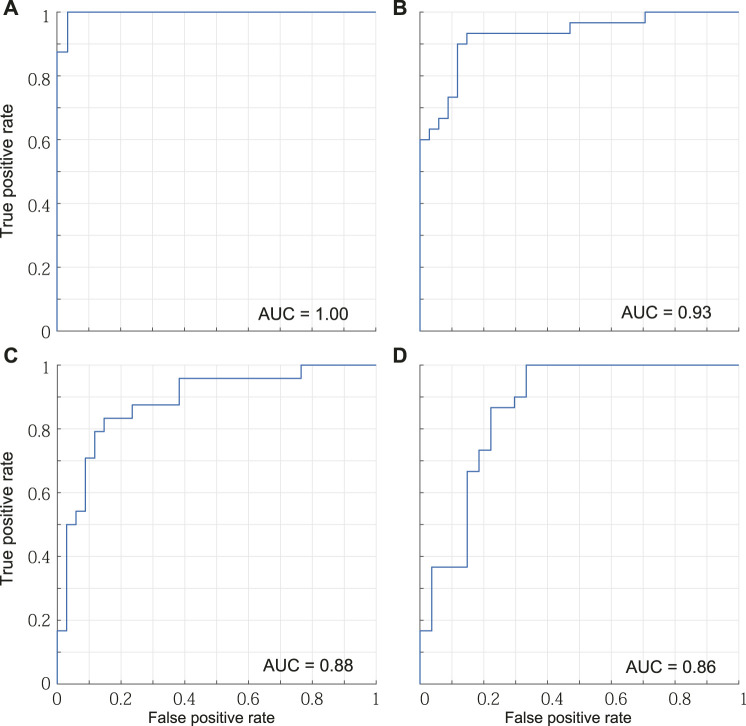
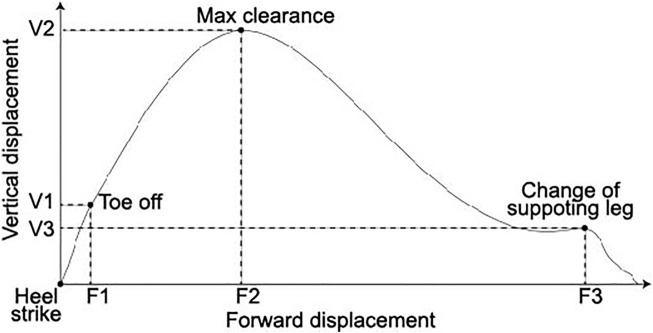
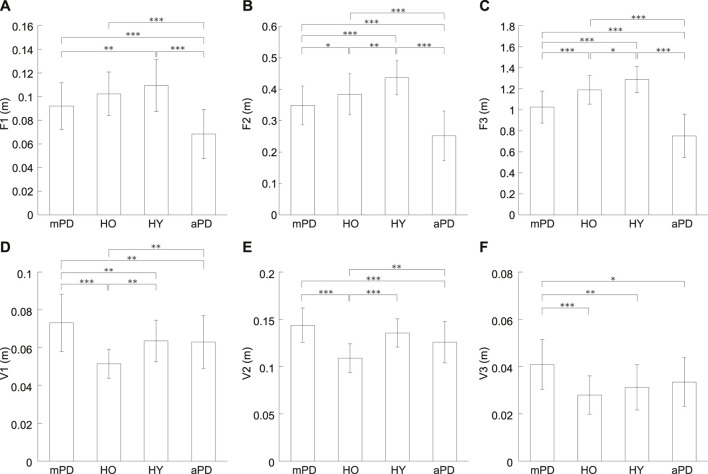
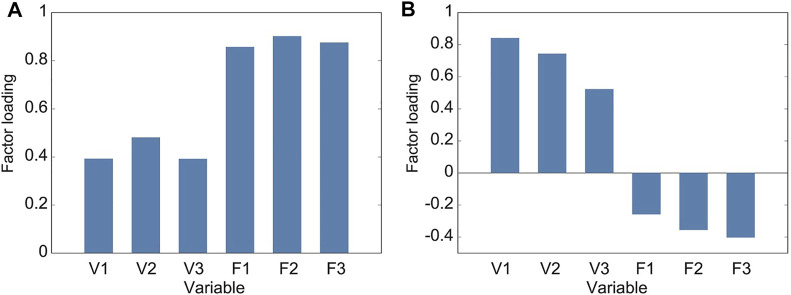
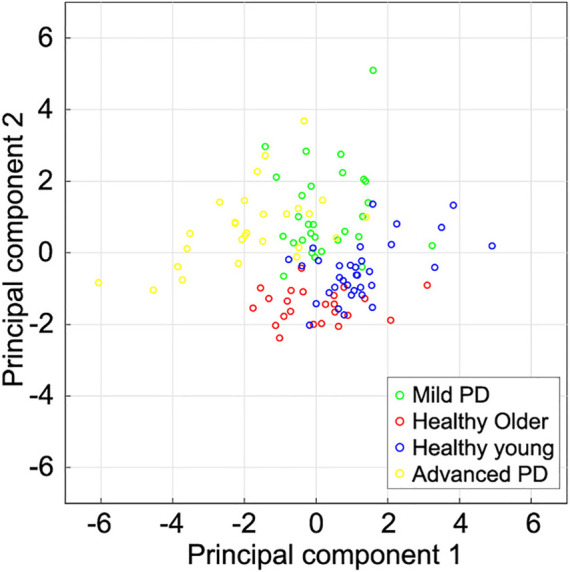
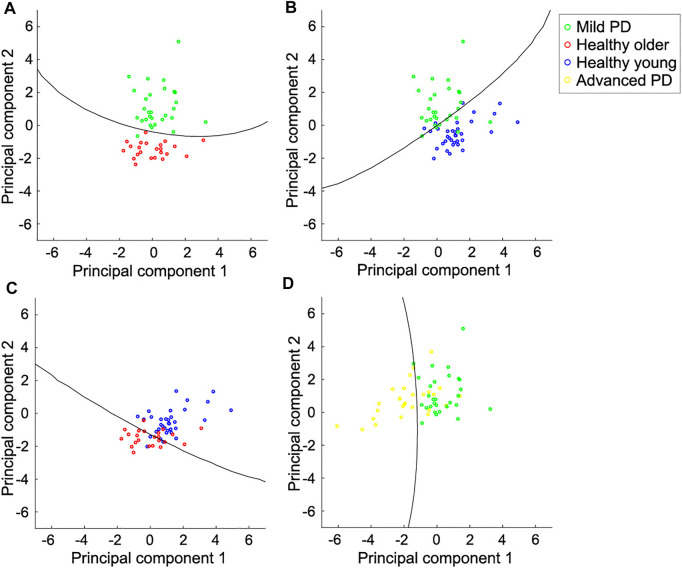
Parkinson's disease (PD) is a progressive neurological disorder characterized by movement disorders, such as gait instability. This study investigated whether certain spatial features of foot trajectory are characteristic of patients with PD. The foot trajectory of patients with mild and advanced PD in on-state and healthy older and young individuals was estimated from acceleration and angular velocity measured by inertial measurement units placed on the subject's shanks, just above the ankles. We selected six spatial variables in the foot trajectory: forward and vertical displacements from heel strike to toe-off, maximum clearance, and change in supporting leg (F1 to F3 and V1 to V3, respectively). Healthy young individuals had the greatest F2 and F3 values, followed by healthy older individuals, and then mild PD patients. Conversely, the vertical displacements of mild PD patients were larger than the healthy older individuals. Still, those of healthy older individuals were smaller than the healthy young individuals except for V3. All six displacements of the advanced PD patients were smaller than the mild PD patients. To investigate features in foot trajectories in detail, a principal components analysis and soft-margin kernel support vector machine was used in machine learning. The accuracy in distinguishing between mild PD patients and healthy older individuals and between mild and advanced PD patients was 96.3 and 84.2%, respectively. The vertical and forward displacements in the foot trajectory was the main contributor. These results reveal that large vertical displacements and small forward ones characterize mild and advanced PD patients, respectively.
帕金森病(PD)是一种进行性神经疾病,其特征为运动障碍,如步态不稳。本研究调查了足部轨迹的某些空间特征是否为帕金森病患者所特有。通过放置在受试者小腿(刚好位于脚踝上方)的惯性测量单元测量的加速度和角速度,估算了轻度和重度帕金森病患者在开启状态下以及健康老年人和年轻人的足部轨迹。我们在足部轨迹中选取了六个空间变量:从足跟触地到足趾离地的向前和垂直位移、最大间隙以及支撑腿的变化(分别为F1至F3和V1至V3)。健康年轻人的F2和F3值最大,其次是健康老年人,然后是轻度帕金森病患者。相反,轻度帕金森病患者的垂直位移大于健康老年人。不过,除V3外,健康老年人的垂直位移小于健康年轻人。重度帕金森病患者的所有六个位移均小于轻度帕金森病患者。为了详细研究足部轨迹的特征,在机器学习中使用了主成分分析和软间隔核支持向量机。区分轻度帕金森病患者与健康老年人以及轻度和重度帕金森病患者的准确率分别为96.3%和84.2%。足部轨迹中的垂直和向前位移是主要因素。这些结果表明,垂直位移大而向前位移小分别是轻度和重度帕金森病患者的特征。