Zhu Shilan, Lu Jinmiao, Lin Zhibing, Abuzeid Asmaa M I, Chen Xiaoyu, Zhuang Tingting, Gong Haiyan, Mi Rongsheng, Huang Yan, Chen Zhaoguo, Li Guoqing
Guangdong Provincial Key Laboratory of Zoonosis Prevention and Control, College of Veterinary Medicine, South China Agricultural University, Guangzhou, China.
Key Laboratory of Animal Parasitology of Ministry of Agriculture, Laboratory of Quality and Safety Risk Assessment for Animal Products on Biohazards (Shanghai) of Ministry of Agriculture, Shanghai Veterinary Research Institute, Chinese Academy of Agricultural Sciences, Shanghai, China.
Front Oncol. 2022 Apr 22;12:870528. doi: 10.3389/fonc.2022.870528. eCollection 2022.
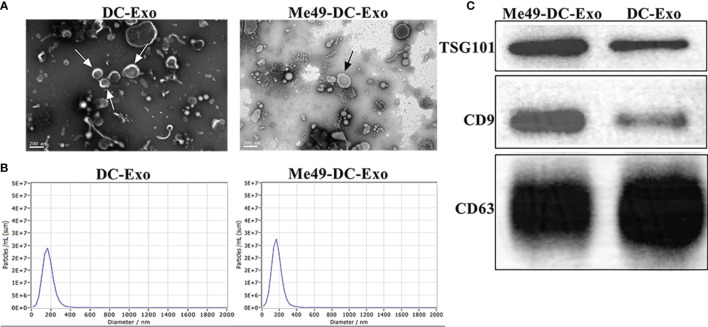
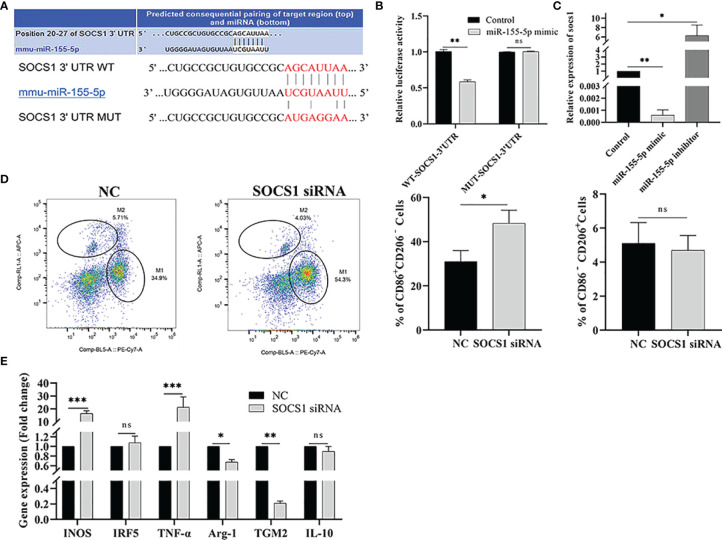
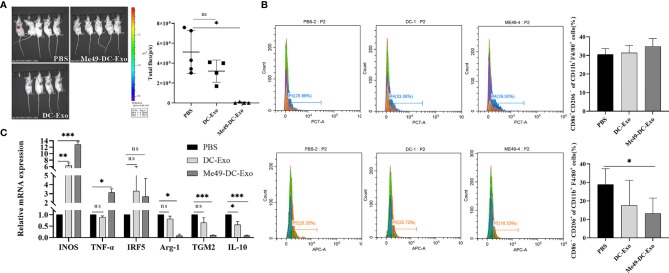
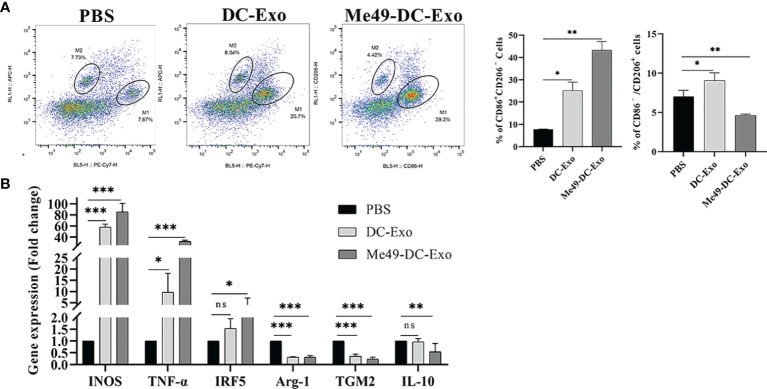
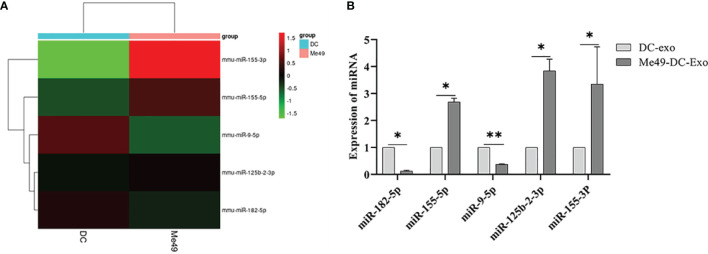
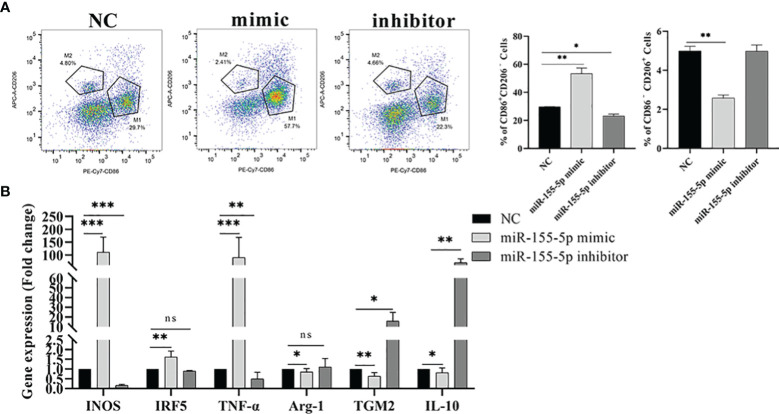
is an obligate intracellular protozoan with anti-tumor activity against a variety of cancers. However, the therapeutic effect of on colorectal cancer is unclear, and using direct infection in immunotherapy involves safety concerns. This study investigated the anti-tumoral effect and mechanism of exosomes derived from dendritic cells (DCs) infected with (Me49-DC-Exo). We used differential ultracentrifugation to isolate exosomes from uninfected DCs (DC-Exo) and Me49-infected DCs (Me49-DC-Exo). The isolated exosomes were identified by transmission electron microscopy, nanoparticle tracking analysis, and western blotting. Me49-DC-Exo significantly inhibited the tumor growth and reduced the proportion of M2 macrophages in the blood of tumor-bearing mice. , Me49-DC-Exo suppressed macrophage (RAW264.7) polarization to M2 phenotype. miRNA sequencing revealed that multiple miRNAs in Me49-DC-Exo were differentially expressed compared with DC-Exo, among which miR-182-5p, miR-155-5p, miR-125b-2-3p, and miR-155-3p were up-regulated, while miR-9-5p was significantly down-regulated. Transfecting mimics or inhibitors of these differential miRNAs into RAW264.7 cells showed that miR-155-5p promoted M1 macrophage polarization while inhibiting M2 macrophage polarization. Bioinformatics prediction and dual-luciferase reporter assay confirmed the suppressor of cytokine signaling 1 (SOCS1) as a direct target of miR-155-5p. Silencing SOCS1 gene expression in RAW264.7 cells increased CD86 CD206 M1 macrophage proportion, and inducible nitric oxide synthase and tumor necrosis factor-α mRNA levels. However, arginase-1 and transglutaminase 2 expression levels decreased. These results suggest that the exosomes inhibit macrophage polarization to M2 phenotype and regulate SOCS1 expression by delivering functional miR-155-5p. These findings provide new ideas for colorectal cancer immunotherapy.
是一种专性细胞内原生动物,对多种癌症具有抗肿瘤活性。然而,其对结直肠癌的治疗效果尚不清楚,且在免疫治疗中使用直接感染存在安全问题。本研究调查了感染(Me49-DC-Exo)的树突状细胞(DCs)来源的外泌体的抗肿瘤作用及其机制。我们使用差速超速离心法从未感染的DCs(DC-Exo)和感染Me49的DCs(Me49-DC-Exo)中分离外泌体。通过透射电子显微镜、纳米颗粒跟踪分析和蛋白质印迹法对分离出的外泌体进行鉴定。Me49-DC-Exo显著抑制荷瘤小鼠肿瘤生长并降低血液中M2巨噬细胞比例。此外,Me49-DC-Exo抑制巨噬细胞(RAW264.7)向M2表型极化。miRNA测序显示,与DC-Exo相比,Me49-DC-Exo中有多个miRNA差异表达,其中miR-182-5p、miR-155-5p、miR-125b-2-3p和miR-155-3p上调,而miR-9-5p显著下调。将这些差异miRNA的模拟物或抑制剂转染到RAW264.7细胞中表明,miR-155-5p促进M1巨噬细胞极化,同时抑制M2巨噬细胞极化。生物信息学预测和双荧光素酶报告基因检测证实细胞因子信号传导抑制因子1(SOCS1)是miR-155-5p的直接靶标。在RAW264.7细胞中沉默SOCS1基因表达可增加CD86+CD206-M1巨噬细胞比例以及诱导型一氧化氮合酶和肿瘤坏死因子-α mRNA水平。然而,精氨酸酶-1和转谷氨酰胺酶2表达水平降低。这些结果表明,外泌体通过传递功能性miR-155-5p抑制巨噬细胞向M2表型极化并调节SOCS1表达。这些发现为结直肠癌免疫治疗提供了新思路。