Lan Yan, Jin Chaonan, Kumar Pavitra, Yu Xia, Lenahan Cameron, Sheng Jifang
State Key Laboratory for Diagnosis and Treatment of Infectious Diseases, National Clinical Research Center for Infectious Diseases, Collaborative Innovation Center for Diagnosis and Treatment of Infectious Diseases, The First Affiliated Hospital, College of Medicine, Zhejiang University, Hangzhou, China.
Department for BioMedical Research, Hepatology, University of Bern, Bern, Switzerland.
Front Oncol. 2022 May 4;12:879205. doi: 10.3389/fonc.2022.879205. eCollection 2022.
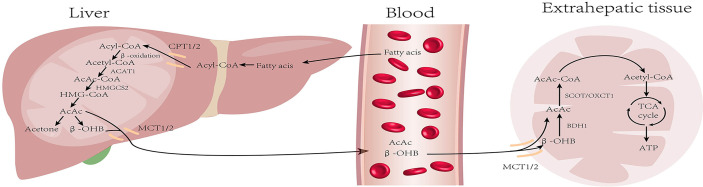
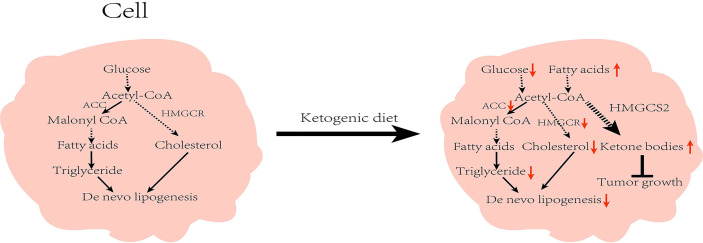
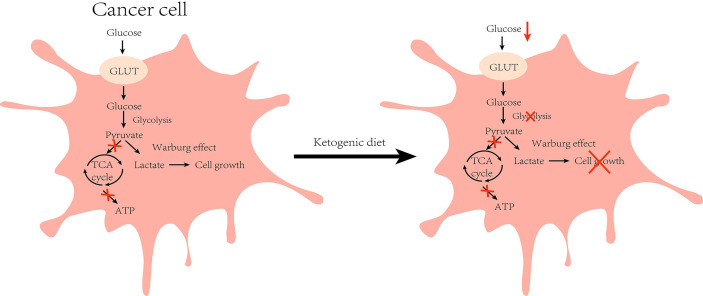
The ketogenic diet (KD) is a low-carbohydrate, high-fat diet regarded as a potential intervention for cancers owing to its effects on tumor metabolism and behavior. Hepatocellular carcinoma (HCC) is the most prevalent type of liver cancer, and its management is worth investigating because of the high fatality rate. Additionally, as the liver is the glucose and lipid metabolism center where ketone bodies are produced, the application of KD to combat HCC is promising. Prior studies have reported that KD could reduce the energy supply and affect the proliferation and differentiation of cancer cells by lowering the blood glucose and insulin levels. Furthermore, KD can increase the expression of hydroxymethylglutaryl-CoA synthase 2 (HMGCS2) in hepatocytes and regulate lipid metabolism to inhibit the progression of HCC. In addition, β-hydroxybutyrate can induce histone hyperacetylation and reduce the expression of inflammatory factors to alleviate damage to hepatocytes. However, there are few relevant studies at present, and the specific effects and safety of KD on HCC warrant further research. Optimizing the composition of KD and combining it with other therapies to enhance its anti-cancer effects warrant further exploration.
生酮饮食(KD)是一种低碳水化合物、高脂肪的饮食,由于其对肿瘤代谢和行为的影响,被视为癌症的一种潜在干预措施。肝细胞癌(HCC)是最常见的肝癌类型,因其高死亡率,其治疗方法值得研究。此外,由于肝脏是葡萄糖和脂质代谢中心,也是酮体产生的地方,应用生酮饮食对抗肝细胞癌很有前景。先前的研究报道,生酮饮食可以通过降低血糖和胰岛素水平来减少能量供应,并影响癌细胞的增殖和分化。此外,生酮饮食可以增加肝细胞中羟甲基戊二酰辅酶A合酶2(HMGCS2)的表达,并调节脂质代谢以抑制肝细胞癌的进展。此外,β-羟基丁酸可以诱导组蛋白高度乙酰化,并降低炎症因子的表达,以减轻对肝细胞的损伤。然而,目前相关研究较少,生酮饮食对肝细胞癌的具体作用和安全性值得进一步研究。优化生酮饮食的组成,并将其与其他疗法相结合以增强其抗癌效果,值得进一步探索。