Odeh-Couvertier Valerie Y, Dwarshuis Nathan J, Colonna Maxwell B, Levine Bruce L, Edison Arthur S, Kotanchek Theresa, Roy Krishnendu, Torres-Garcia Wandaliz
Department of Industrial Engineering University of Puerto Rico Mayagüez Mayagüez Puerto Rico USA.
The Wallace H. Coulter Department of Biomedical Engineering Georgia Institute of Technology Atlanta Georgia USA.
Bioeng Transl Med. 2022 Jan 4;7(2):e10282. doi: 10.1002/btm2.10282. eCollection 2022 May.
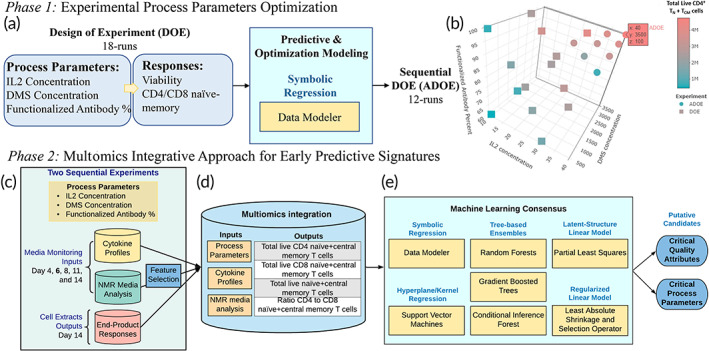
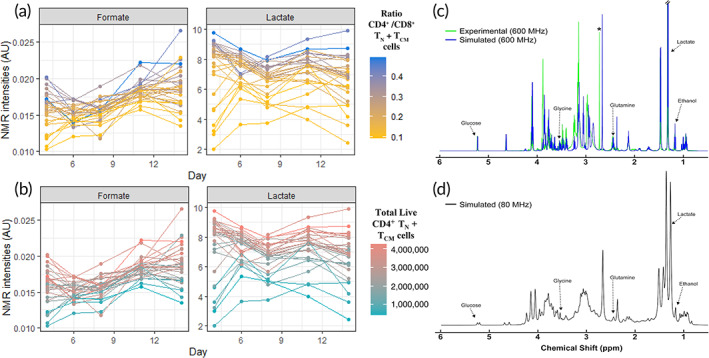
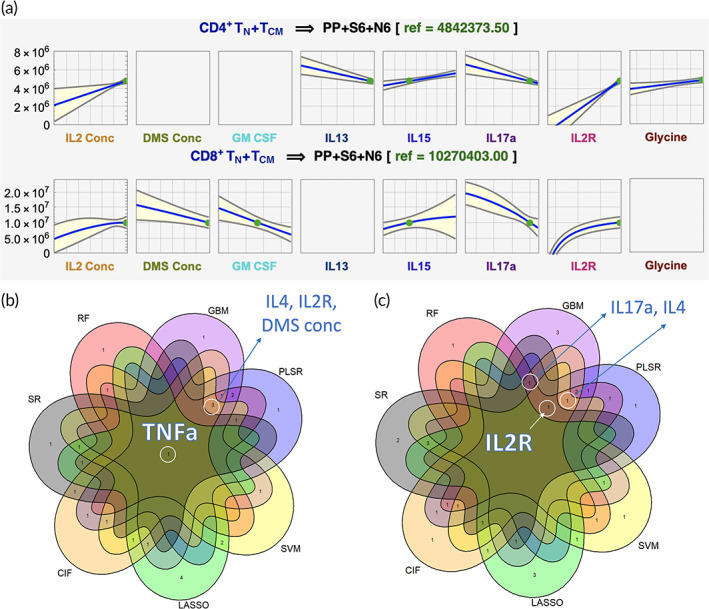
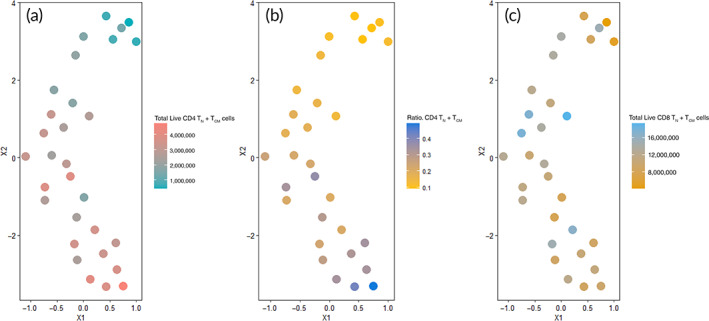
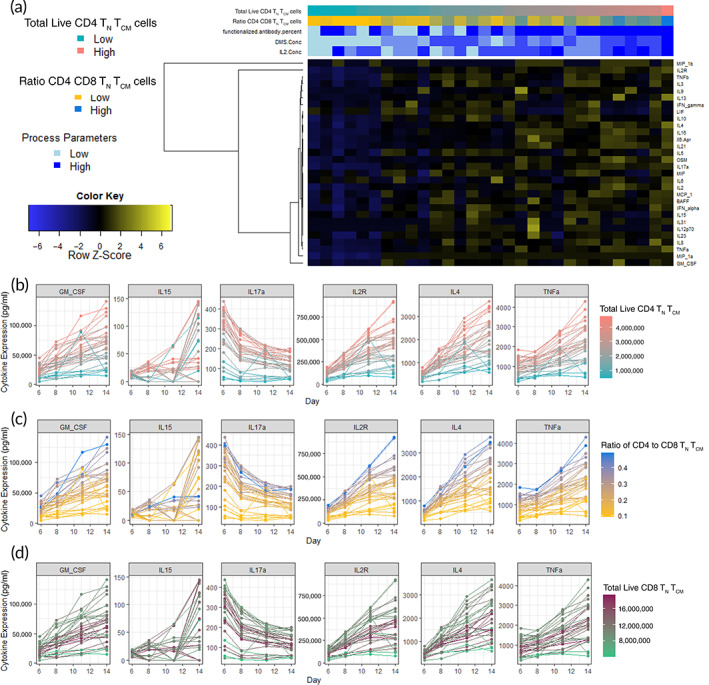
Large-scale, reproducible manufacturing of therapeutic cells with consistently high quality is vital for translation to clinically effective and widely accessible cell therapies. However, the biological and logistical complexity of manufacturing a living product, including challenges associated with their inherent variability and uncertainties of process parameters, currently make it difficult to achieve predictable cell-product quality. Using a degradable microscaffold-based T-cell process, we developed an artificial intelligence (AI)-driven experimental-computational platform to identify a set of critical process parameters and critical quality attributes from heterogeneous, high-dimensional, time-dependent multiomics data, measurable during early stages of manufacturing and predictive of end-of-manufacturing product quality. Sequential, design-of-experiment-based studies, coupled with an agnostic machine-learning framework, were used to extract feature combinations from early in-culture media assessment that were highly predictive of the end-product CD4/CD8 ratio and total live CD4 and CD8 naïve and central memory T cells (CD63LCCR7). Our results demonstrate a broadly applicable platform tool to predict end-product quality and composition from early time point in-process measurements during therapeutic cell manufacturing.
大规模、可重复生产始终保持高质量的治疗性细胞对于转化为临床有效且广泛可及的细胞疗法至关重要。然而,制造活体产品的生物学和后勤复杂性,包括与其固有变异性和工艺参数不确定性相关的挑战,目前使得难以实现可预测的细胞产品质量。利用基于可降解微支架的T细胞工艺,我们开发了一个人工智能(AI)驱动的实验-计算平台,以从异质、高维、随时间变化的多组学数据中识别一组关键工艺参数和关键质量属性,这些数据在制造早期阶段可测量,并能预测制造结束时的产品质量。基于实验设计的序贯研究,结合一个不可知的机器学习框架,用于从早期培养培养基评估中提取特征组合,这些特征组合能高度预测最终产品的CD4/CD8比率以及总活CD4和CD8初始及中央记忆T细胞(CD63LCCR7)。我们的结果展示了一个广泛适用的平台工具,可从治疗性细胞制造过程中的早期时间点测量预测最终产品质量和组成。