Lopez-Lopez Victor, Ome Yusuke, Kawamoto Yusuke, Ruiz Alvaro Gómez, Campos Ricardo Robles, Honda Goro
Department of Gastroenterological Surgery, Virgen de la Arrixaca Clinic and University Hospital, IMIB, Murcia, Spain.
Department of Gastroenterological Surgery, Minimally Invasive & Robotic Surgery Center, New Tokyo Hospital, Matsudo, Tokyo, Japan.
J Minim Invasive Surg. 2020 Mar 15;23(1):5-16. doi: 10.7602/jmis.2020.23.1.5.
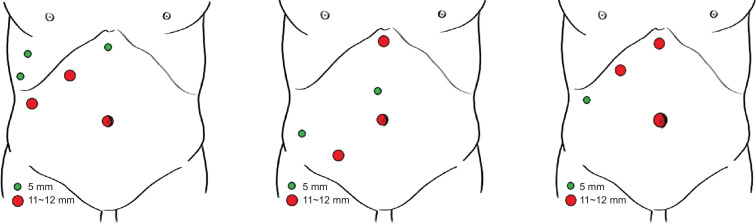
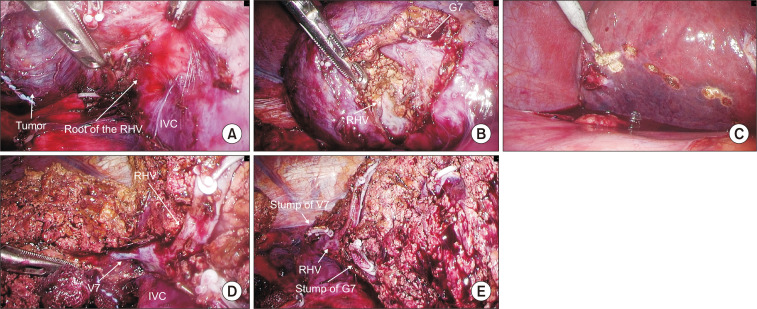
Since the beginning of laparoscopic liver surgery, resection of the posterosuperior segments has been considered one of the most challenging procedure due to its difficult access. The main drawbacks of the laparoscopic approach to dome lesions are poor visualization, the difficulty of instrumentation and the greater complexity in the control of bleeding. In the evolution of minimally invasive techniques from hybrid techniques to the current purely laparoscopic approaches, the different authors have established gradually the currents indications and surgical techniques to operate these segments with a similar feasibility and safety than open approach. The standardization in the patient position, the use of intercostal trocars, the learning curve in laparoscopic liver surgery, the management of the hepatic blood flow and the refinement of the technique in the extrahepatic and intrahepatic Glissonean pedicle approaches, has allowed to leave behind the initial contraindications about the laparoscopic approach in these segments. In the present review of the literature, the accumulated experience of the different groups in minimally invasive liver surgery together with the technological advances in the different laparoscopic devices have facilitated the resection of tumors in segments 7 and 8 with similar and even better results than open surgery.
自腹腔镜肝脏手术开展以来,由于后上段手术入路困难,其切除一直被认为是最具挑战性的手术之一。腹腔镜治疗肝顶部病变的主要缺点是视野不佳、器械操作困难以及控制出血的难度更大。在从杂交技术到当前纯粹腹腔镜技术的微创技术发展过程中,不同的作者逐渐确立了当前的适应证和手术技术,以在与开放手术相似的可行性和安全性下对这些肝段进行手术。患者体位的标准化、肋间套管针的使用、腹腔镜肝脏手术的学习曲线、肝血流的管理以及肝外和肝内Glissonean蒂入路技术的完善,使得这些肝段腹腔镜手术最初的禁忌证得以摒弃。在本次文献综述中,不同团队在微创肝脏手术方面积累的经验以及不同腹腔镜设备的技术进步,使得第7和第8肝段肿瘤的切除取得了与开放手术相似甚至更好的效果。