Hentschel Florian
Department of Gastroenterology and Hepatology Brandenburg Medical School (Theodor Fontane) Brandenburg Germany.
JGH Open. 2022 May 11;6(5):287-291. doi: 10.1002/jgh3.12750. eCollection 2022 May.
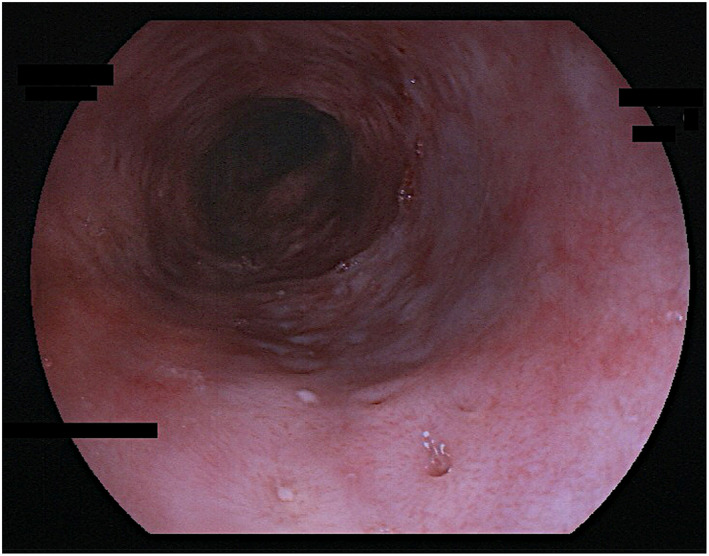
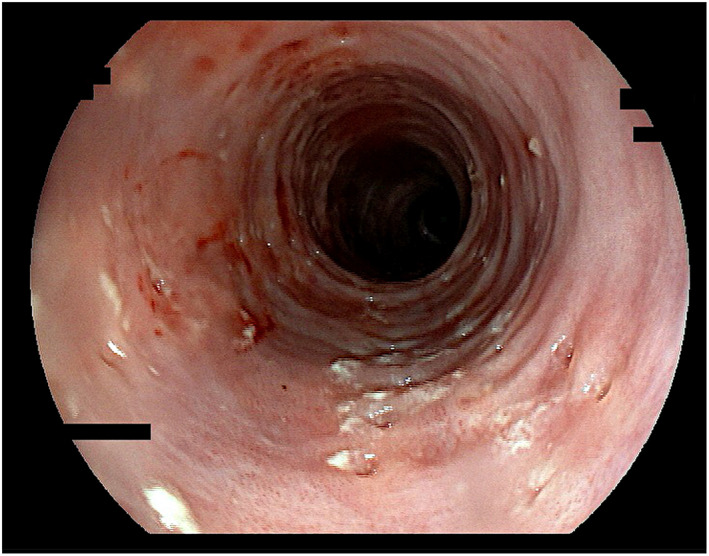
Diffuse esophageal intramural pseudo-diverticulosis (DEIPD) is a chronic fibrosing inflammation of the esophagus of unknown origin. Its name derives from the characteristic pseudo-diverticula formed by dilated ducts of submucosal glands. With an assumed prevalence of approximately 5-50/100 000, DEIPD is more frequent than previously estimated. It preferentially affects men between 50 and 70 years of age with a history of alcohol and tobacco abuse. Key symptoms are chronic dysphagia and food impactions. Typical endoscopic findings are multiple small, longitudinally aligned pseudo-diverticle openings and trachealization of the esophagus. Additionally, the usually gray mucosa may show a fine-grained pattern of very small red dots that merge into a pink tint, called "faux uni pattern." Once established, clinical symptoms and endoscopic changes persist throughout life. Although there is no known causal therapy, complications like bolus impactions, candida infections, or reflux can and should be treated.
弥漫性食管壁内假性憩室病(DEIPD)是一种病因不明的食管慢性纤维性炎症。其名称源于由黏膜下腺扩张导管形成的特征性假性憩室。据推测,其患病率约为5-50/10万,比之前估计的更为常见。它优先影响50至70岁有酗酒和吸烟史的男性。主要症状是慢性吞咽困难和食物嵌塞。典型的内镜检查结果是多个小的、纵向排列的假性憩室开口以及食管气管化。此外,通常呈灰色的黏膜可能会呈现出非常小的红点组成的细颗粒状图案,融合成粉红色调,称为“假单图案”。一旦形成,临床症状和内镜改变会终生持续。虽然尚无已知的病因治疗方法,但像食团嵌塞、念珠菌感染或反流等并发症是可以且应该进行治疗的。