Center for Internal Medicine II, Brandenburg Medical School Theodor Fontane, Brandenburg an der Havel, Germany.
Zentrum für Innere Medizin II, Hochschulklinikum Brandenburg der MHB, Hochstr. 29, 14770, Brandenburg an der Havel, Germany.
Esophagus. 2020 Oct;17(4):492-501. doi: 10.1007/s10388-020-00729-6. Epub 2020 Mar 11.
With 250 published cases worldwide, diffuse esophageal intramural pseudo-diverticulosis (DEIPD) is a poorly understood disease. The aim of this study was to determine the prevalence of DEIPD in our own population, identify risk factors and clinical symptoms, and characterize its typical endoscopic signs.
Retrospective search in our center's endoscopic and clinical database. Reviewing of all cases by re-examining stored endoscopic photographs. Reviewing of all cases regarding age, sex, risk factors, comorbidities, histology, and clinical symptoms.
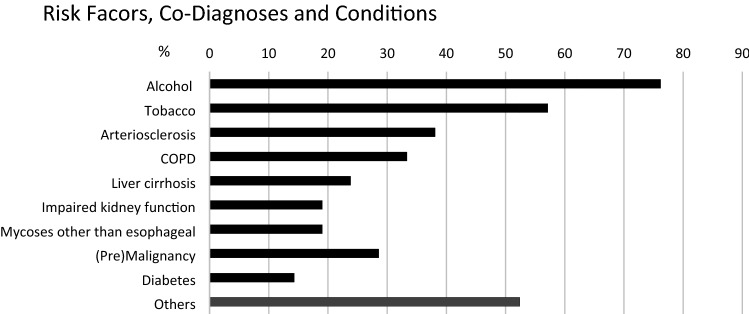
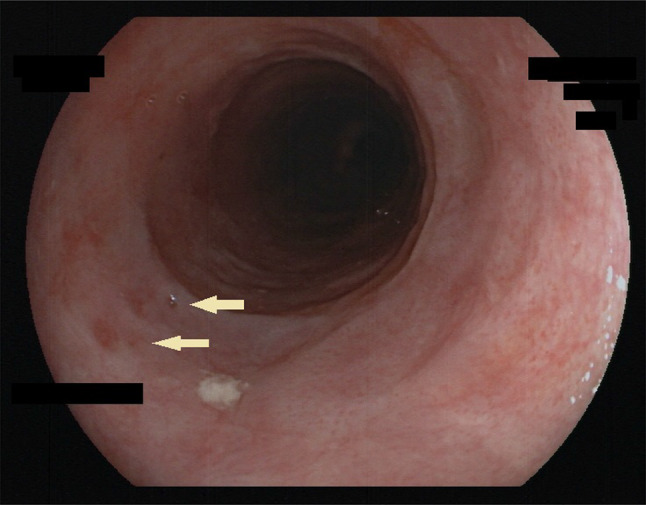
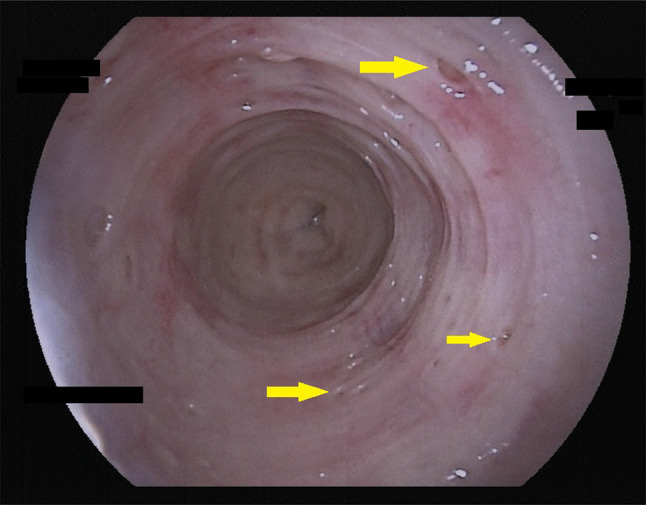
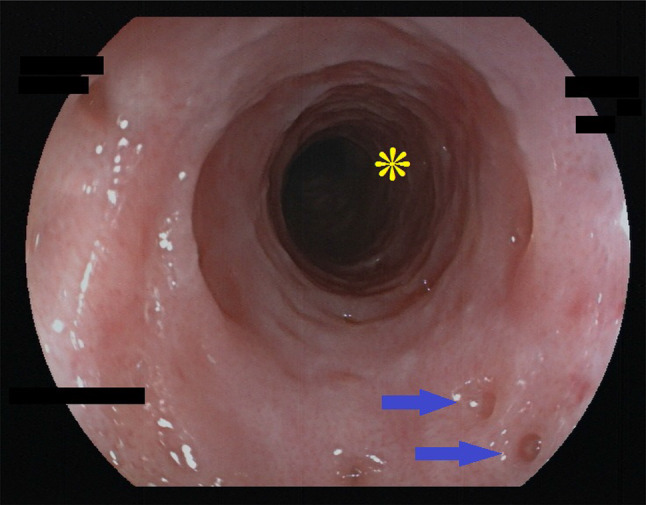
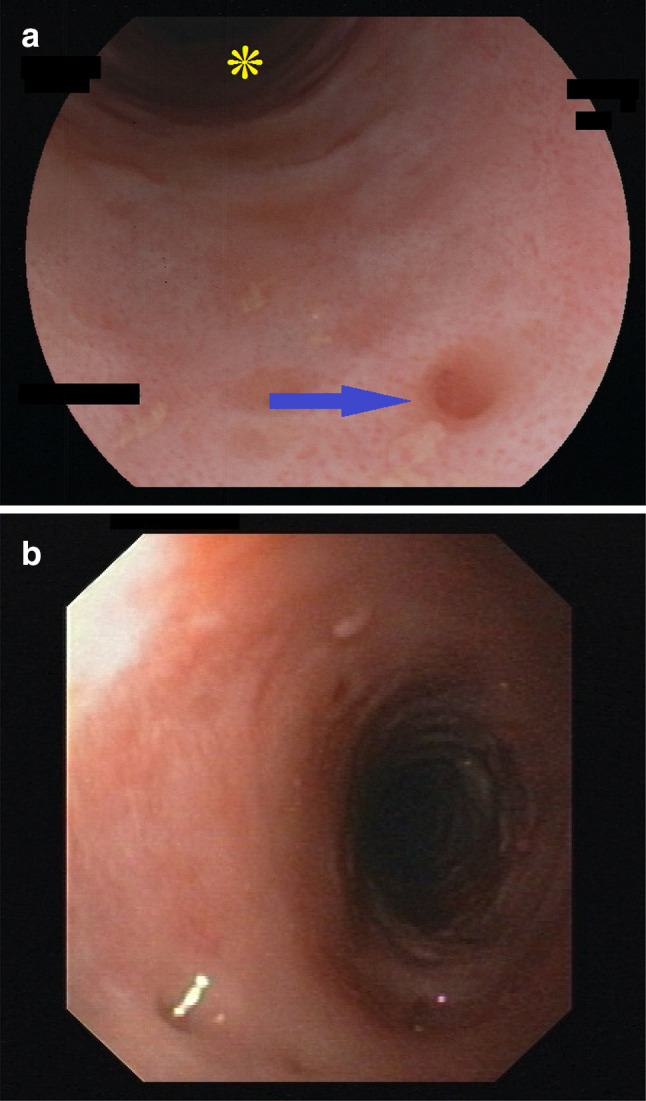
In a population of 150.000 we found 21 cases of DEIPD. Mean age was 56 ± 10 years. 86% were males, 76% had alcohol abuse, 57% had nicotine abuse, 38% had arteriosclerosis, 33% had COPD, 29% had malignancies, 24% had liver cirrhosis, 19% had impaired kidney function, and 15% had diabetes. Dysphagia was present in 62% and food bolus impaction (single or repeated) in 48%. Endoscopically, 95% of patients had multiple (> 4), small (0.25-2.5 mm) pseudodiverticle openings in the esophageal wall. In 62%, openings were aligned longitudinally. 86% showed edematous swelling of mucosa ("frosted glass look"), 76% showed a fine-grained pattern of small (10-100 µm) red dots ("faux uni pattern"), and 76% had a rigid, narrow lumen with multiple rings ("trachealization").
With a prevalence of approximately 5 to 50/100.000, DEIPD may be more frequent than previously estimated. It preferably affects middle-aged male alcoholics. Key symptoms are chronic dysphagia and food impaction. Typical endoscopic findings are multiple, small, longitudinally aligned pseudodiverticle openings, frosted glass look, faux uni pattern, and trachealization of the esophagus.
全球已有 250 例病例报道,弥漫性食管壁内假性憩室病(DEIPD)是一种了解甚少的疾病。本研究的目的是确定我们人群中 DEIPD 的患病率,确定其危险因素和临床症状,并描述其典型的内镜表现。
在我们中心的内镜和临床数据库中进行回顾性搜索。通过重新检查存储的内镜照片来重新检查所有病例。回顾所有病例的年龄、性别、危险因素、合并症、组织学和临床症状。
在 150000 人的人群中,我们发现了 21 例 DEIPD。平均年龄为 56±10 岁。86%为男性,76%有酗酒,57%有尼古丁滥用,38%有动脉硬化,33%有 COPD,29%有恶性肿瘤,24%有肝硬化,19%有肾功能不全,15%有糖尿病。62%的患者有吞咽困难,48%的患者有食物团块嵌塞(单发或多发)。内镜下,95%的患者食管壁有多个(>4 个)、小(0.25-2.5 毫米)假性憩室开口。62%的开口呈纵向排列。86%的患者黏膜呈水肿肿胀(“磨砂玻璃样外观”),76%的患者有细小(10-100 微米)红点的细颗粒状模式(“假性 uni 样外观”),76%的患者食管腔狭窄,有多个环形(“气管样化”)。
DEIPD 的患病率约为 5 至 50/100000,可能比以前估计的更为常见。它主要影响中年男性酗酒者。主要症状是慢性吞咽困难和食物嵌塞。典型的内镜表现是多个、小的、纵向排列的假性憩室开口、磨砂玻璃样外观、假性 uni 样外观和食管气管样化。