Koide Takahiro, Koyanagi-Aoi Michiyo, Uehara Keiichiro, Kakeji Yoshihiro, Aoi Takashi
Division of Advanced Medical Science, Graduate School of Science, Technology and Innovation, Kobe University, Kobe, Japan.
Department of iPS Cell Applications, Graduate School of Medicine, Kobe University, Kobe, Japan.
iScience. 2022 Apr 28;25(5):104314. doi: 10.1016/j.isci.2022.104314. eCollection 2022 May 20.
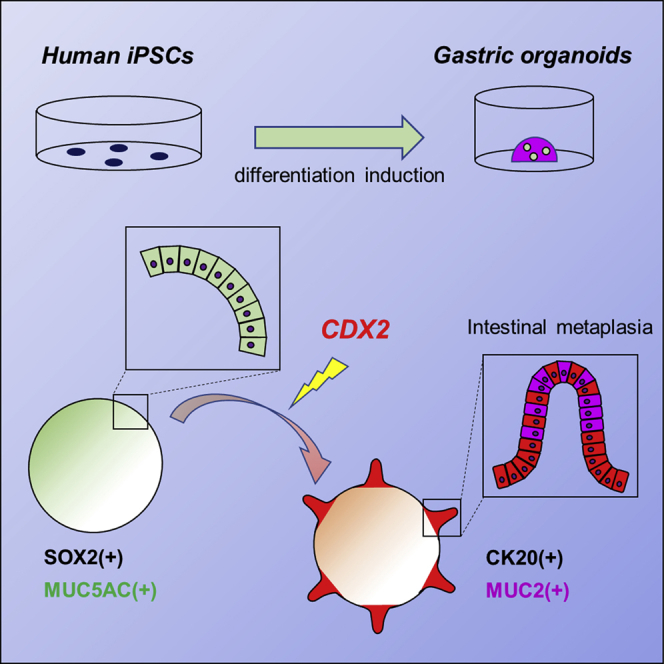
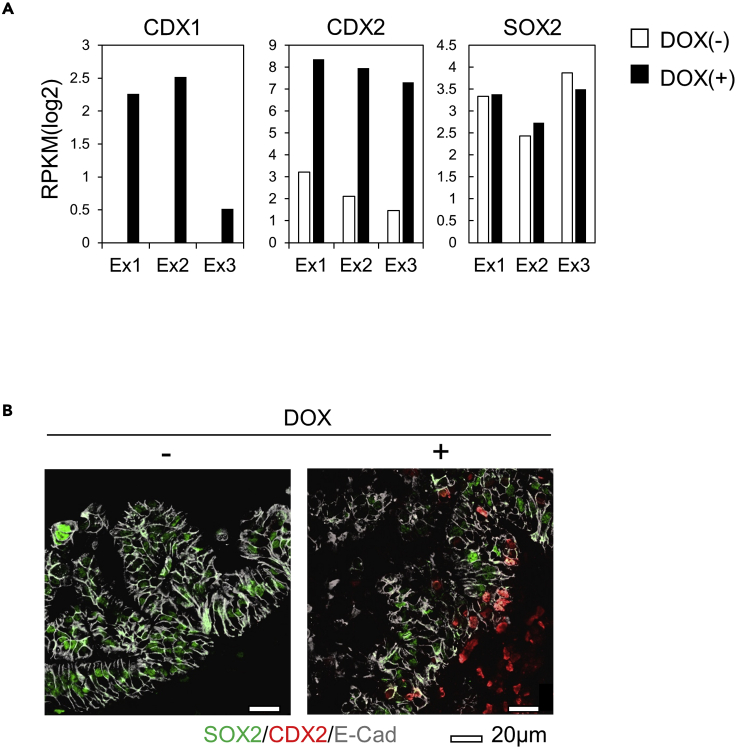
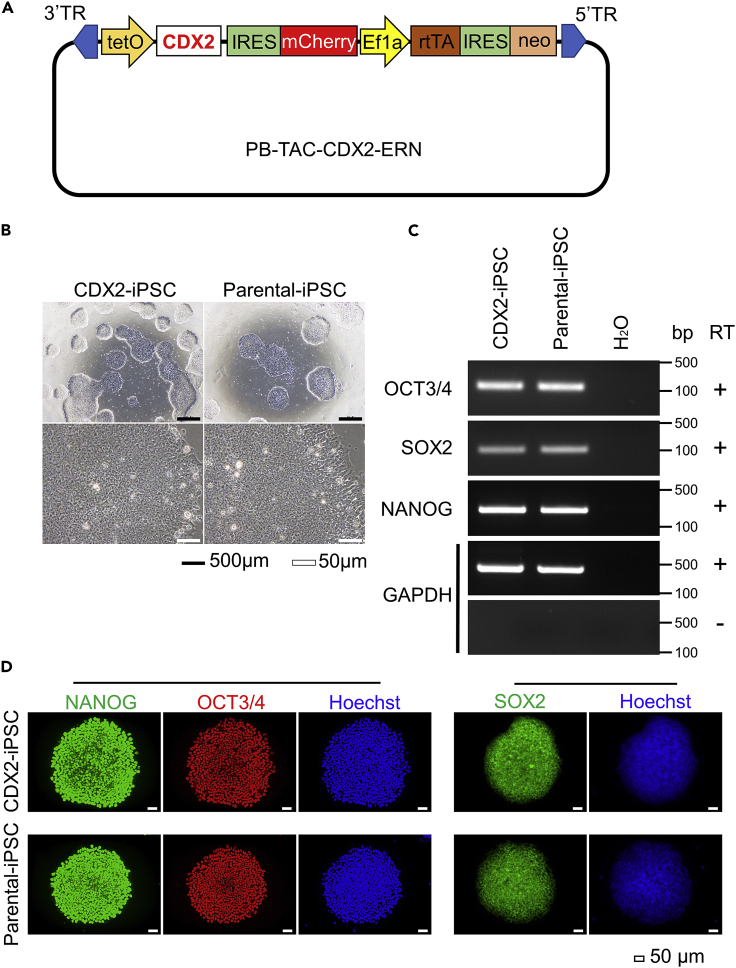
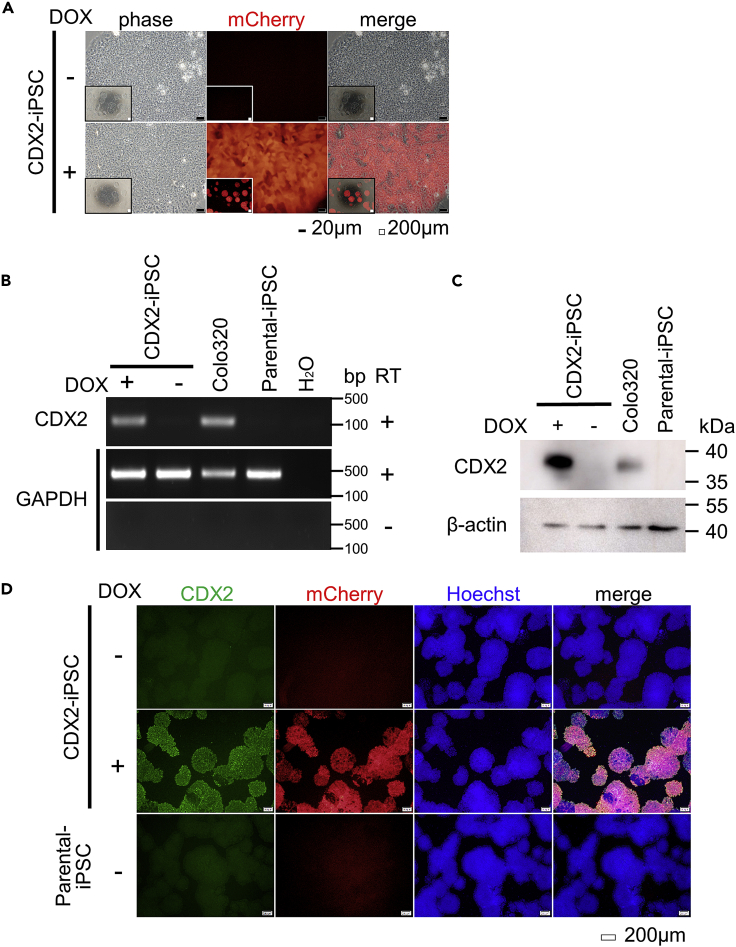
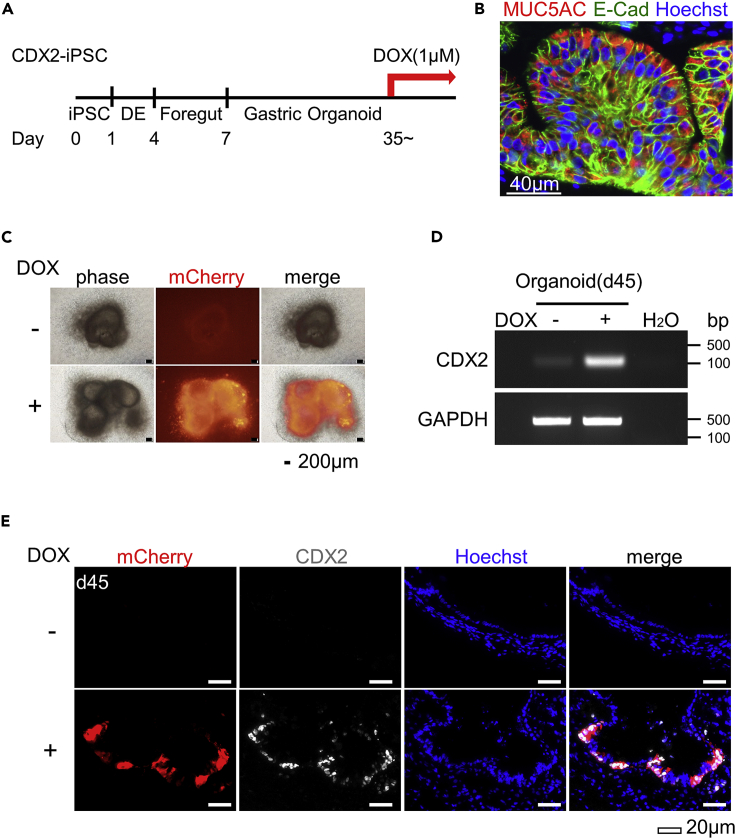
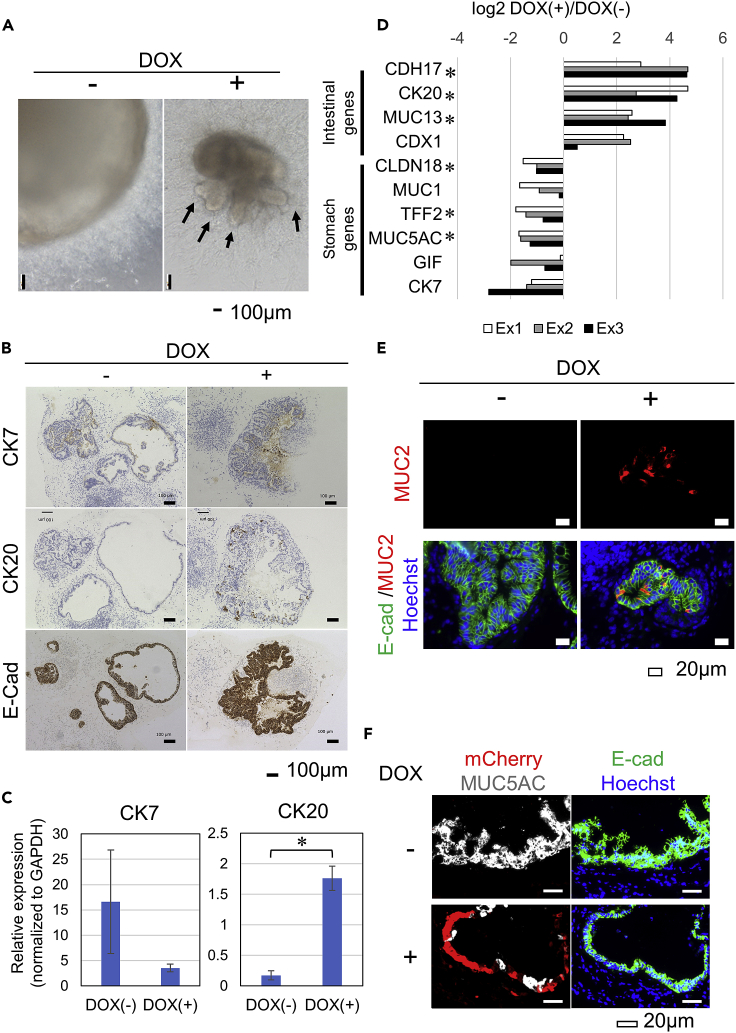
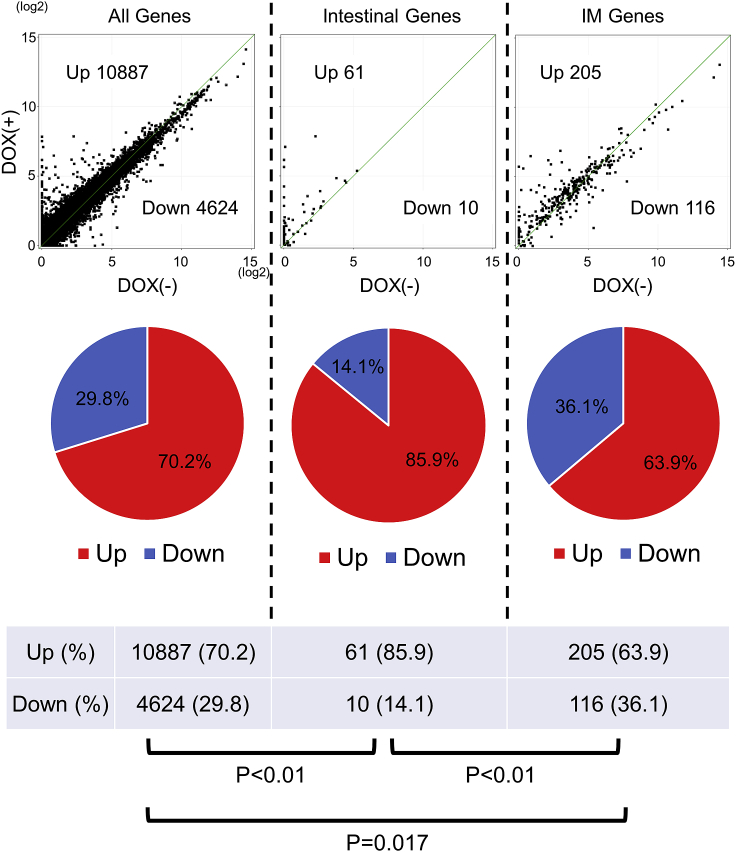
Intestinal metaplasia is related to gastric carcinogenesis. Previous studies have suggested the important role of CDX2 in intestinal metaplasia, and several reports have shown that the overexpression of CDX2 in mouse gastric mucosa caused intestinal metaplasia. However, no study has examined the induction of intestinal metaplasia using human gastric mucosa. In the present study, to produce an intestinal metaplasia model in human gastric mucosa , we differentiated human-induced pluripotent stem cells (hiPSC) to gastric organoids, followed by the overexpression of CDX2 using a tet-on system. The overexpression of CDX2 induced, although not completely, intestinal phenotypes and the enhanced expression of many, but not all, intestinal genes and previously reported intestinal metaplasia-related genes in the gastric organoids. This model can help clarify the mechanisms underlying intestinal metaplasia and carcinogenesis in human gastric mucosa and develop therapies to restitute precursor conditions of gastric cancer to normal mucosa.
肠化生与胃癌发生相关。既往研究提示CDX2在肠化生中起重要作用,且有多项报道表明CDX2在小鼠胃黏膜中过表达可导致肠化生。然而,尚无研究使用人胃黏膜来检测肠化生的诱导情况。在本研究中,为了在人胃黏膜中构建肠化生模型,我们将人诱导多能干细胞(hiPSC)分化为胃类器官,随后使用四环素诱导表达系统使CDX2过表达。CDX2的过表达诱导胃类器官出现了(虽不完全)肠型表型,并增强了许多(但并非全部)肠道基因以及先前报道的与肠化生相关基因的表达。该模型有助于阐明人胃黏膜肠化生及癌变的潜在机制,并开发将胃癌前状态恢复至正常黏膜的治疗方法。