Li Yuan, Chen Jiena, Li Tao, Lin Jie, Zheng Haocheng, Johnson Nadia, Yao Xuebiao, Ding Xia
N ational Institute of Traditional Chinese Medicine Constitution and Preventive Treatment of Diseases, Beijing University of Chinese Medicine, Beijing 100029, China.
School of Traditional Chinese Medicine, Beijing University of Chinese Medicine, Beijing 100029, China.
J Mol Cell Biol. 2024 Dec 20;16(7). doi: 10.1093/jmcb/mjae030.
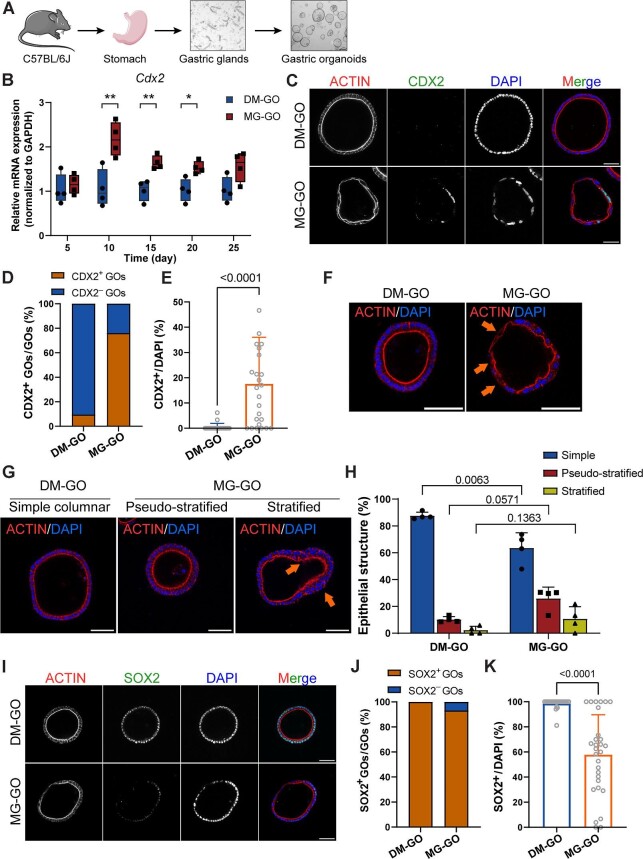
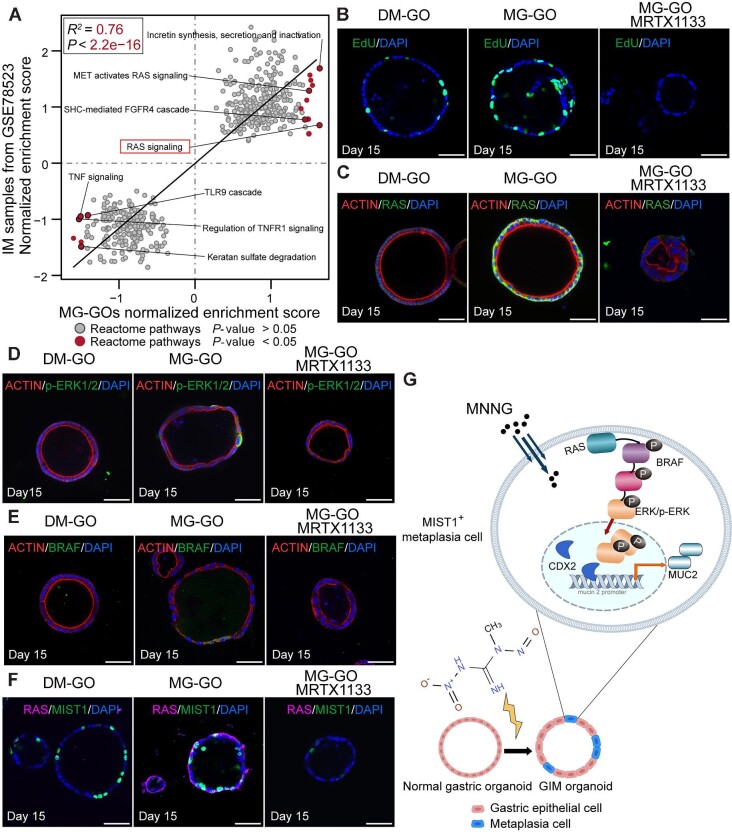
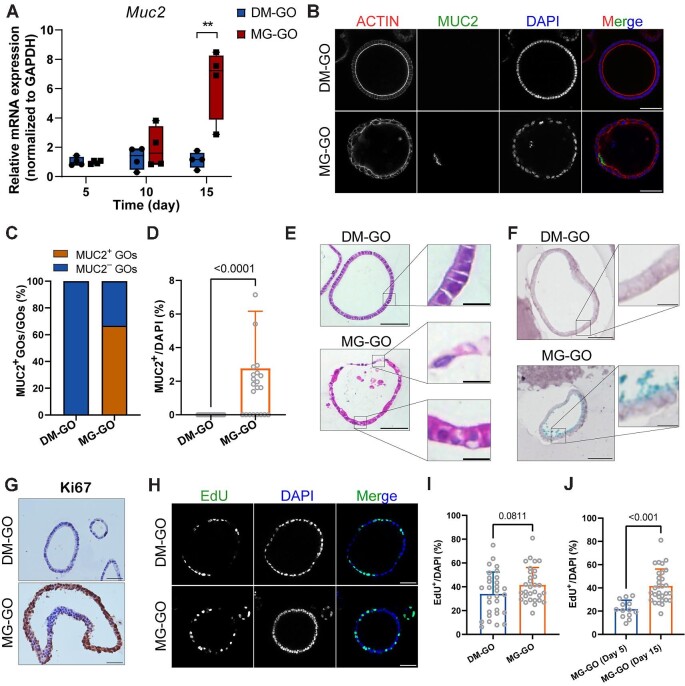
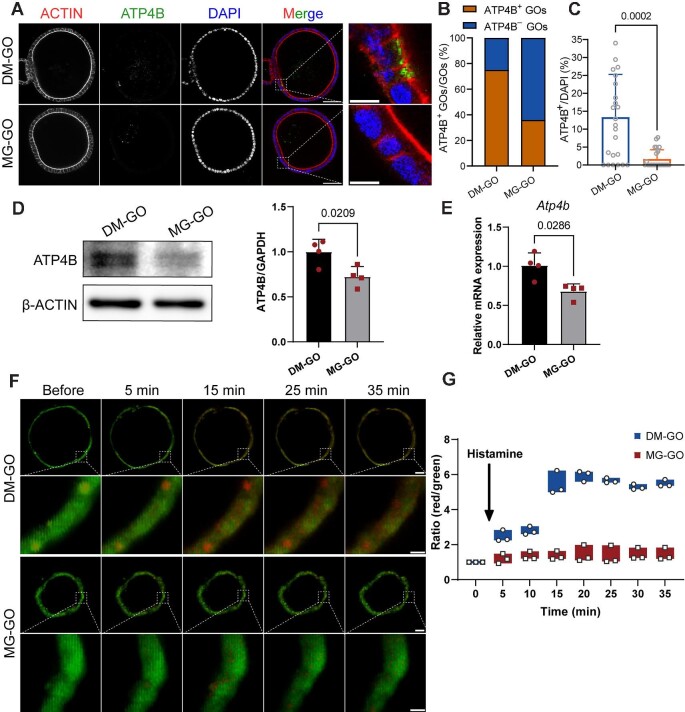
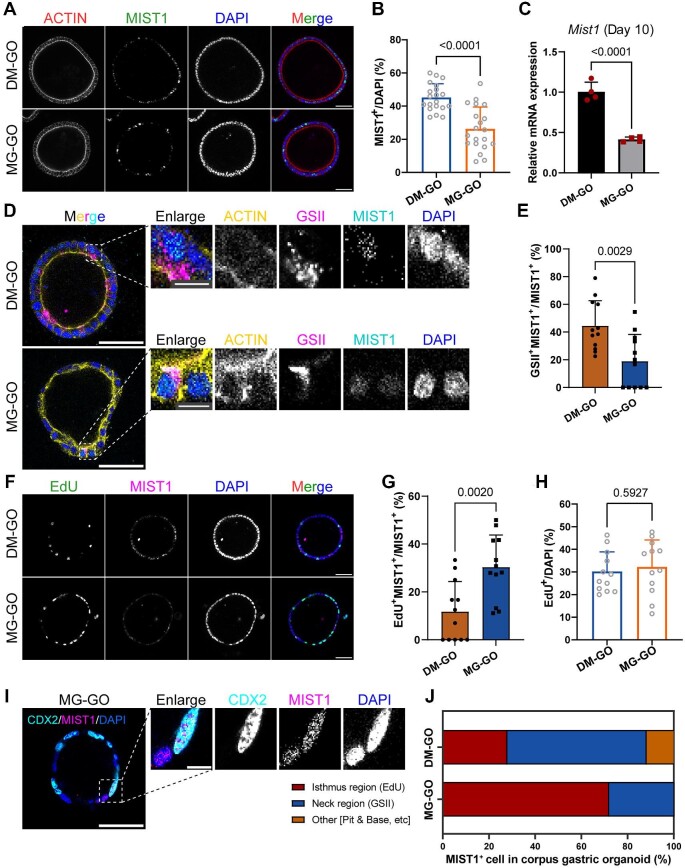
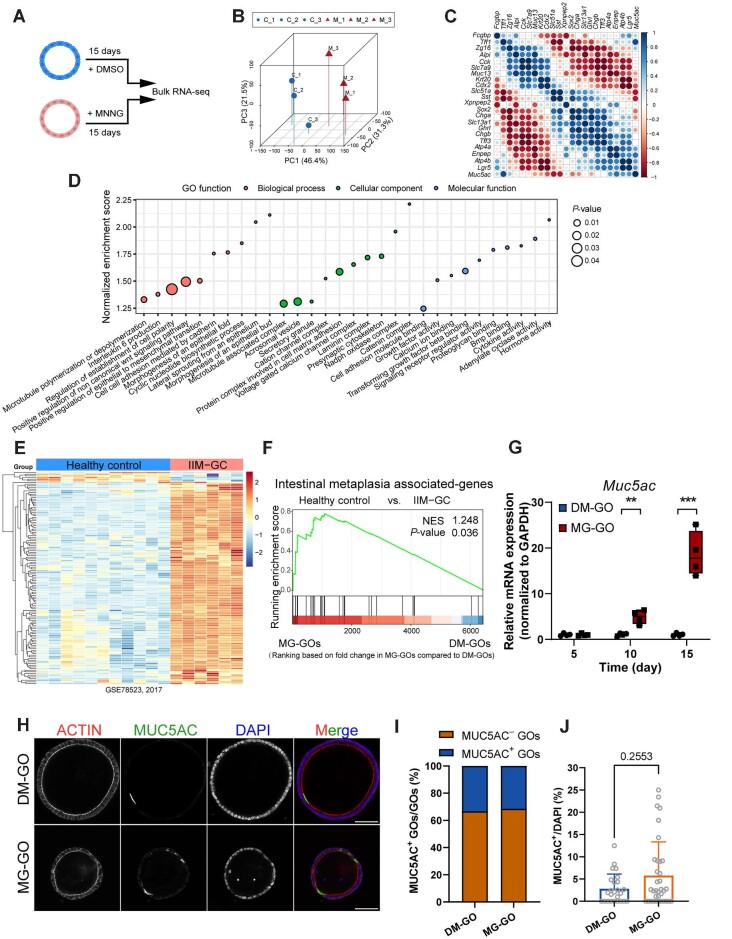
Gastric intestinal metaplasia (GIM) represents a precancerous stage characterized by morphological and pathophysiological changes in the gastric mucosa, where gastric epithelial cells transform into a phenotype resembling that of intestinal cells. Previous studies have demonstrated that the intragastric administration of N-methyl-N'-nitro-N-nitrosoguanidine (MNNG) induces both gastric carcinoma and intestinal metaplasia in mice. Here, we show that MNNG induces GIM in three-dimensional (3D) mouse organoids. Our histological analyses reveal that MNNG-induced gastric organoids undergo classical morphological alterations, exhibiting a distinct up-regulation of CDX2 and MUC2, along with a down-regulation of ATP4B and MUC6. Importantly, metaplastic cells observed in MNNG-treated organoids originate from MIST1+ cells, indicating their gastric chief cell lineage. Functional analyses show that activation of the RAS signaling pathway drives MNNG-induced metaplasia in 3D organoids, mirroring the characteristics observed in human GIM. Consequently, modeling intestinal metaplasia using 3D organoids offers valuable insights into the molecular mechanisms and spatiotemporal dynamics of the gastric epithelial lineage during the development of intestinal metaplasia within the gastric mucosa. We conclude that the MNNG-induced metaplasia model utilizing 3D organoids provides a robust platform for developing preventive and therapeutic strategies to mitigate the risk of gastric cancer before precancerous lesions occur.
胃黏膜肠化生(GIM)是一种癌前阶段,其特征是胃黏膜发生形态学和病理生理学变化,胃上皮细胞转变为类似肠细胞的表型。先前的研究表明,给小鼠胃内注射N-甲基-N'-硝基-N-亚硝基胍(MNNG)可诱导胃癌和肠化生。在此,我们表明MNNG可在三维(3D)小鼠类器官中诱导GIM。我们的组织学分析显示,MNNG诱导的胃类器官发生经典的形态学改变,表现为CDX2和MUC2明显上调,同时ATP4B和MUC6下调。重要的是,在MNNG处理的类器官中观察到的化生细胞起源于MIST1+细胞,表明它们来自胃主细胞谱系。功能分析表明,RAS信号通路的激活驱动MNNG诱导的3D类器官化生,这与在人类GIM中观察到的特征相似。因此,使用3D类器官模拟肠化生为深入了解胃黏膜内肠化生发展过程中胃上皮谱系的分子机制和时空动态提供了有价值的见解。我们得出结论,利用3D类器官的MNNG诱导化生模型为制定预防和治疗策略以降低癌前病变发生前胃癌风险提供了一个强大的平台。