Department of Pharmacology and Toxicology, Indiana University School of Medicine, Indianapolis, Indiana, USA.
Department of Microbiology and Immunology, Indiana University School of Medicine, Indianapolis, Indiana, USA.
mSphere. 2022 Jun 29;7(3):e0005222. doi: 10.1128/msphere.00052-22. Epub 2022 May 23.
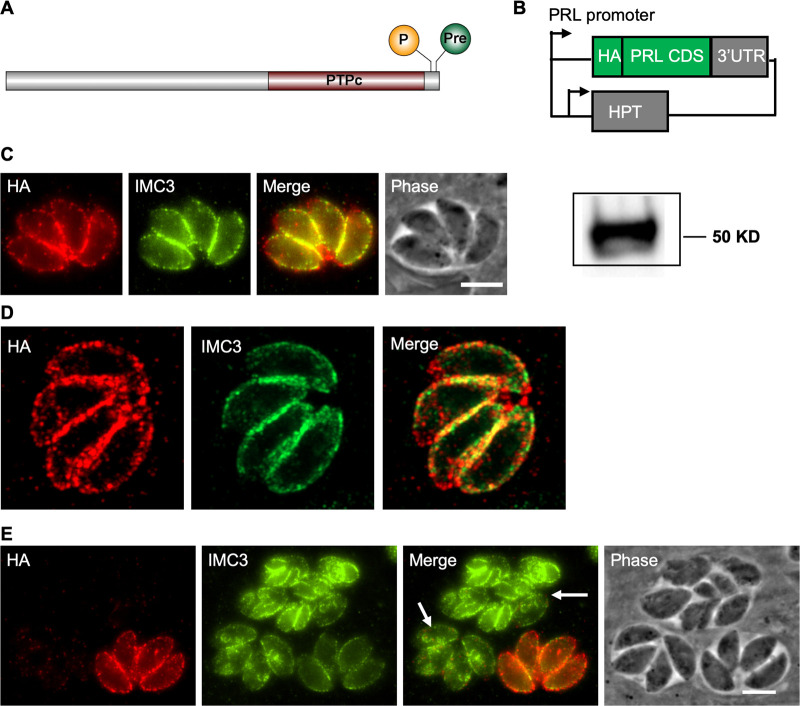
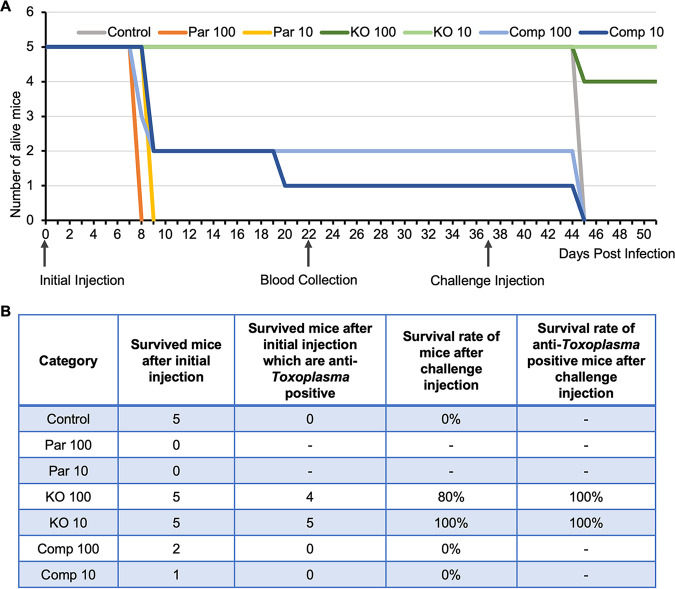
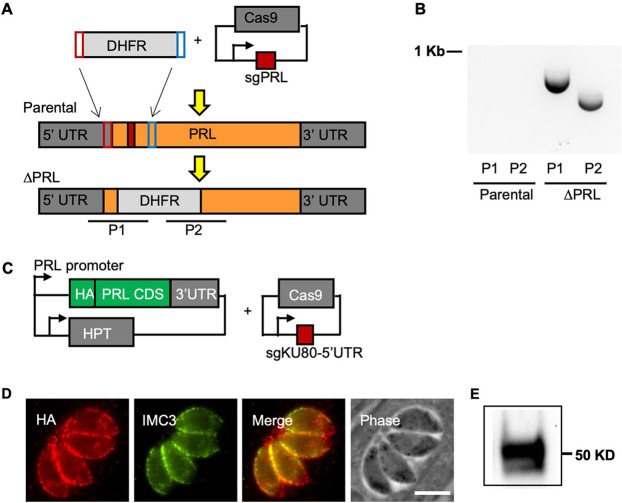
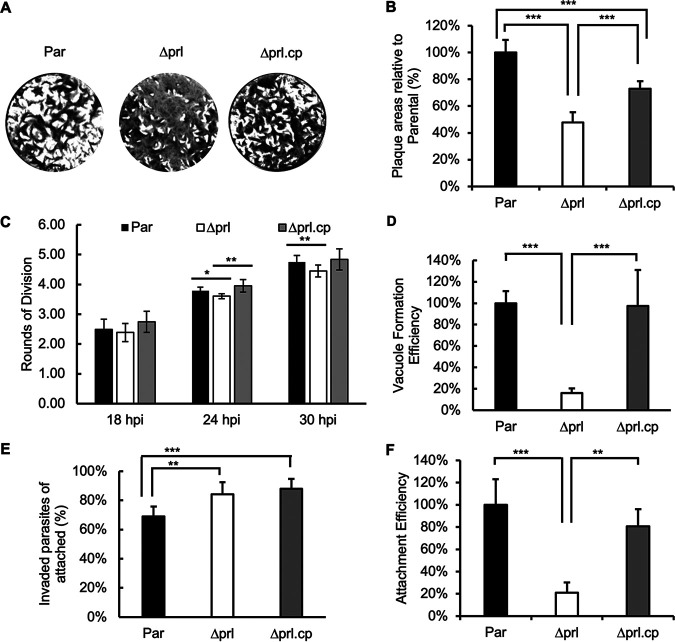
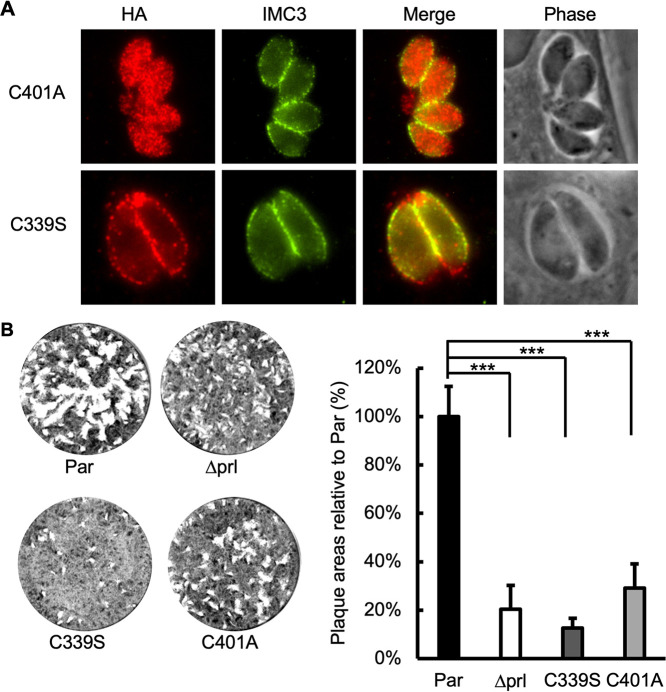
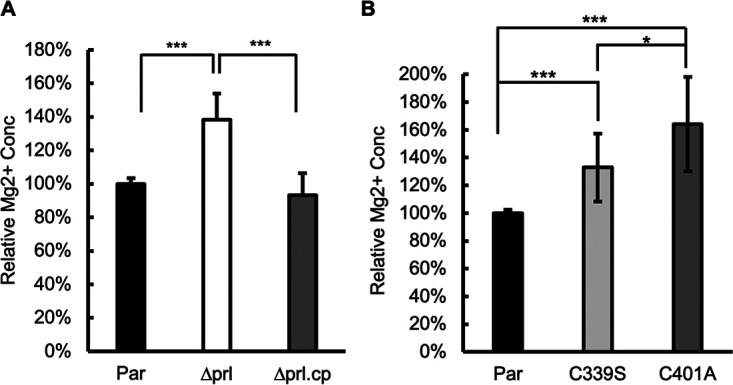
The pathogenesis of Toxoplasma gondii is mainly due to tissue damage caused by the repeating lytic cycles of the parasite. Many proteins localized to the pellicle of the parasite, particularly kinases, have been identified as critical regulators of the lytic cycle. However, little is known about the associated protein phosphatases. Phosphatase of regenerating liver (PRL), a highly conserved tyrosine phosphatase, is an oncoprotein that plays pivotal roles in mammalian cells and typically associates with membranes via a conserved prenylation site. PRL in has a predicted prenylation motif in the C terminus, like other homologs. We have determined that T. gondii PRL (TgPRL) localizes to the plasma membrane and that disruption of TgPRL results in a defect in the parasite's ability to attach to host cells. This function is dependent on both TgPRL's membrane localization and phosphatase activity. Importantly, experiments have shown that while mice infected with parental strain parasites die within days of infection, those infected with parasites lacking TgPRL not only survive but also develop immunity that confers protection against subsequent infection with wild-type parasites. Immunoprecipitation experiments revealed that the PRL-CNNM (cyclin M) complex, which regulates intracellular Mg homeostasis in mammalian cells, is also present in . Consistent with this interaction, parasites lacking TgPRL had higher intracellular Mg levels than the parental or complemented strains, suggesting TgPRL is involved in regulating intracellular Mg homeostasis. Thus, TgPRL is a vital regulator of the lytic cycle and virulence, showing its potential as a target of therapeutic intervention. Infection with Toxoplasma gondii can lead to severe and even life-threatening diseases in people with compromised or suppressed immune systems. Unfortunately, drugs to combat the parasite are limited, highly toxic, and ineffective against the chronic stage of the parasite. Consequently, there is a strong demand for the discovery of new treatments. A comprehensive understanding of how the parasite propagates in the host cells and which proteins contribute to the parasite's virulence will facilitate the discovery of new drug targets. Our study meets this objective and adds new insights to understanding the lytic cycle regulation and virulence of by determining that the protein phosphatase TgPRL plays a vital role in the parasite's ability to attach to host cells and that it is essential for parasite virulence.
刚地弓形虫的发病机制主要是由于寄生虫重复裂解周期引起的组织损伤。许多定位于寄生虫囊膜的蛋白质,特别是激酶,已被鉴定为裂解周期的关键调节剂。然而,与相关蛋白磷酸酶有关的信息却知之甚少。肝再生磷酸酶(PRL)是一种高度保守的酪氨酸磷酸酶,是一种癌蛋白,在哺乳动物细胞中发挥着关键作用,通常通过保守的prenylation 位点与膜结合。具有预测的 prenylation 基序在 C 末端,与其他同源物相似。我们已经确定刚地弓形虫 PRL(TgPRL)定位于质膜,并且 TgPRL 的破坏导致寄生虫附着到宿主细胞的能力缺陷。这种功能依赖于 TgPRL 的膜定位和磷酸酶活性。重要的是,实验表明,虽然感染亲本株寄生虫的小鼠在感染后几天内死亡,但感染缺乏 TgPRL 的寄生虫的小鼠不仅存活下来,而且还产生了免疫力,对随后感染野生型寄生虫具有保护作用。免疫沉淀实验表明,调节哺乳动物细胞内镁稳态的 PRL-CNNM(细胞周期蛋白 M)复合物也存在于弓形虫中。与这种相互作用一致,缺乏 TgPRL 的寄生虫的细胞内镁水平高于亲本株或互补株,表明 TgPRL 参与调节细胞内镁稳态。因此,TgPRL 是裂解周期和毒力的重要调节剂,表明其作为治疗干预的靶点具有潜力。刚地弓形虫感染可导致免疫系统受损或抑制的人群发生严重甚至危及生命的疾病。不幸的是,用于对抗寄生虫的药物有限,毒性高,对寄生虫的慢性阶段无效。因此,强烈需要发现新的治疗方法。全面了解寄生虫在宿主细胞中如何繁殖以及哪些蛋白质有助于寄生虫的毒力将有助于发现新的药物靶点。我们的研究满足了这一目标,并通过确定蛋白磷酸酶 TgPRL 在寄生虫附着到宿主细胞的能力中发挥重要作用,并且对于寄生虫的毒力是必需的,为理解刚地弓形虫的裂解周期调控和毒力提供了新的见解。