Alagboso Francisca I, Mannala Gopala K, Walter Nike, Docheva Denitsa, Brochhausen Christoph, Alt Volker, Rupp Markus
Laboratory for Experimental Trauma Surgery, Department of Trauma Surgery, University Hospital Regensburg, Regensburg, Germany.
Department of Trauma Surgery, University Hospital Regensburg, Regensburg, Germany.
Bone Joint Res. 2022 May;11(5):327-341. doi: 10.1302/2046-3758.115.BJR-2021-0395.R1.
Bone regeneration during treatment of staphylococcal bone infection is challenging due to the ability of to invade and persist within osteoblasts. Here, we sought to determine whether the metabolic and extracellular organic matrix formation and mineralization ability of -infected human osteoblasts can be restored after rifampicin (RMP) therapy.
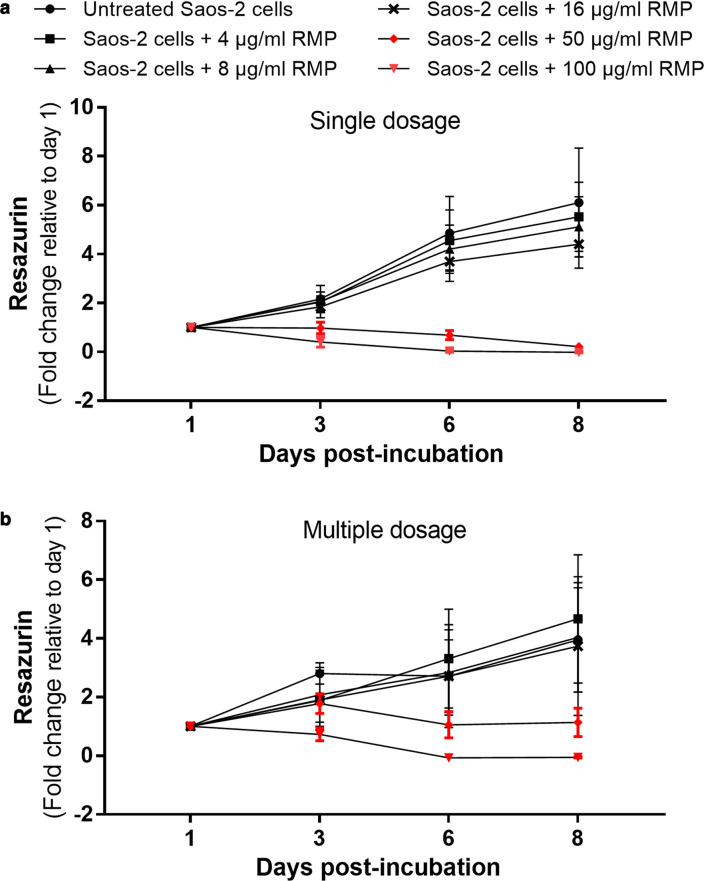
The human osteoblast-like Saos-2 cells infected with EDCC 5055 strain and treated with 8 µg/ml RMP underwent osteogenic stimulation for up to 21 days. Test groups were Saos-2 cells + and Saos-2 cells + + 8 µg/ml RMP, and control groups were uninfected untreated Saos-2 cells and uninfected Saos-2 cells + 8 µg/ml RMP.
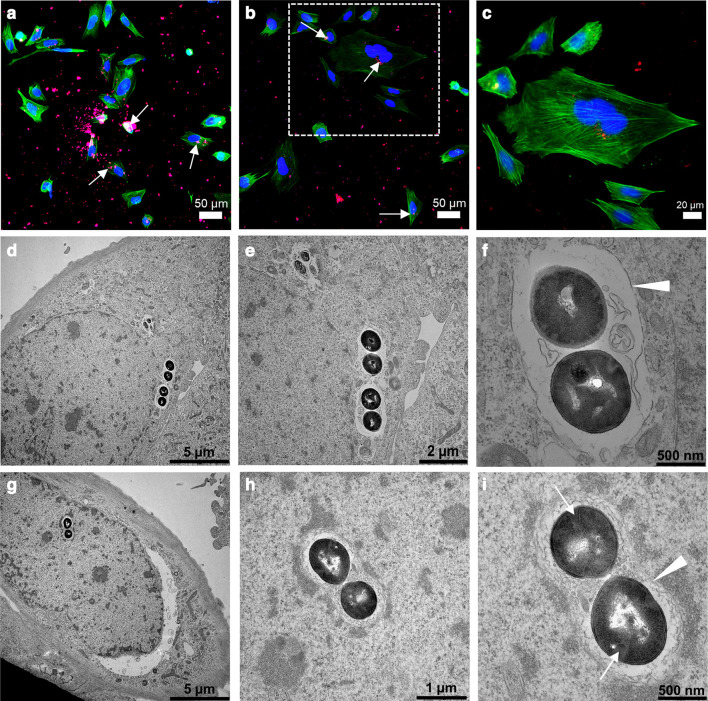
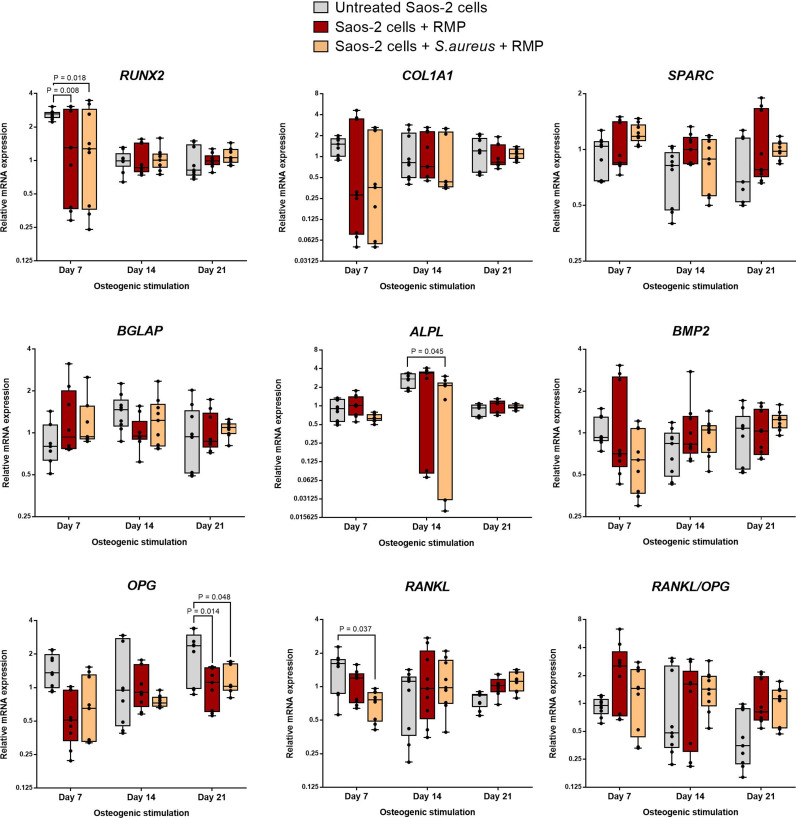
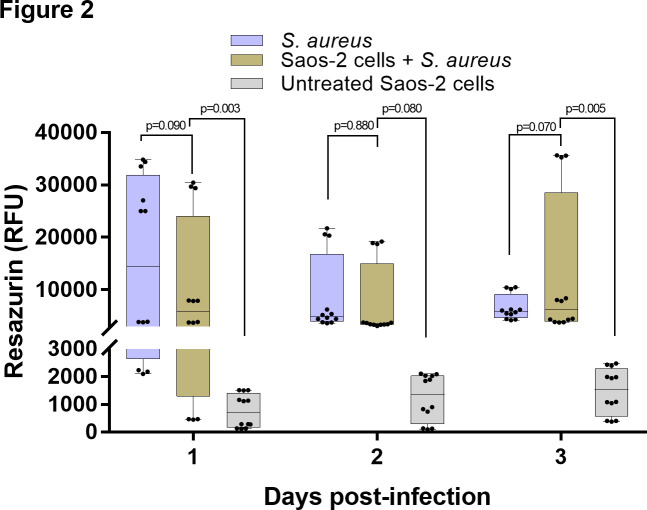
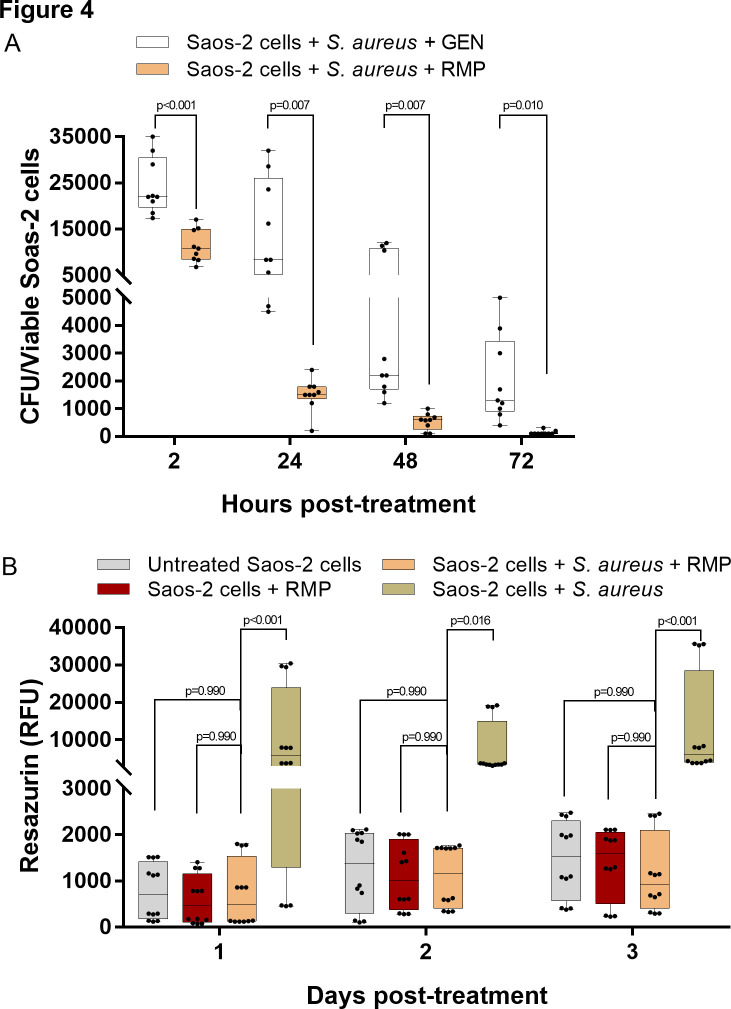
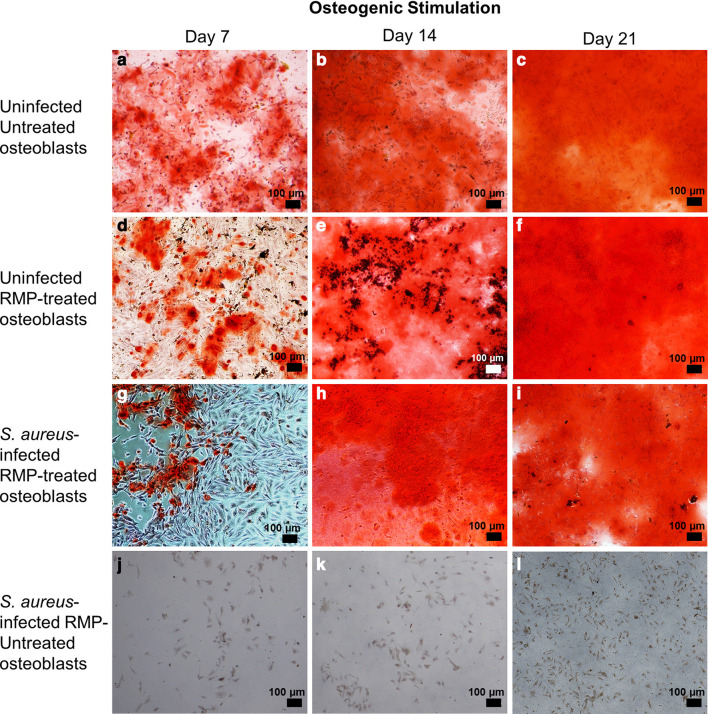
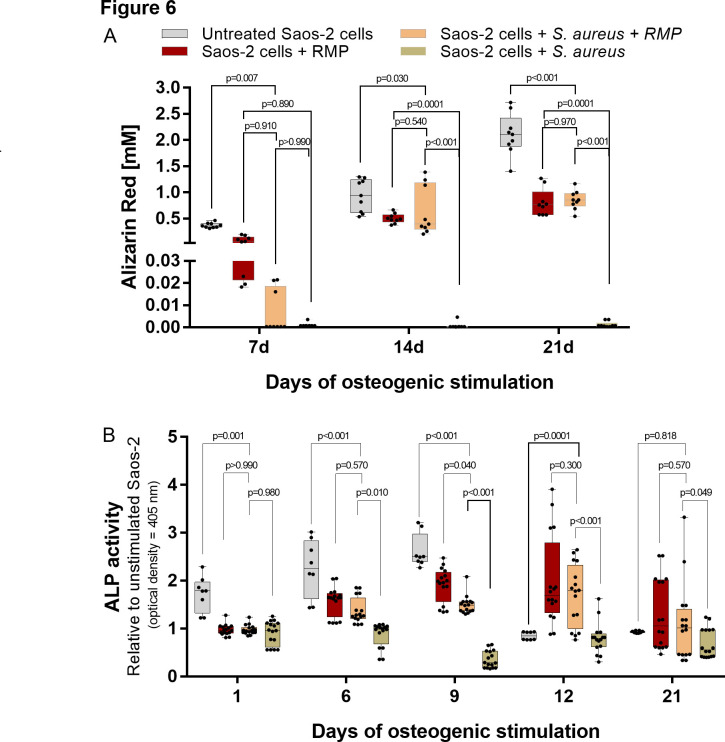
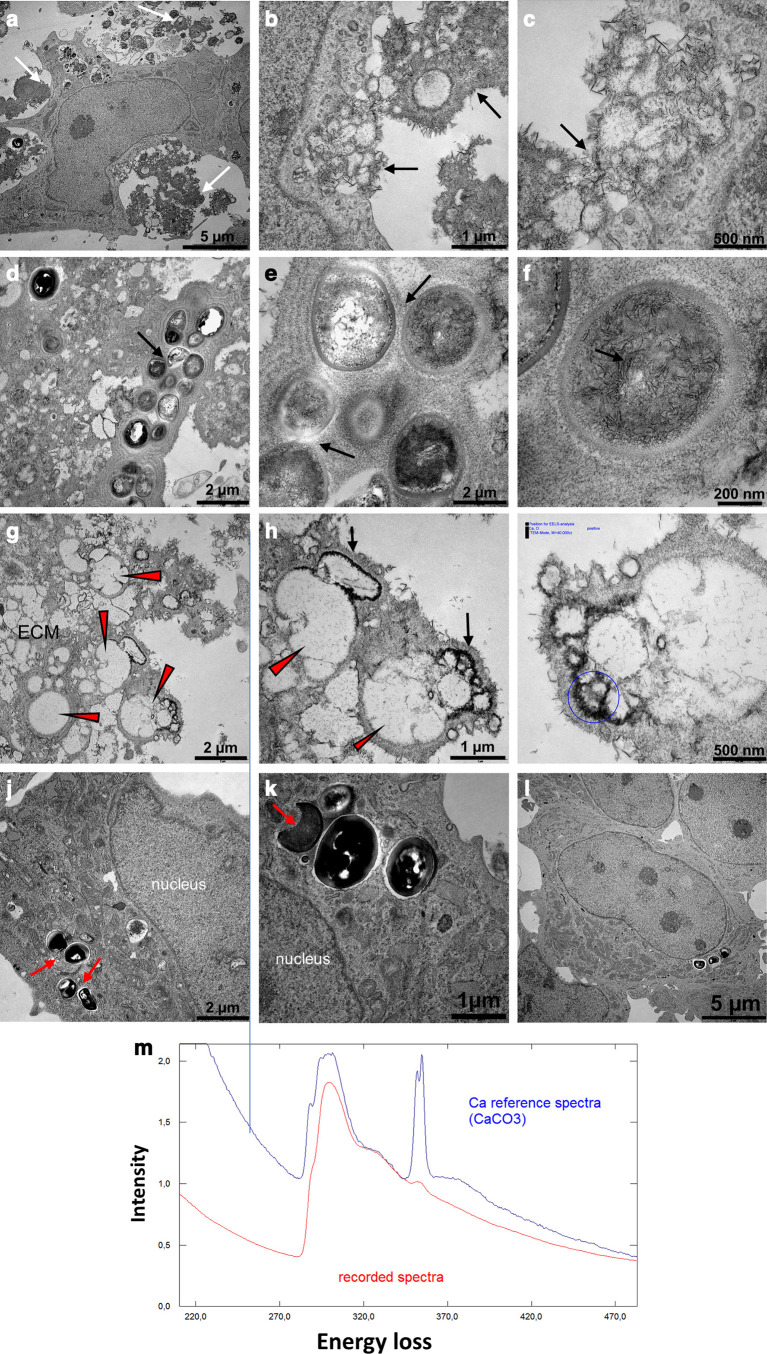
The -infected osteoblasts showed a significant number of intracellular bacteria colonies and an unusual higher metabolic activity (p < 0.005) compared to uninfected osteoblasts. Treatment with 8 µg/ml RMP significantly eradicated intracellular bacteria and the metabolic activity was comparable to uninfected groups. The RMP-treated infected osteoblasts revealed a significantly reduced amount of mineralized extracellular matrix (ECM) at seven days osteogenesis relative to uninfected untreated osteoblasts (p = 0.007). Prolonged osteogenesis and RMP treatment at 21 days significantly improved the ECM mineralization level. Ultrastructural images of the mineralized RMP-treated infected osteoblasts revealed viable osteoblasts and densely distributed calcium crystal deposits within the extracellular organic matrix. The expression levels of prominent bone formation genes were comparable to the RMP-treated uninfected osteoblasts.
Intracellular infection impaired osteoblast metabolism and function. However, treatment with low dosage of RMP eradicated the intracellular , enabling extracellular organic matrix formation and mineralization of osteoblasts at later stage. Cite this article: 2022;11(5):327-341.
由于葡萄球菌能够侵入成骨细胞并在其中持续存在,因此在治疗葡萄球菌性骨感染期间的骨再生具有挑战性。在此,我们试图确定利福平(RMP)治疗后,感染葡萄球菌的人成骨细胞的代谢、细胞外有机基质形成和矿化能力是否能够恢复。
用8μg/ml RMP处理感染了EDCC 5055菌株的人成骨样Saos-2细胞,并进行长达21天的成骨刺激。试验组为Saos-2细胞+葡萄球菌和Saos-2细胞+葡萄球菌+8μg/ml RMP,对照组为未感染未处理的Saos-2细胞和未感染的Saos-2细胞+8μg/ml RMP。
与未感染的成骨细胞相比,感染葡萄球菌的成骨细胞显示出大量的细胞内细菌菌落和异常高的代谢活性(p<0.005)。用8μg/ml RMP治疗可显著根除细胞内细菌,且代谢活性与未感染组相当。相对于未感染未处理的成骨细胞,RMP处理的感染成骨细胞在成骨7天时矿化细胞外基质(ECM)的量显著减少(p = 0.007)。延长成骨时间并在21天时进行RMP治疗可显著提高ECM矿化水平。RMP处理的感染成骨细胞矿化的超微结构图像显示有存活的成骨细胞,且细胞外有机基质内有密集分布的钙晶体沉积物。显著的骨形成基因的表达水平与RMP处理的未感染成骨细胞相当。
细胞内葡萄球菌感染损害了成骨细胞的代谢和功能。然而,低剂量RMP治疗可根除细胞内葡萄球菌,使成骨细胞在后期能够形成细胞外有机基质并矿化。引用本文:2022;11(5):327-341。