Zhao Chenggang, Yu Huihan, Fan Xiaoqing, Niu Wanxiang, Fan Junqi, Sun Suling, Gong Meiting, Zhao Bing, Fang Zhiyou, Chen Xueran
Anhui Province Key Laboratory of Medical Physics and Technology; Institute of Health and Medical Technology, Hefei Institutes of Physical Science, Chinese Academy of Sciences, No. 350, Shushan Hu Road, 230031, Hefei, Anhui, China.
Science Island Branch, Graduate School of University of Science and Technology of China, No. 96, Jin Zhai Road, 230026, Hefei, Anhui, China.
Oncogenesis. 2022 May 23;11(1):28. doi: 10.1038/s41389-022-00402-w.
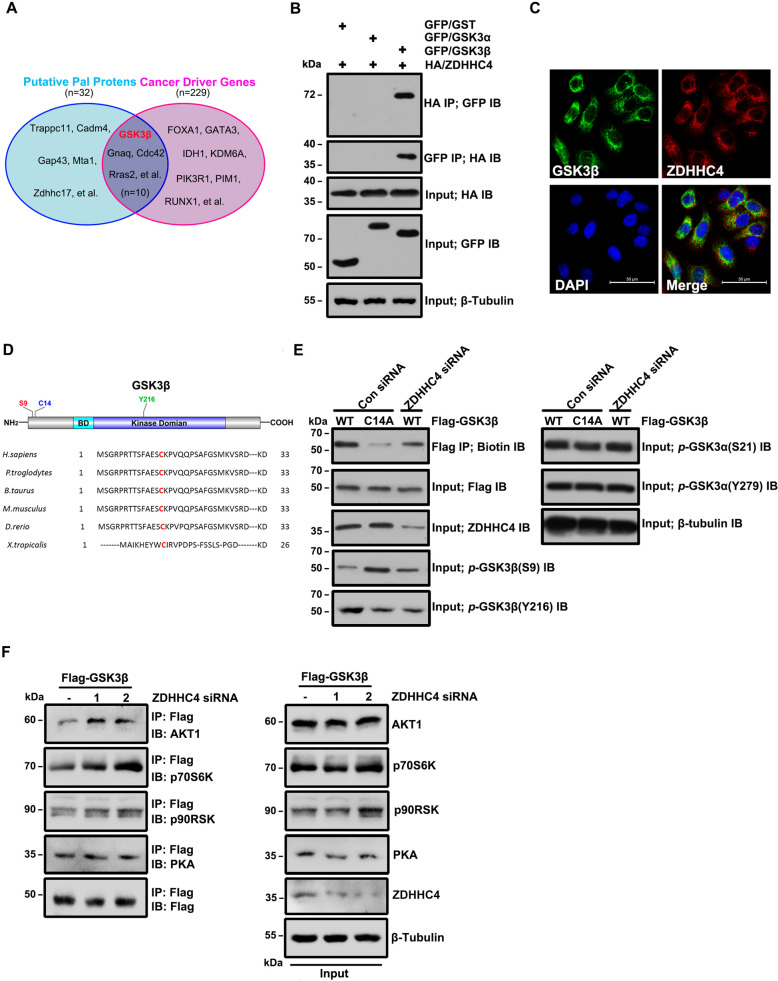
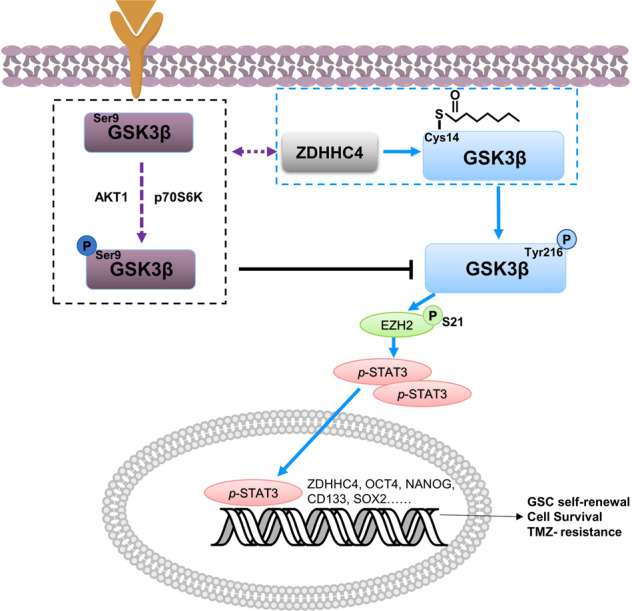
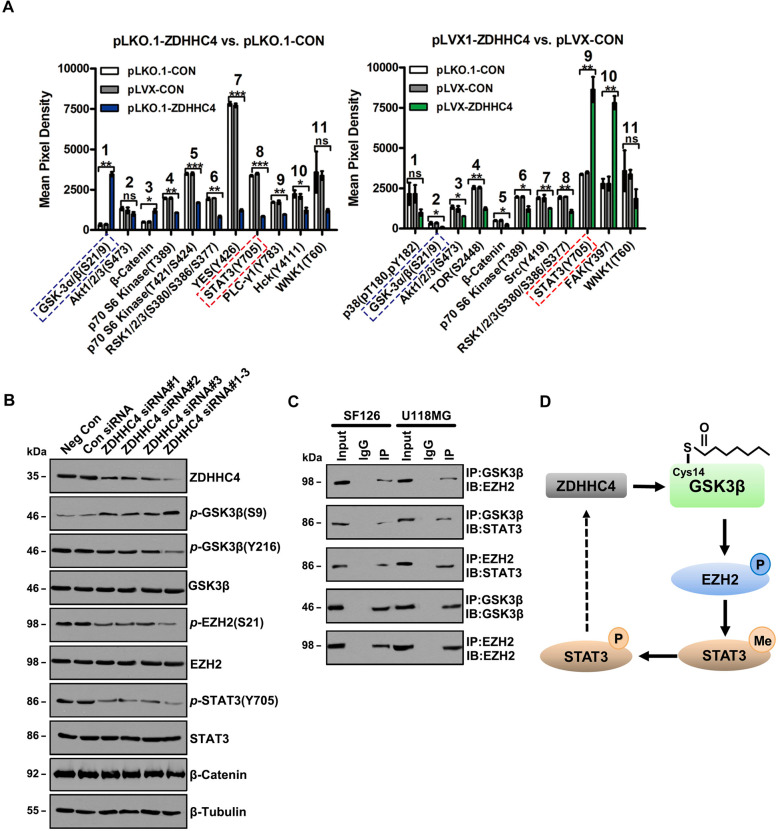
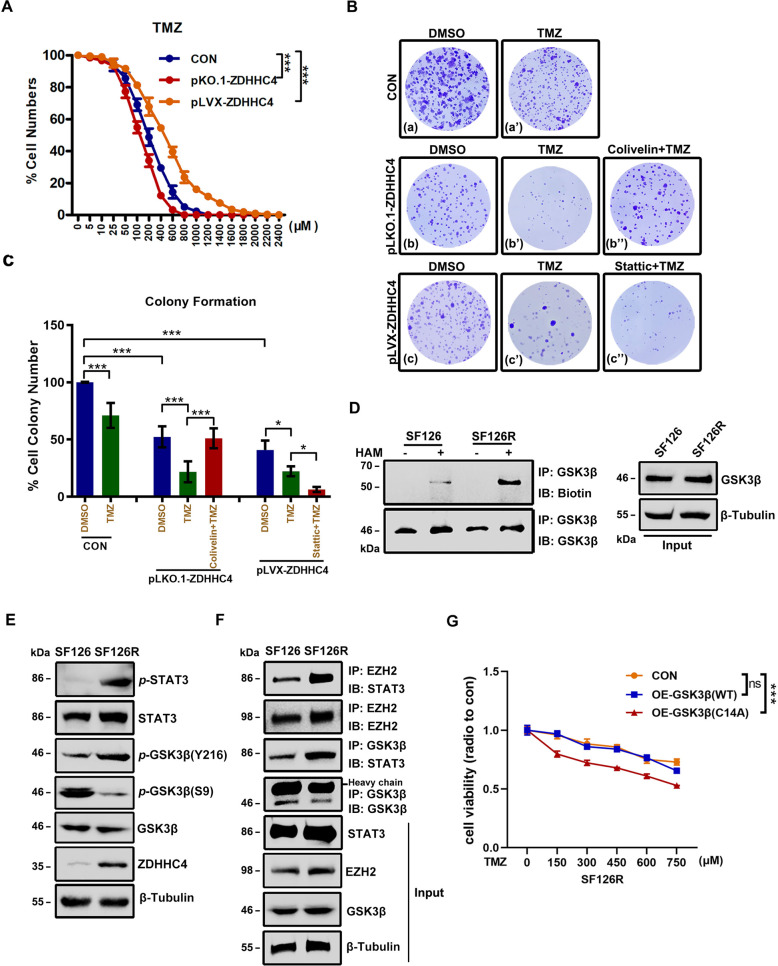
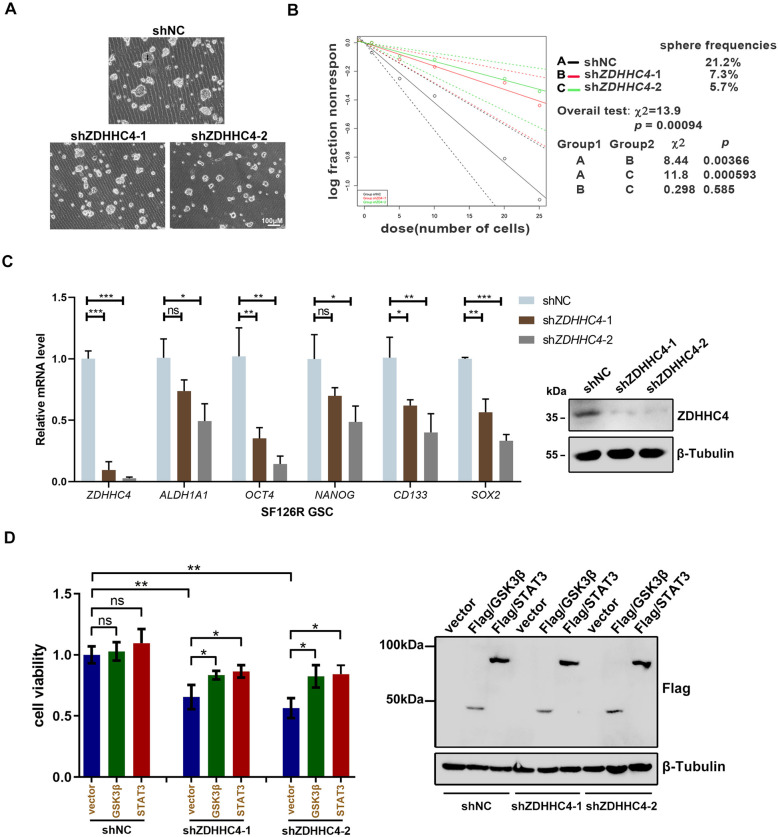
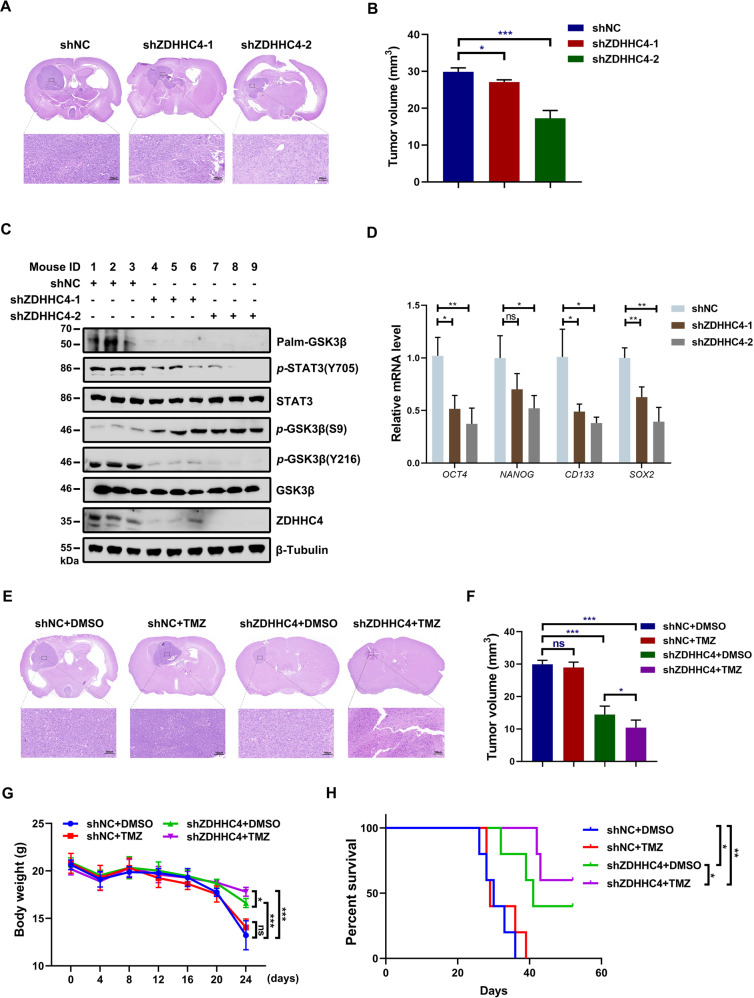
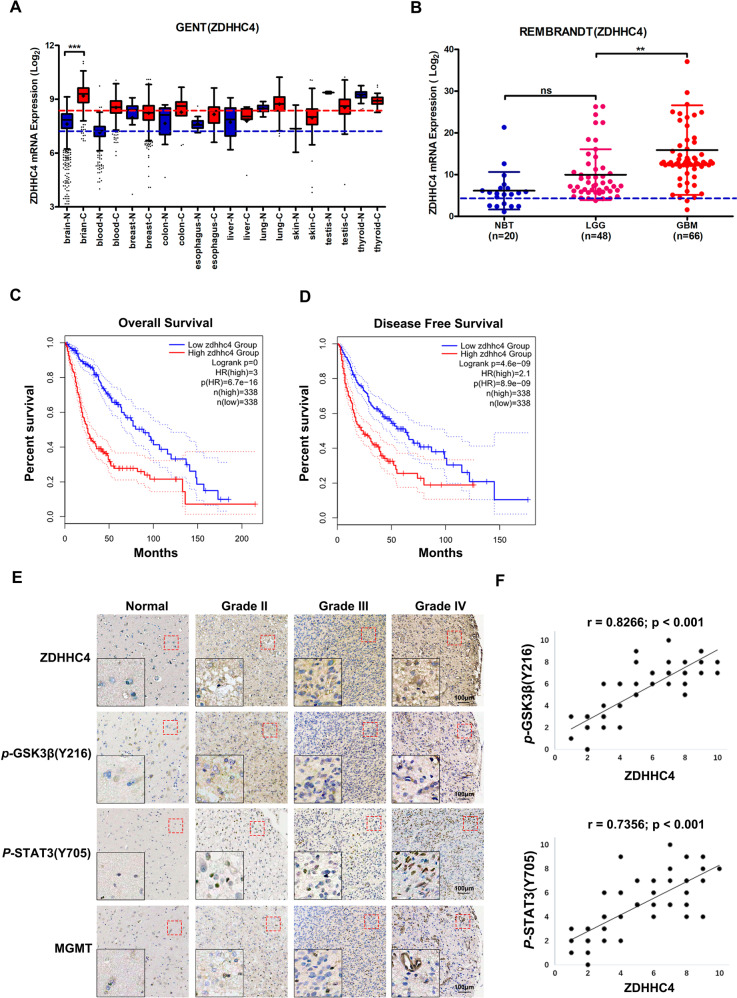
Glioblastoma stem cells (GSCs) are a highly tumorigenic cell subgroup of glioblastoma (GBM). Glycogen synthase kinase 3β (GSK3β) is considered a key hub for promoting malignant phenotypes in GBM. However, the functional relationships between GSK3β and GSCs in GBM are unclear. Here, we found that GSK3β was noted as a substrate for ZDHHC4-mediated palmitoylation at the Cys14 residue, which enhanced GBM temozolomide (TMZ) resistance and GSC self-renewal. Clinically, the expression level of ZDHHC4 was upregulated in GBM, which significantly correlated with tumor grade and poor prognosis. The above phenotypes were based on decreasing p-Ser9 and increasing p-Tyr216 by GSK3β palmitoylation, which further activated the enhancer of the zeste homolog 2 (EZH2)-STAT3 pathway. Notably, STAT3 silencing also inhibited ZDHHC4 expression. This study revealed that GSK3β palmitoylation mediated by ZDHHC4 improved the stemness of TMZ-resistant GBM by activating the EZH2-STAT3 signaling axis, providing a new theoretical basis for further understanding the mechanism of TMZ resistance and recurrence after treatment.
胶质母细胞瘤干细胞(GSCs)是胶质母细胞瘤(GBM)中具有高度致瘤性的细胞亚群。糖原合酶激酶3β(GSK3β)被认为是促进GBM恶性表型的关键枢纽。然而,GBM中GSK3β与GSCs之间的功能关系尚不清楚。在此,我们发现GSK3β是ZDHHC4介导的在半胱氨酸14残基处棕榈酰化的底物,这增强了GBM对替莫唑胺(TMZ)的耐药性和GSC的自我更新能力。临床上,ZDHHC4的表达水平在GBM中上调,这与肿瘤分级和不良预后显著相关。上述表型是基于GSK3β棕榈酰化导致p-Ser9减少和p-Tyr216增加,进而激活了zeste同源物2(EZH2)-信号转导和转录激活因子3(STAT3)通路。值得注意的是,STAT3沉默也抑制了ZDHHC4的表达。本研究揭示,ZDHHC4介导的GSK3β棕榈酰化通过激活EZH2-STAT3信号轴改善了TMZ耐药GBM的干性,为进一步理解TMZ耐药机制及治疗后复发提供了新的理论依据。