Key Laboratory of Ministry of Education for Genetics, Breeding and Multiple Utilization of Crops, College of Life Sciences, Fujian Agriculture and Forestry University, Fuzhou, China.
Institute of Crop Resistance and Chemical Ecology, College of Agriculture, Fujian Agriculture and Forestry University, Fuzhou, 350002, China.
BMC Plant Biol. 2022 May 24;22(1):254. doi: 10.1186/s12870-022-03644-3.
The use of beneficial microorganisms as an alternative for pest control has gained increasing attention. The objective of this study was to screen beneficial rhizosphere bacteria with the ability to enhance tomato anti-herbivore resistance.
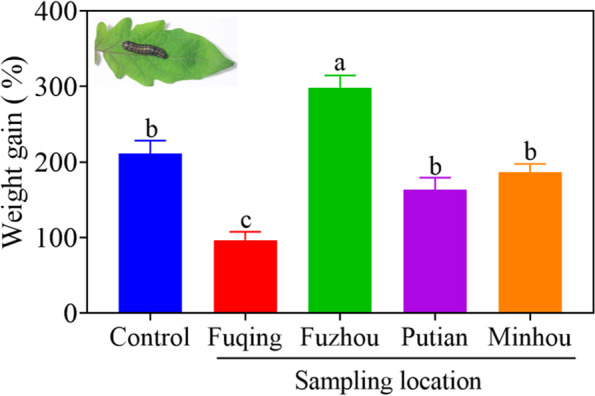
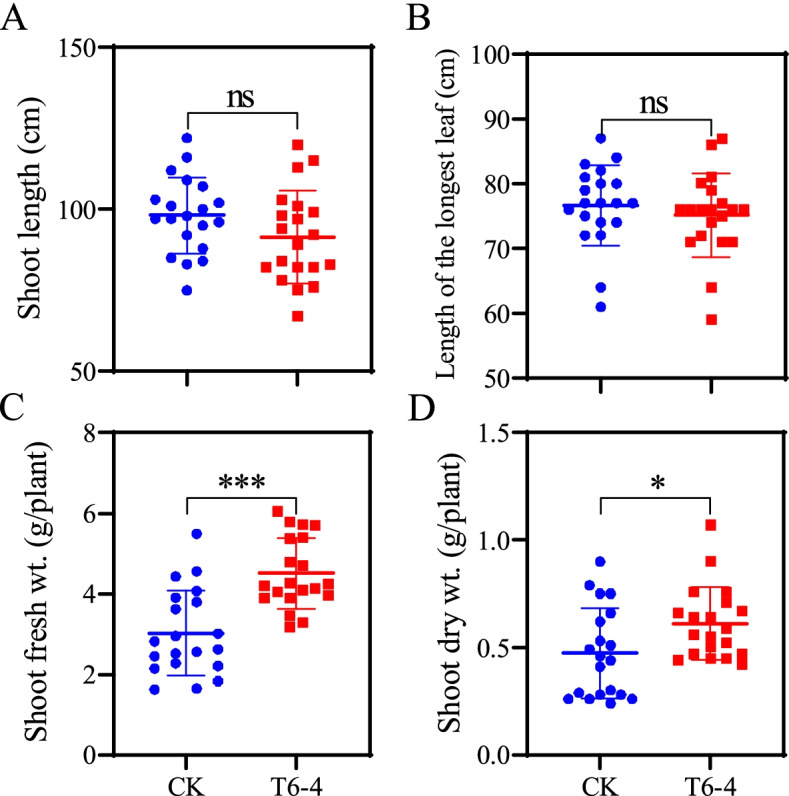
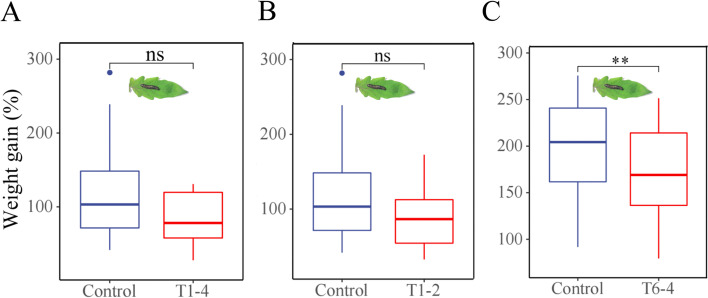
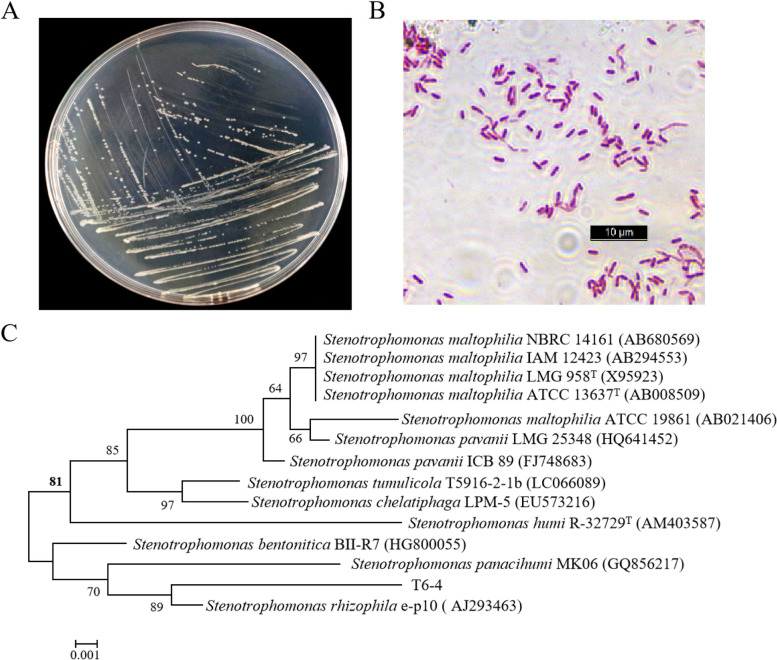
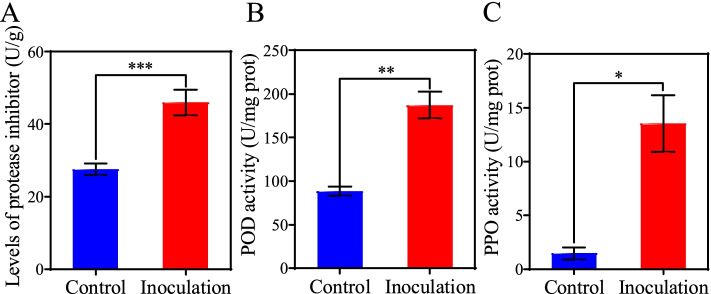
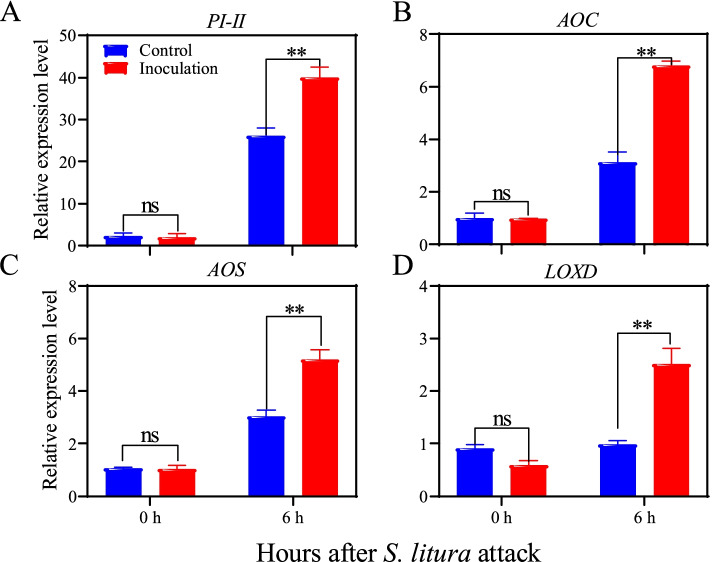
Rhizosphere bacteria in tomato field from Fuqing, one of the four locations where rhizosphere bacteria were collected in Fujian, China, enhanced tomato resistance against the tobacco cutworm Spodoptera litura, an important polyphagous pest. Inoculation with the isolate T6-4 obtained from the rhizosphere of tomato field in Fuqing reduced leaf damage and weight gain of S. litura larvae fed on the leaves of inoculated tomato plants by 27% in relative to control. Analysis of 16S rRNA gene sequence identities indicated that the isolate T6-4 was closely related to Stenotrophomonas rhizophila supported with 99.37% sequence similarity. In the presence of S. litura infestation, inoculation with the bacterium led to increases by a 66.9% increase in protease inhibitor activity, 53% in peroxidase activity and 80% in polyphenol oxidase activity in the leaves of inoculated plants as compared to the un-inoculated control. Moreover, the expression levels of defense-related genes encoding allene oxide cyclase (AOC), allene oxide synthase (AOS), lipoxygenase D (LOXD) and proteinase inhibitor (PI-II) in tomato leaves were induced 2.2-, 1.7-, 1.4- and 2.7-fold, respectively by T6-4 inoculation.
These results showed that the tomato rhizosphere soils harbor beneficial bacteria that can systemically induce jasmonate-dependent anti-herbivore resistance in tomato plants.
有益微生物作为害虫防治替代物的使用引起了越来越多的关注。本研究的目的是筛选具有增强番茄抗食草动物能力的有益根际细菌。
从中国福建四个根际细菌采集地之一的福清番茄地采集的根际细菌增强了番茄对烟草夜蛾 Spodoptera litura 的抗性,烟草夜蛾是一种重要的多食性害虫。与对照相比,从福清番茄地根际分离得到的菌株 T6-4 接种降低了 S. litura 幼虫取食接种番茄叶片的相对叶损伤率和增重率 27%。16S rRNA 基因序列分析表明,菌株 T6-4 与 Stenotrophomonas rhizophila 密切相关,序列相似性为 99.37%。在 S. litura 侵害的情况下,与未接种的对照相比,细菌接种导致接种植物叶片中的蛋白酶抑制剂活性增加 66.9%,过氧化物酶活性增加 53%,多酚氧化酶活性增加 80%。此外,番茄叶片中编码烯氧合酶(AOC)、烯氧合酶(AOS)、脂氧合酶 D(LOXD)和蛋白酶抑制剂(PI-II)的防御相关基因的表达水平分别通过 T6-4 接种诱导 2.2、1.7、1.4 和 2.7 倍。
这些结果表明,番茄根际土壤中蕴藏着有益细菌,可系统诱导番茄植物中茉莉酸依赖的抗食草动物抗性。