Wu Weiwen, Hu Dianlin, Cong Wenxiang, Shan Hongming, Wang Shaoyu, Niu Chuang, Yan Pingkun, Yu Hengyong, Vardhanabhuti Varut, Wang Ge
Biomedical Imaging Center, Center for Biotechnology and Interdisciplinary Studies, Department of Biomedical Engineering, Rensselaer Polytechnic Institute, Troy, NY, USA.
School of Biomedical Engineering, Sun Yat-sen University, Shenzhen, Guangdong, China.
Patterns (N Y). 2022 Apr 6;3(5):100474. doi: 10.1016/j.patter.2022.100474. eCollection 2022 May 13.
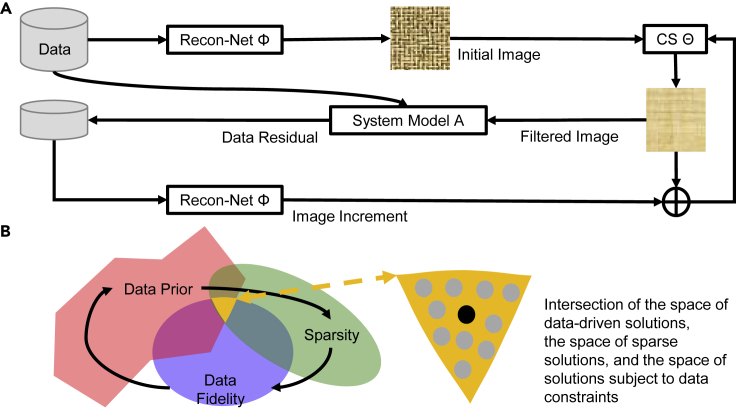
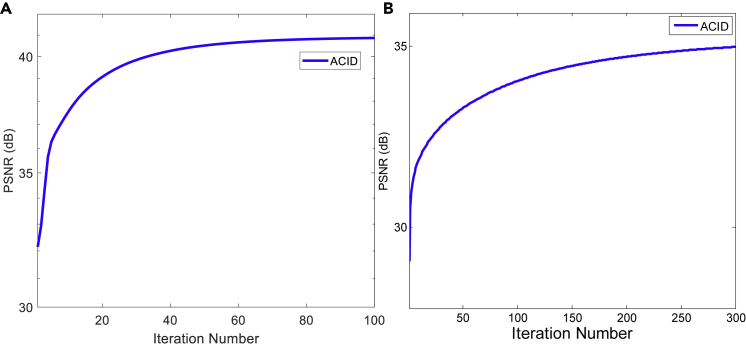
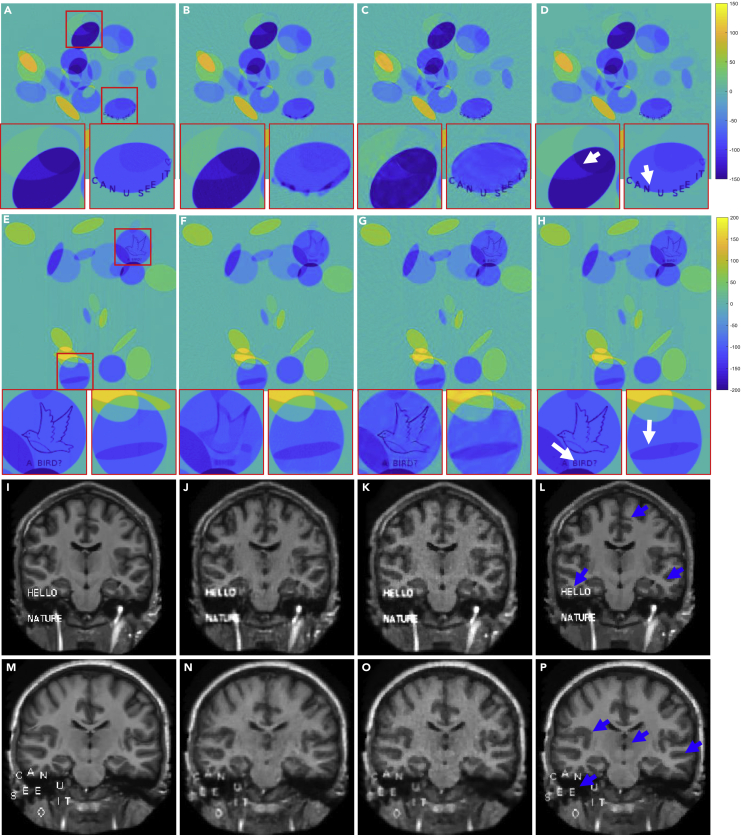
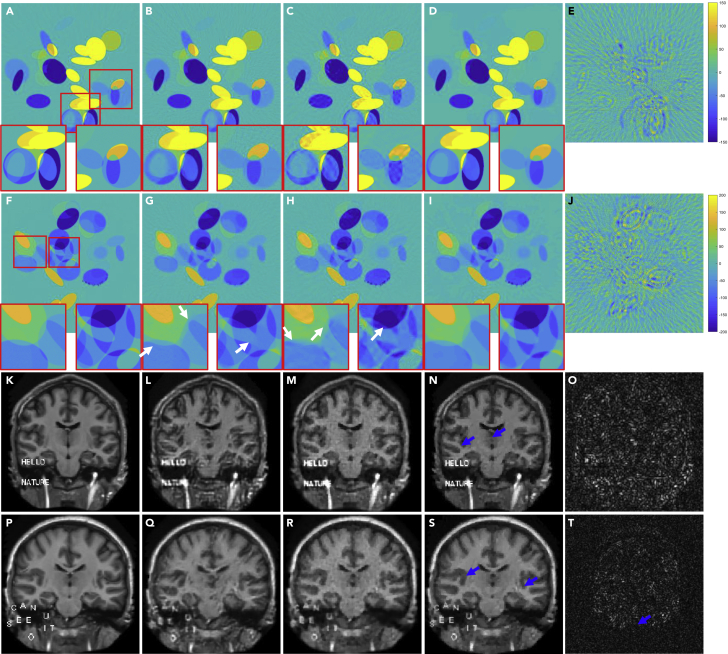
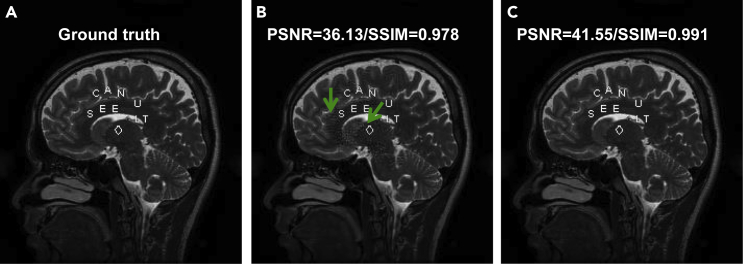
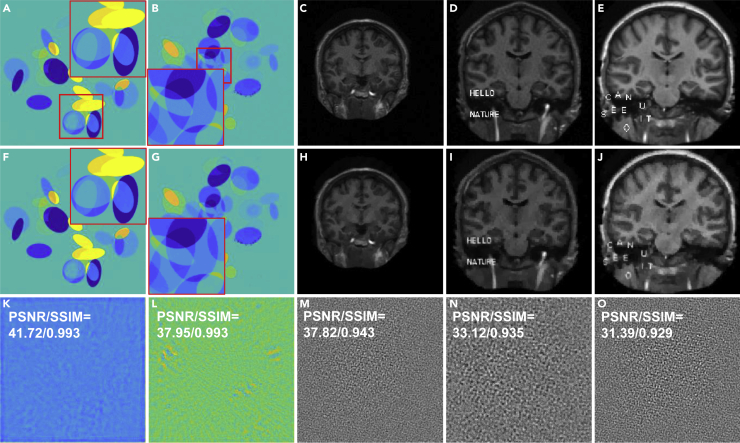
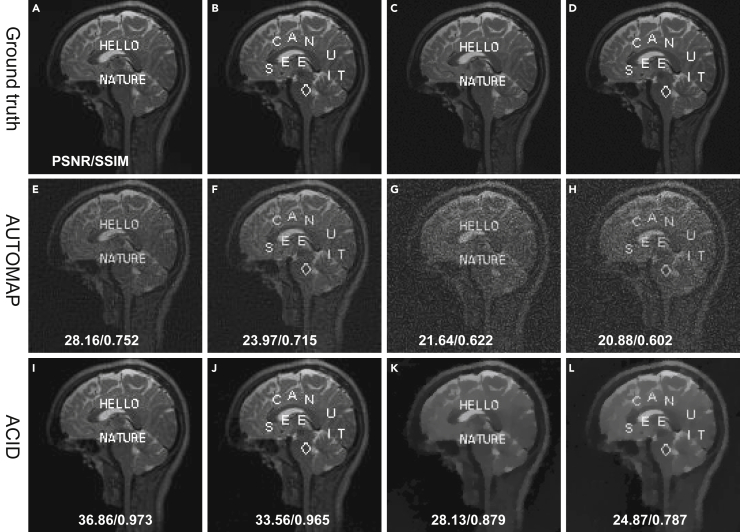
A recent PNAS paper reveals that several popular deep reconstruction networks are unstable. Specifically, three kinds of instabilities were reported: (1) strong image artefacts from tiny perturbations, (2) small features missed in a deeply reconstructed image, and (3) decreased imaging performance with increased input data. Here, we propose an analytic compressed iterative deep (ACID) framework to address this challenge. ACID synergizes a deep network trained on big data, kernel awareness from compressed sensing (CS)-inspired processing, and iterative refinement to minimize the data residual relative to real measurement. Our study demonstrates that the ACID reconstruction is accurate, is stable, and sheds light on the converging mechanism of the ACID iteration under a bounded relative error norm assumption. ACID not only stabilizes an unstable deep reconstruction network but also is resilient against adversarial attacks to the whole ACID workflow, being superior to classic sparsity-regularized reconstruction and eliminating the three kinds of instabilities.
美国国家科学院院刊(PNAS)最近发表的一篇论文表明,几种常用的深度重建网络并不稳定。具体而言,该论文报告了三种不稳定性:(1)微小扰动产生强烈的图像伪影;(2)深度重建图像中遗漏小特征;(3)随着输入数据增加成像性能下降。在此,我们提出一种解析压缩迭代深度(ACID)框架来应对这一挑战。ACID将基于大数据训练的深度网络、受压缩感知(CS)启发处理中的核感知以及迭代细化相结合,以相对于实际测量最小化数据残差。我们的研究表明,ACID重建准确、稳定,并在有界相对误差范数假设下揭示了ACID迭代的收敛机制。ACID不仅稳定了不稳定的深度重建网络,而且对整个ACID工作流程的对抗攻击具有弹性,优于经典的稀疏正则化重建,并消除了这三种不稳定性。