CCS Haryana Agricultural University, Hisar, Haryana, 125004, India.
ICAR-Central Soil Salinity Research Institute, Karnal, Haryana, 132001, India.
Sci Rep. 2022 May 24;12(1):8731. doi: 10.1038/s41598-022-12686-4.
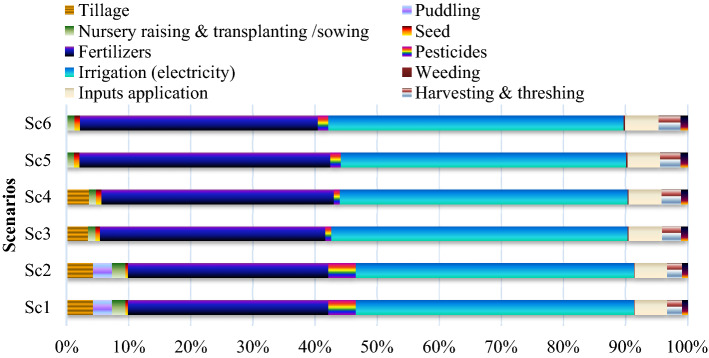
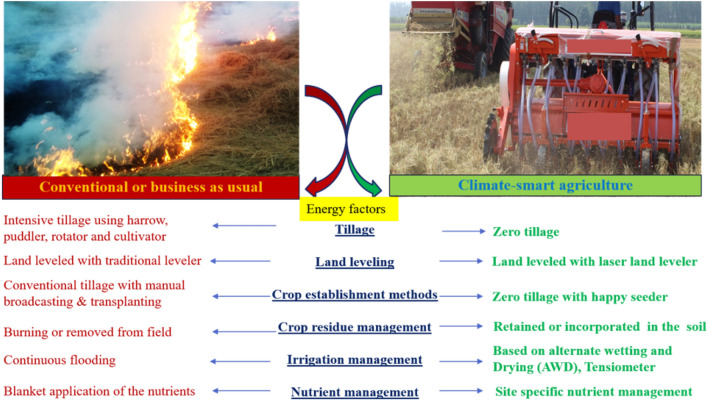
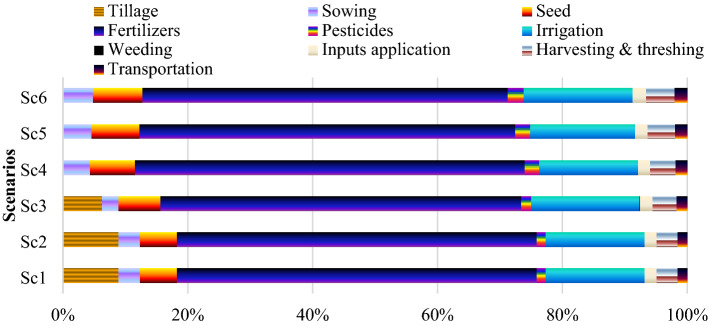
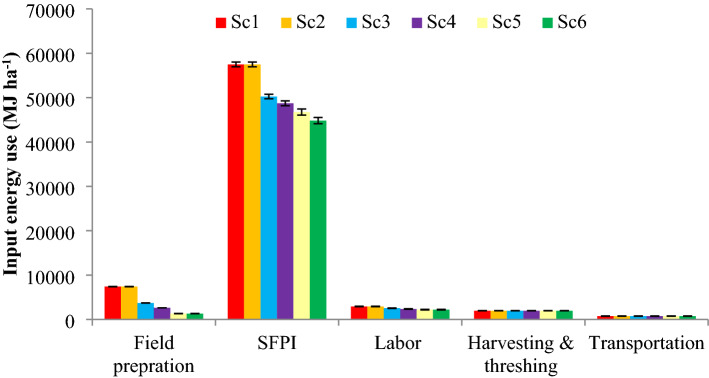
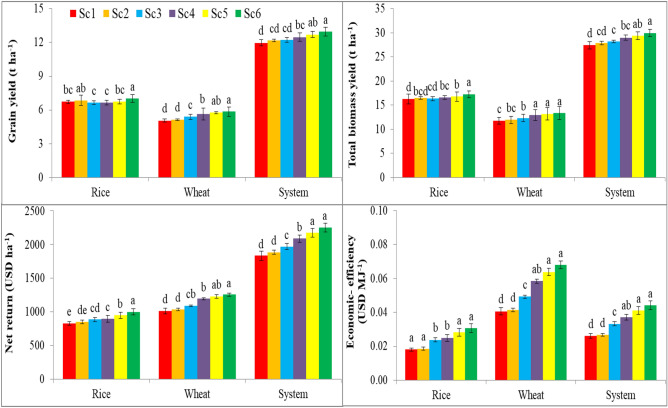
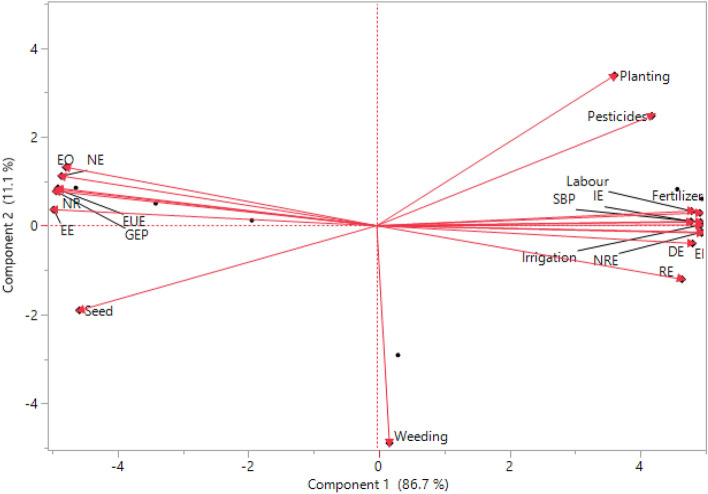
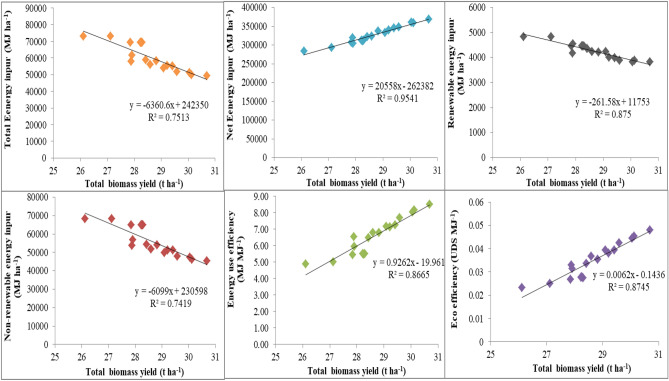
Intensive tillage operations, indiscriminate use of irrigation water, chemical fertilizers, and pesticides and crop biomass burning have made the conventional rice-wheat (RW) system highly energy-intensive and inefficient. In the recent past, portfolios of climate-smart agricultural practices (CSAP) have been promoted as a potential alternative to improve the energy efficiency in conventional RW system. Therefore, to evaluate the energy input-output relation, energy flow and economic efficiency in various combinations of crop management options, a 3-year (2014-2017) on-farm study was conducted at Karnal, India. Various portfolio of management practices; Sc1-Business as usual (BAU) or Conventional tillage (CT) without residue, Sc2-CT with residue, Sc3-Reduce tillage (RT) with residue + recommended dose of fertilizer (RDF), Sc4-RT/Zero tillage (ZT) with residue + RDF, Sc5-ZT with residue + RDF + GreenSeeker + Tensiometer, Sc6-Sc5 + Nutrient expert were investigated. Present study results revealed that net energy, energy use efficiency and energy productivity were 11-18, 31-51 and 29-53% higher under CSAP (mean of Sc4, Sc5 and Sc6) in RW system than Sc1, respectively. However, renewable and non-renewable energy inputs were 14 and 33% higher in Sc1 compared to CSAP (4028 and 49,547 MJ ha), respectively, it showed that BAU practices mostly dependents on non-renewable energy sources whereas CSAP dependents on renewable energy sources. Similarly, the adoption of CSAP improved the biomass yield, net farm income and economic efficiency by 6-9, 18-23 and 42-58%, respectively compared to Sc1. Overall, the adoption of CSAP could be a viable alternative for improving energy use efficiency, farm profitability and eco-efficiency in the RW system.
集约耕作作业、滥用灌溉水、化肥和农药以及作物生物质燃烧,使得传统的稻麦轮作(RW)系统高度能源密集且效率低下。在最近的一段时间里,已经推广了一系列气候智能型农业实践(CSAP),作为提高传统 RW 系统能源效率的潜在替代方案。因此,为了评估各种作物管理方案组合中的能源投入-产出关系、能量流和经济效益,在印度卡纳尔进行了一项为期 3 年(2014-2017 年)的田间研究。各种管理实践组合;Sc1-常规做法(BAU)或无残留物的常规耕作(CT)、Sc2-带残留物的 CT、Sc3-带残留物的减少耕作(RT)+推荐施肥量(RDF)、Sc4-RT/零耕作(ZT)带残留物+RDF、Sc5-ZT 带残留物+RDF+GreenSeeker+张力计、Sc6-Sc5+营养专家。本研究结果表明,与 Sc1 相比,RW 系统中 CSAP(Sc4、Sc5 和 Sc6 的平均值)下的净能、能源利用效率和能源生产力分别高出 11-18%、31-51%和 29-53%。然而,可再生和不可再生能源投入分别高出 Sc1 的 14%和 33%,CSAP(4028 和 49547 MJ ha),这表明 BAU 实践主要依赖于不可再生能源,而 CSAP 则依赖于可再生能源。同样,与 Sc1 相比,CSAP 的采用分别提高了 6-9%、18-23%和 42-58%的生物量产量、净农场收入和经济效益。总体而言,CSAP 的采用可以成为提高 RW 系统能源利用效率、农场盈利能力和生态效率的可行替代方案。