Department of Otolaryngology, The First Affiliated Hospital of Sun Yat-sen University, No. 58 Zhongshan Er Road, Guangzhou, 510080, China.
BMC Cancer. 2022 May 24;22(1):577. doi: 10.1186/s12885-022-09673-3.
Mast cells can reshape the tumour immune microenvironment and greatly affect tumour occurrence and development. However, mast cell gene prognostic and predictive value in head and neck squamous cell carcinoma (HNSCC) remains unclear. This study was conducted to identify and establish a prognostic mast cell gene signature (MCS) for assessing the prognosis and immunotherapy response of patients with HNSCC.
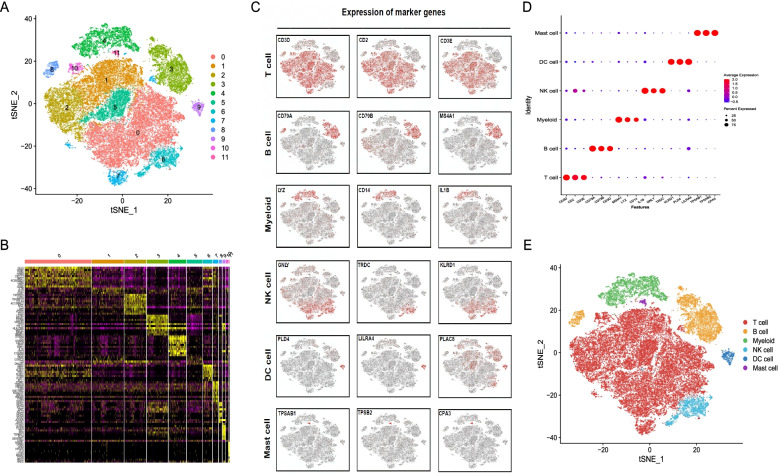
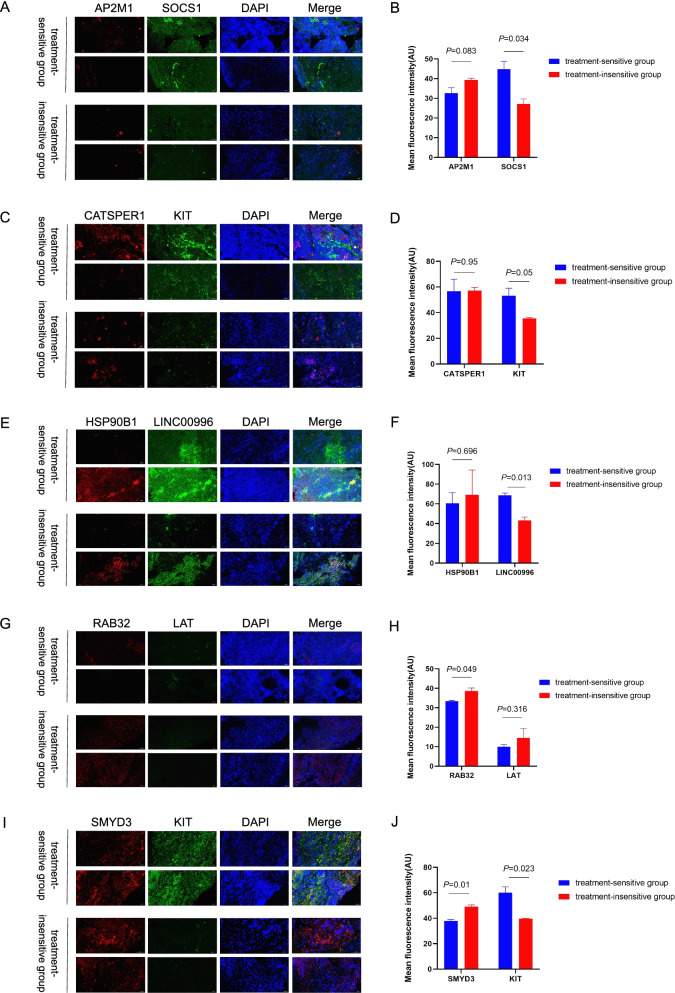
Mast cell marker genes in HNSCC were identified using single-cell RNA sequencing analysis. A dataset from The Cancer Genome Atlas was divided into a training cohort to construct the MCS model and a testing cohort to validate the model. Fluorescence in-situ hybridisation was used to evaluate the MCS model gene expression in tissue sections from patients with HNSCC who had been treated with programmed cell death-1 inhibitors and further validate the MCS.
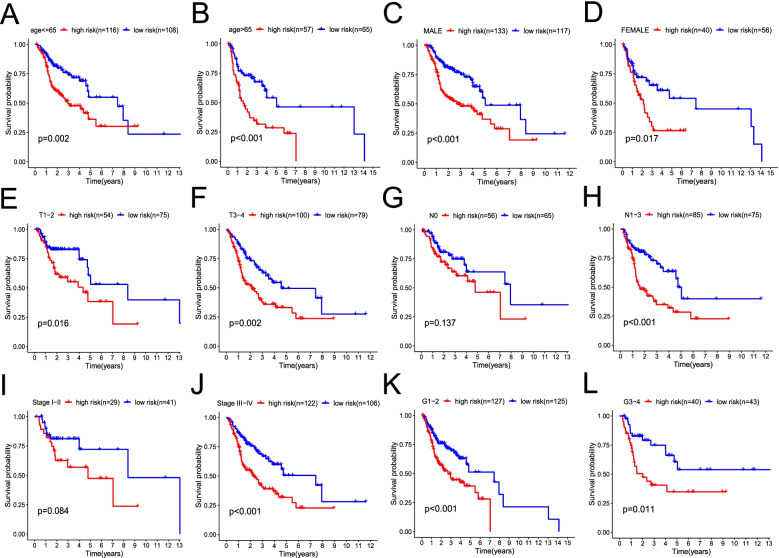
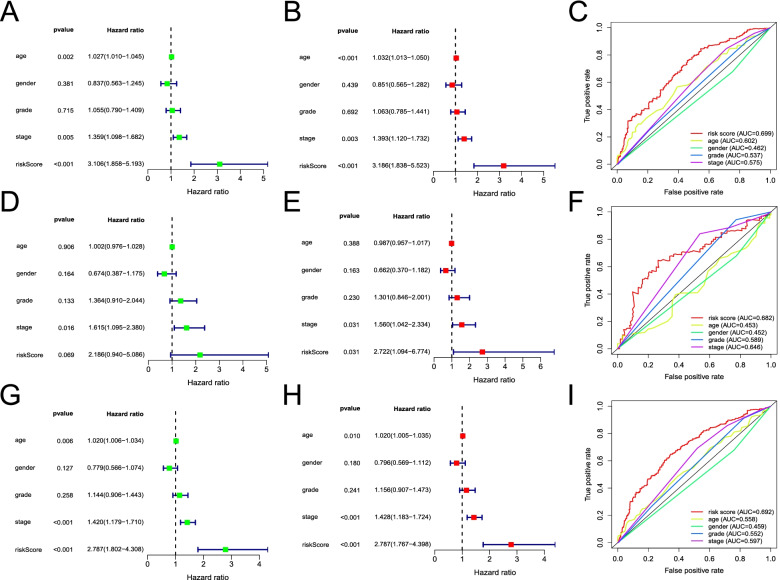
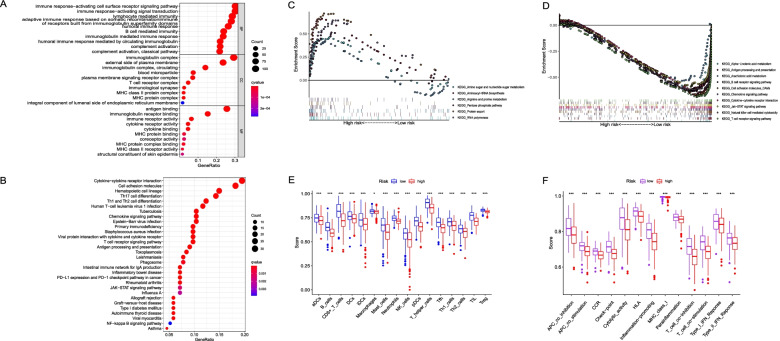
A prognostic MCS comprising nine genes (KIT, RAB32, CATSPER1, SMYD3, LINC00996, SOCS1, AP2M1, LAT, and HSP90B1) was generated by comprehensively analysing clinical features and 47 mast cell-related genes. The MCS effectively distinguished survival outcomes across the training, testing, and entire cohorts as an independent prognostic factor. Furthermore, we identified patients with favourable immune cell infiltration status and immunotherapy responses. Fluorescence in-situ hybridisation supported the MCS immunotherapy response of patients with HNSCC prediction, showing increased high-risk gene expression and reduced low-risk gene expression in immunotherapy-insensitive patients.
Our MCS provides insight into the roles of mast cells in HNSCC prognosis and may have applications as an immunotherapy response predictive indicator in patients with HNSCC and a reference for immunotherapy decision-making.
肥大细胞可以重塑肿瘤免疫微环境,极大地影响肿瘤的发生和发展。然而,肥大细胞基因在头颈部鳞状细胞癌(HNSCC)中的预后和预测价值尚不清楚。本研究旨在鉴定和建立一个用于评估 HNSCC 患者预后和免疫治疗反应的肥大细胞基因预后signature(MCS)。
使用单细胞 RNA 测序分析鉴定 HNSCC 中的肥大细胞标记基因。来自癌症基因组图谱(TCGA)的数据集被分为训练队列以构建 MCS 模型和测试队列以验证模型。荧光原位杂交(FISH)用于评估接受程序性细胞死亡-1 抑制剂治疗的 HNSCC 患者组织切片中的 MCS 模型基因表达,并进一步验证 MCS。
通过综合分析临床特征和 47 个肥大细胞相关基因,生成了一个由 9 个基因(KIT、RAB32、CATSPER1、SMYD3、LINC00996、SOCS1、AP2M1、LAT 和 HSP90B1)组成的预后 MCS。MCS 作为独立的预后因素,可有效区分训练、测试和整个队列的生存结局。此外,我们确定了具有有利免疫细胞浸润状态和免疫治疗反应的患者。FISH 支持 HNSCC 患者 MCS 免疫治疗反应预测,显示免疫治疗不敏感患者中高危基因表达增加,低危基因表达减少。
我们的 MCS 深入了解了肥大细胞在 HNSCC 预后中的作用,并可能作为 HNSCC 患者免疫治疗反应预测指标以及免疫治疗决策的参考。