Leone Giuseppe, Fabiani Emiliano, Voso Maria Teresa
Università Cattolica del Sacro Cuore, Roma, Italy.
Department of Biomedicine and Prevention, University Tor Vergata, Rome, Italy.
Mediterr J Hematol Infect Dis. 2022 May 1;14(1):e2022030. doi: 10.4084/MJHID.2022.030. eCollection 2022.
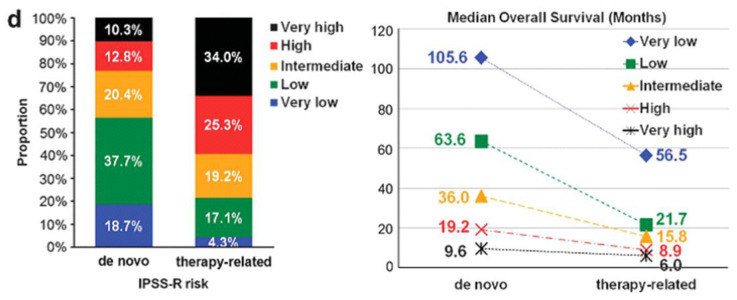
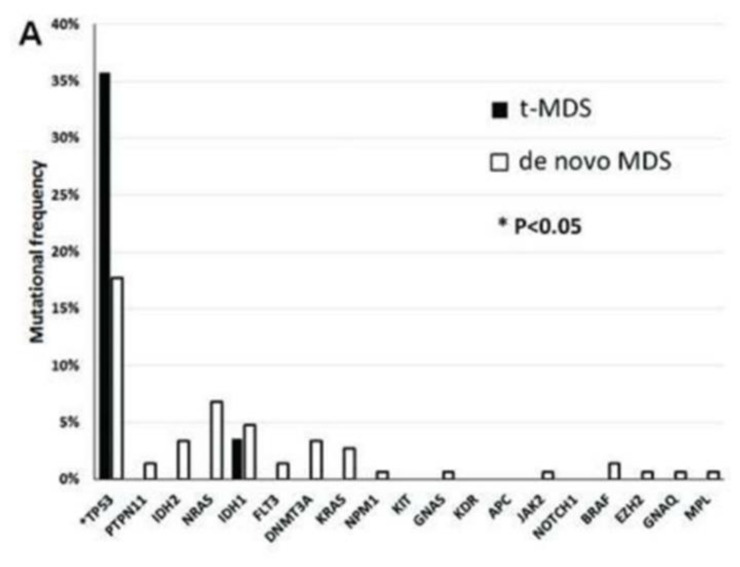
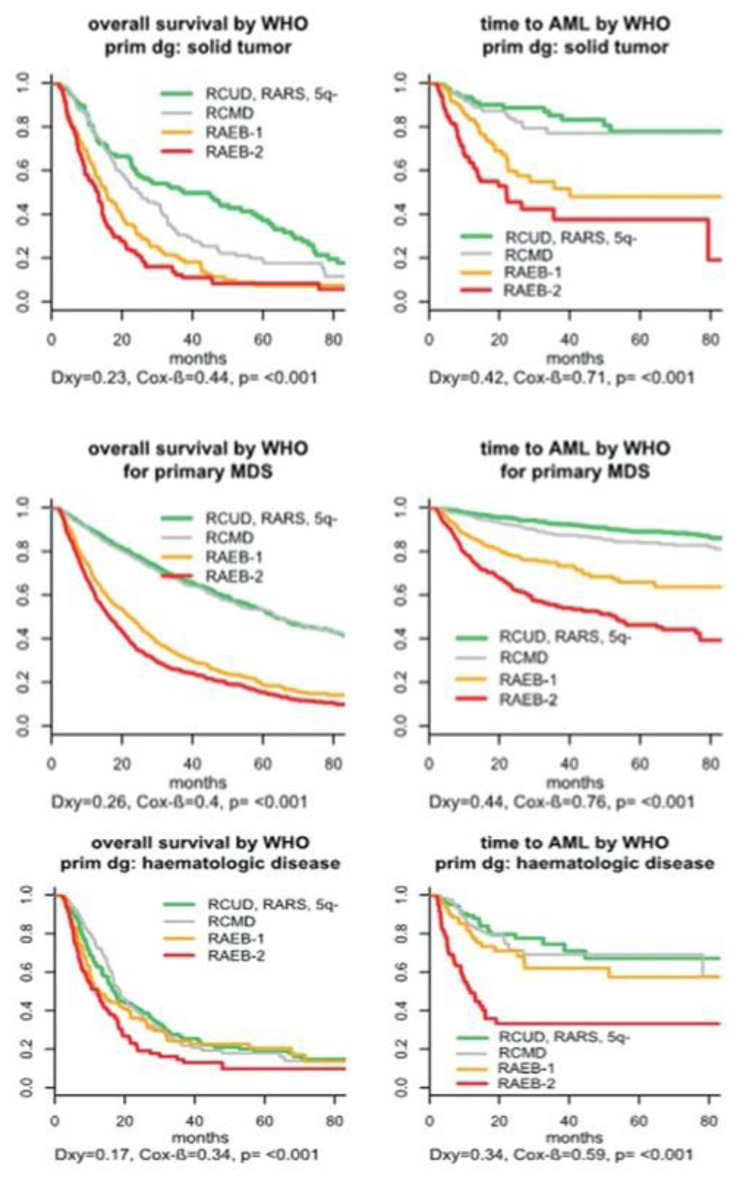
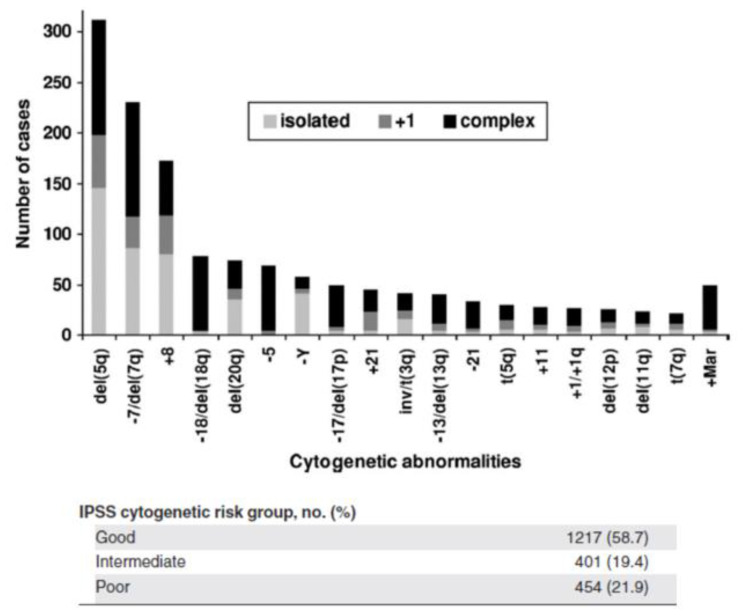
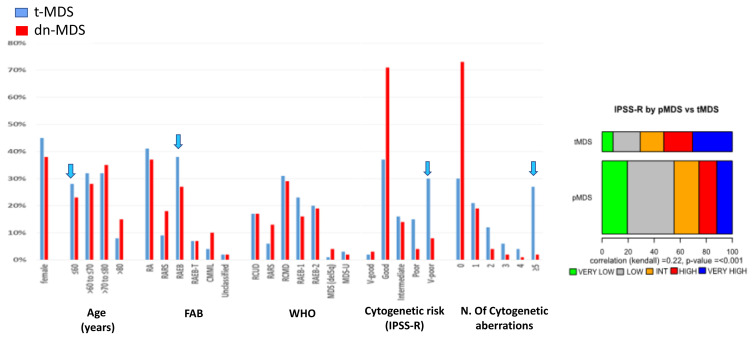
The aim of our review has been to give an appropriate idea of analogies and differences between primitive MDS (p-MDS) and t-MDS throughout an accurate reviewing of English peer-reviewed literature focusing on clinical, cytogenetic, epigenetic, and somatic mutation features of these two groups of diseases. Therapy-related MDS (t-MDS) are classified by WHO together with therapy-related acute myeloid leukemia (t-AML) in the same group, named therapy-related myeloid neoplasm. However, in clinical practice, the diagnosis of t-MDS is made with the same criteria as for primitive MDS (p-MDS), and the only difference is a previous non-myeloid neoplasm. The prognosis and the consequent therapy can be established following the same criteria as for p-MDS, and the therapy is generally decided using the same criteria. We stress the possible difference in cytogenetics, mutations, and epigenetics to distinguish the two forms. Actually, there is no marker specific for t-MDS either in cytogenetics, epigenetics, or mutations; however, some alterations are also frequent in t-MDS and, in general, they induce a poorer prognosis. So, the high-risk forms in t-MDS are prevalent. The present literature data suggest classifying the t-MDS as a subgroup of MDS and introducing some parameters to evaluate the probability of previous therapy in inducing MDS. An important issue remains the patient's fitness, which strongly influences the outcome.
我们综述的目的是通过对英文同行评审文献进行准确回顾,重点关注这两组疾病的临床、细胞遗传学、表观遗传学和体细胞突变特征,来恰当阐述原发性骨髓增生异常综合征(p-MDS)和治疗相关骨髓增生异常综合征(t-MDS)之间的异同。世界卫生组织(WHO)将治疗相关骨髓增生异常综合征(t-MDS)与治疗相关急性髓系白血病(t-AML)归为同一组,命名为治疗相关髓系肿瘤。然而,在临床实践中,t-MDS的诊断标准与原发性骨髓增生异常综合征(p-MDS)相同,唯一的区别是有先前的非髓系肿瘤病史。其预后及后续治疗可依据与p-MDS相同的标准来确定,并且治疗方案通常也按相同标准决定。我们强调在细胞遗传学、突变和表观遗传学方面可能存在差异,以此来区分这两种形式。实际上,无论是在细胞遗传学、表观遗传学还是突变方面,都没有t-MDS特有的标志物;然而,某些改变在t-MDS中也较为常见,并且总体上它们会导致更差的预后。所以,t-MDS中的高危形式较为普遍。目前的文献数据表明,可将t-MDS归类为骨髓增生异常综合征的一个亚组,并引入一些参数来评估先前治疗诱发骨髓增生异常综合征的可能性。一个重要问题仍然是患者的身体状况,它对治疗结果有很大影响。