Zhang Rui, Niu Shuai, Rong Zhihua, Li Fengshi, Ni Leng, Di Xiao, Liu Changwei
Department of Vascular Surgery, Peking Union Medical College Hospital, Chinese Academy of Medical Sciences and Peking Union Medical College, Beijing, China.
Front Bioeng Biotechnol. 2022 May 9;10:913791. doi: 10.3389/fbioe.2022.913791. eCollection 2022.
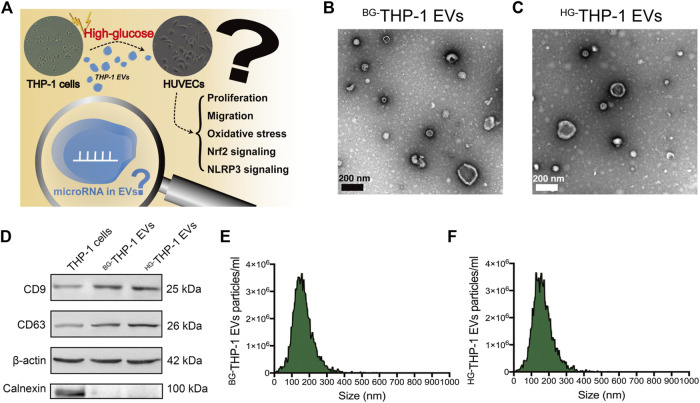
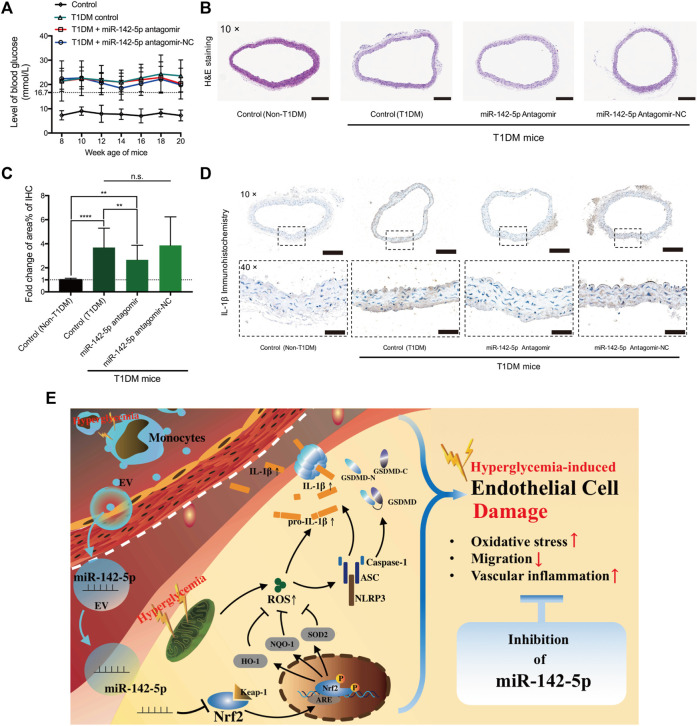
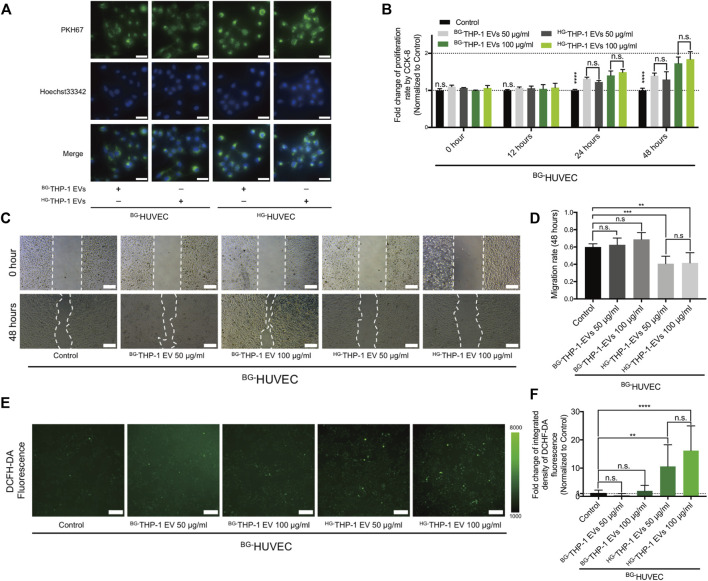
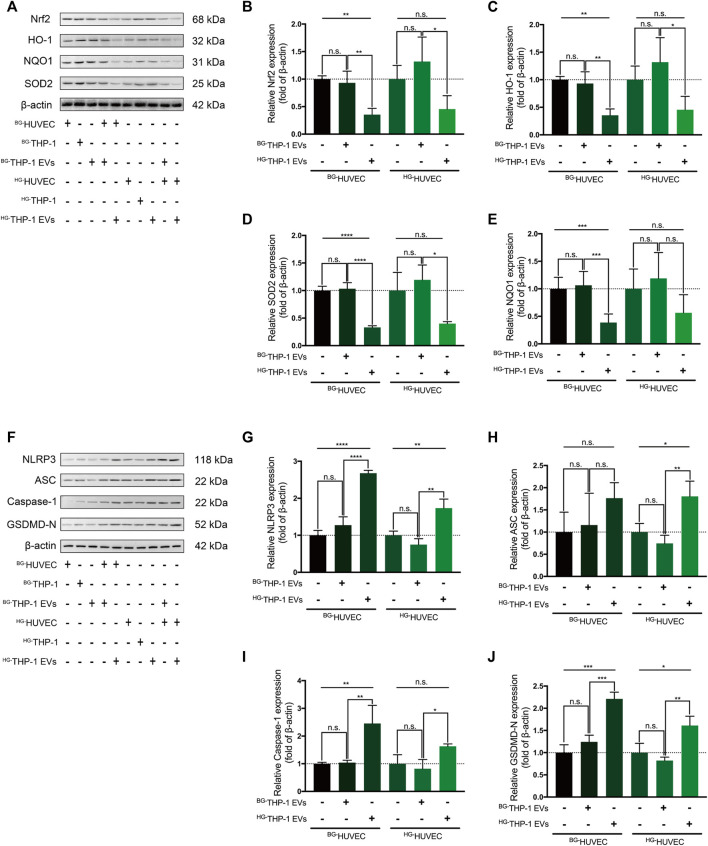
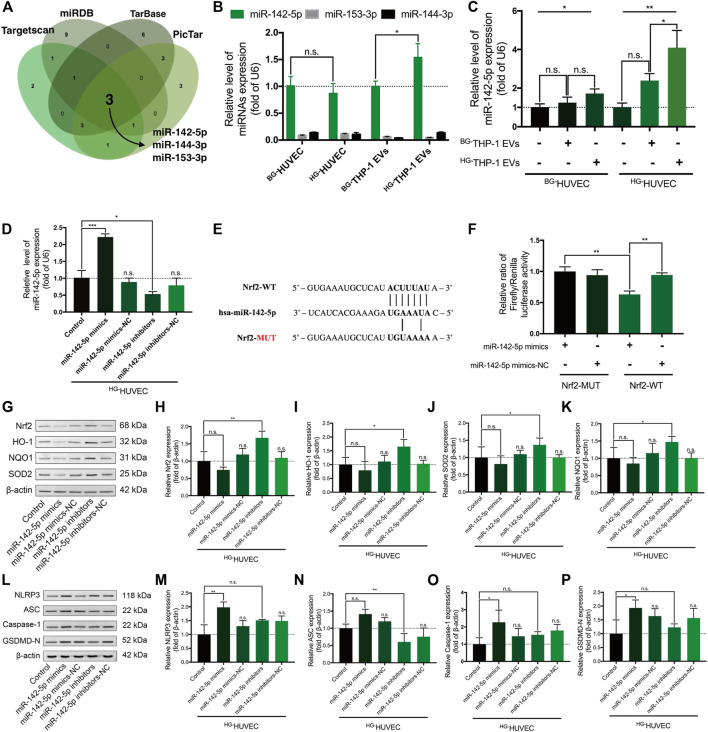
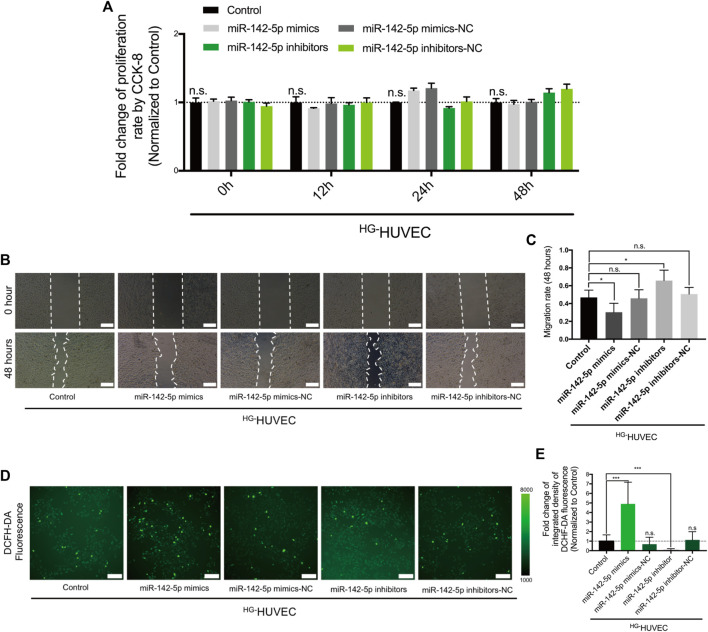
Endothelial dysfunction is a key accessory to diabetic cardiovascular complications, and the regulatory role of the extracellular vesicles (EVs) from the innate immune system is growing. We tested whether EVs derived from high glucose-induced monocytes could shuttle microRNAs and impair endothelial cells. EVs from high glucose- and basal glucose-treated THP-1 cells (THP-1 EVs and THP-1 EVs) were isolated and identified. After coculture with THP-1 EVs, human umbilical vein endothelial cells (HUVECs) were tested by proliferation, migration, reactive oxygen species (ROS) detection assays, and western blot for Nrf2/NLRP3 signaling. MiR-142-5p was predicted by miRNAs databases and further verified by RT-qPCR and dual-luciferase reporter gene assays that inhibit Nrf2 expression. The regulation of miR-142-5p in HUVECs was further evaluated. A type 1 diabetes mellitus (T1DM) mouse model was developed for miR-142-5p inhibition. Aorta tissue was harvested for hematoxylin-eosin staining and immunohistochemistry of interleukin-1β (IL-1β). Compared to THP-1 EVs, THP-1 EVs significantly reduced migration and increased ROS production in HUVECs but did not affect proliferation. THP-1 EVs induced suppression of Nrf2 signaling and NLRP3 signaling activation. RT-qPCR results showed that THP-1 EVs overexpressed miR-142-5p in HUVECs. The transfection of miR-142-5p mimics into HUVECs exhibited consistent regulatory effects on THP-1 EVs, whereas miR-142-5p inhibitors demonstrated protective effects. The miR-142-5p antagomir significantly reduced the IL-1β level in T1DM aortas despite morphological changes. To conclude, miR-142-5p transferred by high glucose-induced monocyte EVs participates in diabetic endothelial damage. The inhibition of miR-142-5p could be a potential adjuvant to diabetic cardiovascular protection.
内皮功能障碍是糖尿病心血管并发症的关键辅助因素,并且来自固有免疫系统的细胞外囊泡(EVs)的调节作用日益受到关注。我们测试了高糖诱导的单核细胞衍生的EVs是否能转运微小RNA并损害内皮细胞。分离并鉴定了来自高糖处理和基础葡萄糖处理的THP-1细胞的EVs(THP-1 EVs和THP-1 EVs)。与THP-1 EVs共培养后,通过增殖、迁移、活性氧(ROS)检测试验以及针对Nrf2/NLRP3信号通路的蛋白质印迹法对人脐静脉内皮细胞(HUVECs)进行检测。通过微小RNA数据库预测了miR-142-5p,并通过RT-qPCR和双荧光素酶报告基因试验进一步验证其抑制Nrf2表达。进一步评估了miR-142-5p在HUVECs中的调节作用。建立了1型糖尿病(T1DM)小鼠模型用于抑制miR-142-5p。采集主动脉组织进行苏木精-伊红染色和白细胞介素-1β(IL-1β)的免疫组织化学检测。与THP-1 EVs相比,THP-1 EVs显著降低了HUVECs的迁移能力并增加了ROS的产生,但不影响增殖。THP-1 EVs诱导Nrf2信号通路的抑制和NLRP3信号通路的激活。RT-qPCR结果显示,THP-1 EVs在HUVECs中过表达miR-142-5p。将miR-142-5p模拟物转染到HUVECs中对THP-1 EVs表现出一致的调节作用,而miR-142-5p抑制剂则显示出保护作用。尽管存在形态学变化,但miR-142-5p拮抗剂显著降低了T1DM主动脉中的IL-1β水平。总之,高糖诱导的单核细胞EVs转运的miR-142-5p参与了糖尿病性内皮损伤。抑制miR-142-5p可能是糖尿病心血管保护的潜在辅助手段。