He Meng, Fan Jun, Zhou Ruqin, Gao Guanbin, Li Ruoxi, Zuo YuFeng, Li Benben, Li Yanmei, Sun Taolei
School of Chemistry, Chemical Engineering and Life Sciences, Wuhan University of Technology, Wuhan, China.
State Key Laboratory of Advanced Technology for Materials Synthesis and Processing, Wuhan University of Technology, Wuhan, China.
Front Aging Neurosci. 2022 May 9;14:847561. doi: 10.3389/fnagi.2022.847561. eCollection 2022.
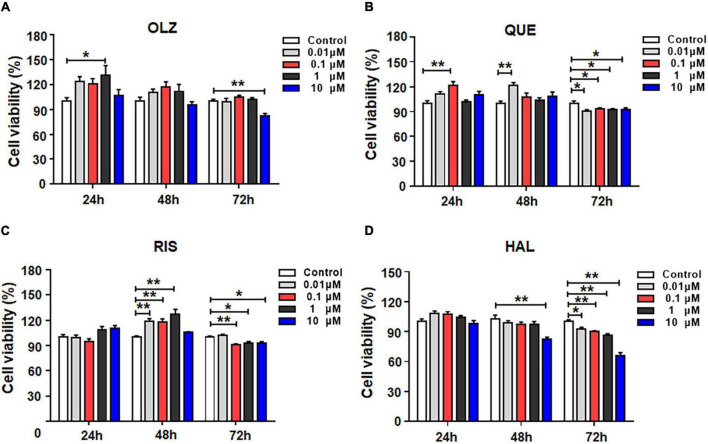
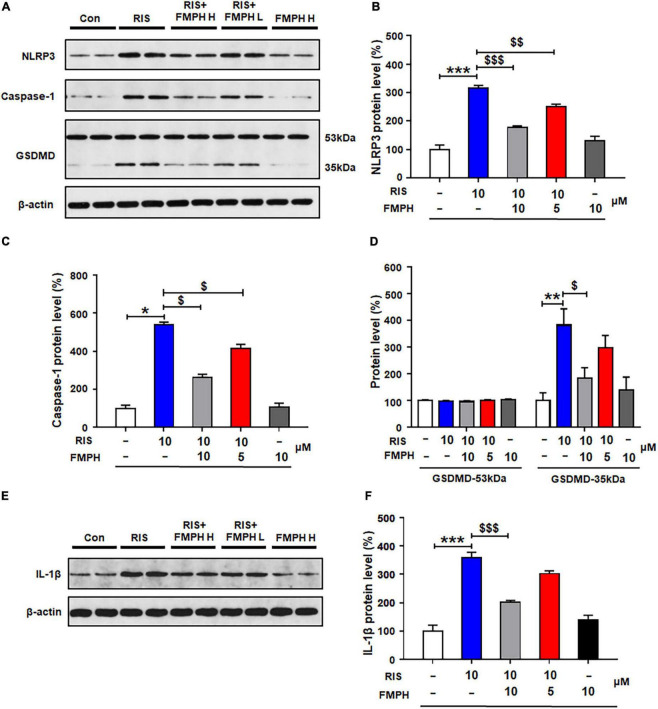
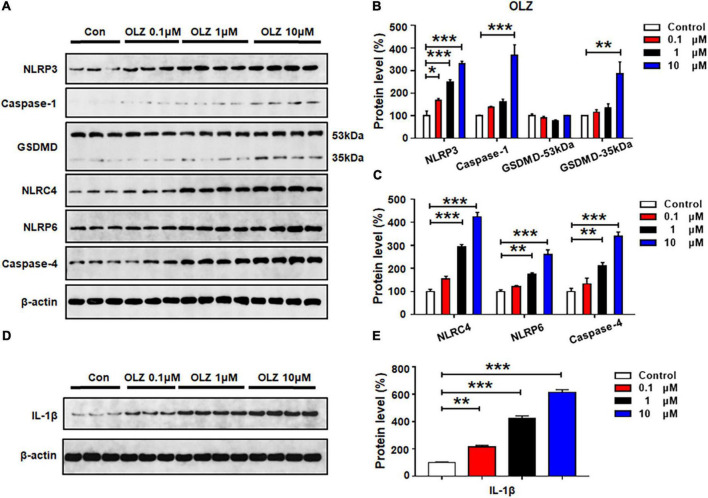
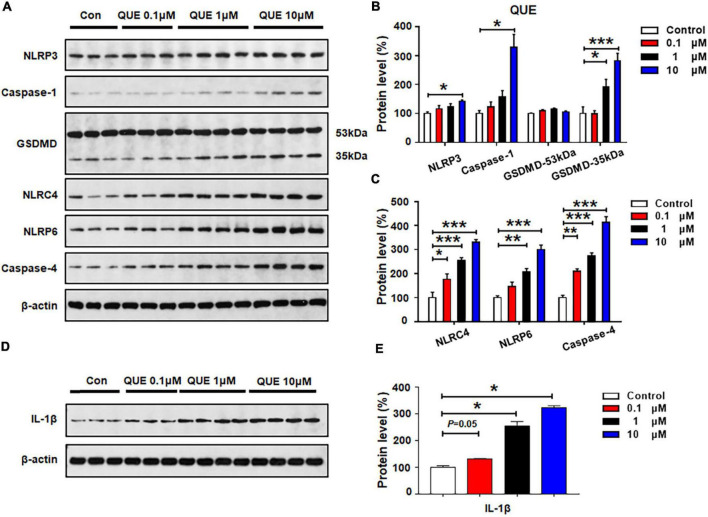
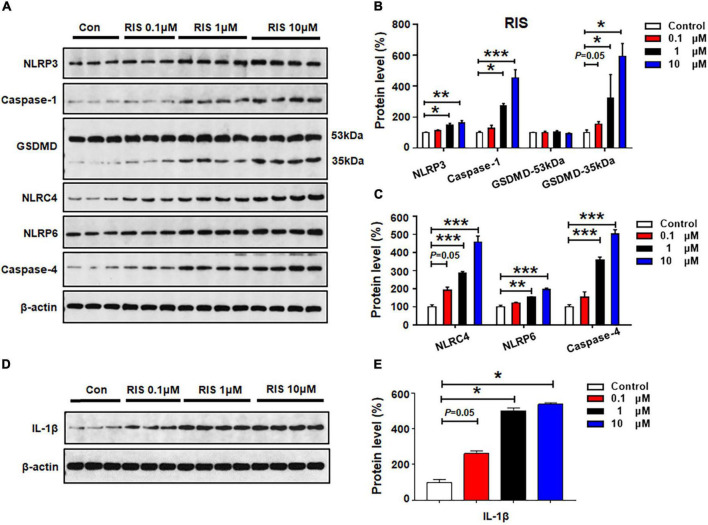
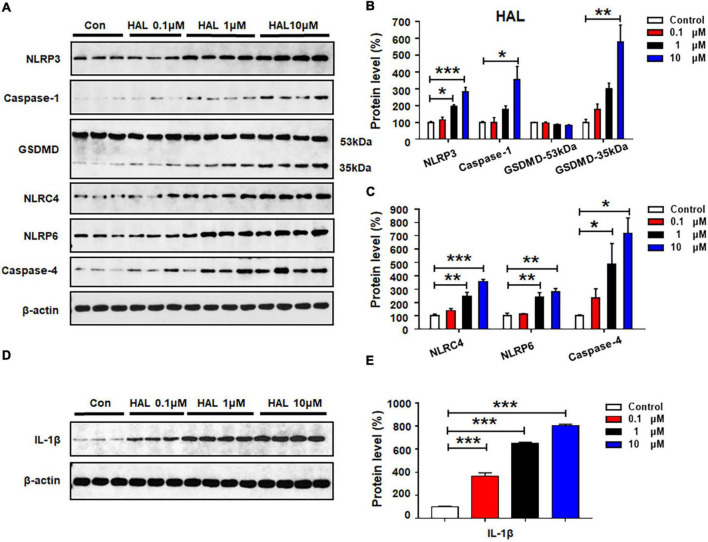
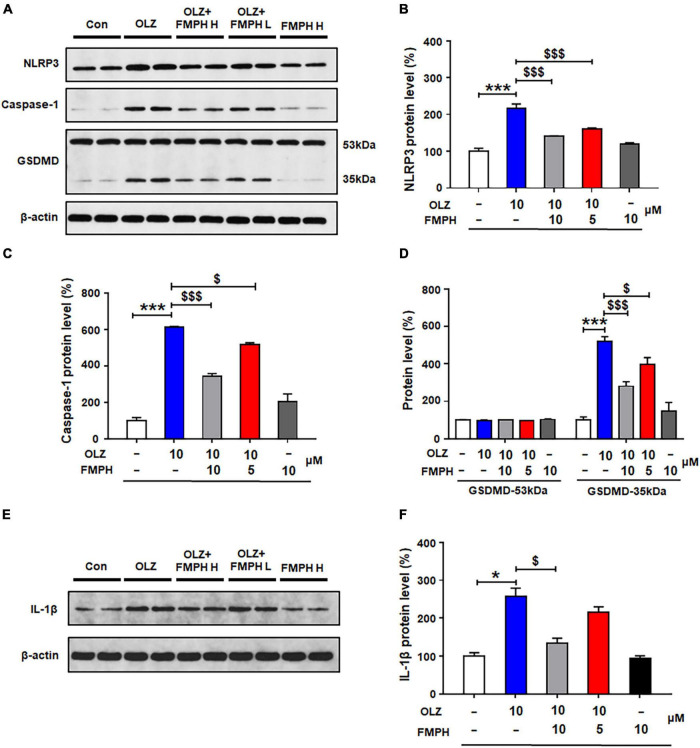
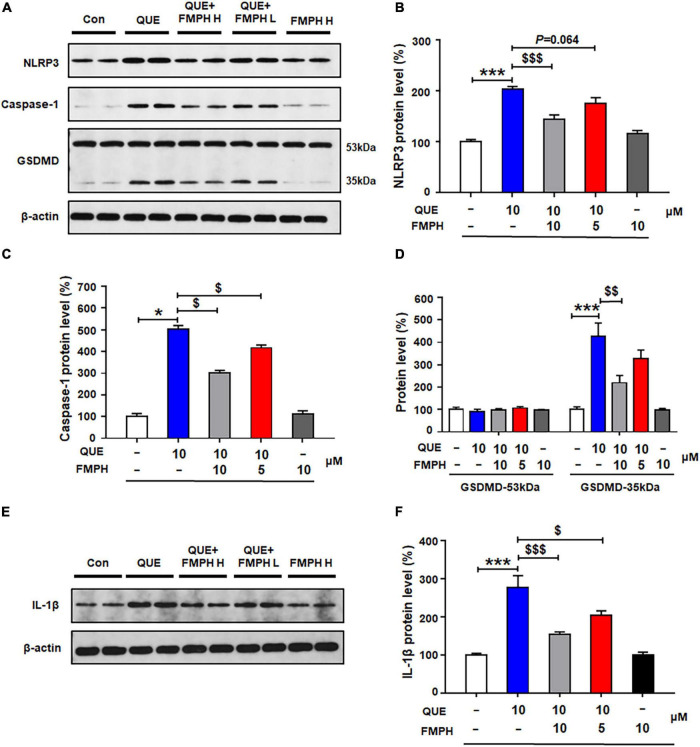
Emerging data indicate that antipsychotic treatment causes brain volume loss and astrocyte death, but the mechanisms remain elusive. Pyroptosis, inflammatory cell death characterized by the formation of inflammatory bodies, increased expression of nod-like receptor proteins (NLRPs) such as NLRP3, and activation of caspases and gasdermin D (GSDMD) are largely associated with innate immunity, inflammation, and cell injury/death. However, the main effect of antipsychotics on astrocyte pyroptotic signaling and the molecular mechanisms remain obscure. In the present study, 72-h treatment with olanzapine, quetiapine, risperidone, or haloperidol significantly decreased the viability of astrocytes. Twenty-four hour treatment with olanzapine, quetiapine, risperidone, or haloperidol dose-dependently increased the protein expression of astrocytic NLRP3, NLRP6, caspase-1, caspase-4, and GSDMD. Co-treatment with a histamine H1 receptor agonist, 2-(3-trifluoromethylphenyl) histamine (FMPH), dose-dependently reduced the increased expression of NLRP3, caspase-1 and GSDMD induced by olanzapine, quetiapine, risperidone, or haloperidol. Moreover, olanzapine, quetiapine, risperidone, or haloperidol treatment induced pore formation in the membranes of astrocytes, and these effects were inhibited by FMPH co-treatment. Taken together, antipsychotic treatment activated astrocyte pyroptotic signaling, and these effects may be related to antipsychotic-induced astrocyte death. H1 receptor activation is an effective treatment strategy to suppress antipsychotic-induced astrocyte pyroptosis and inflammation.
新出现的数据表明,抗精神病药物治疗会导致脑容量减少和星形胶质细胞死亡,但其机制仍不清楚。细胞焦亡是一种炎症性细胞死亡,其特征是炎性小体的形成、NOD样受体蛋白(NLRP)如NLRP3表达增加以及半胱天冬酶和gasdermin D(GSDMD)的激活,这在很大程度上与先天免疫、炎症和细胞损伤/死亡有关。然而,抗精神病药物对星形胶质细胞焦亡信号传导的主要作用及其分子机制仍不清楚。在本研究中,用奥氮平、喹硫平、利培酮或氟哌啶醇治疗72小时可显著降低星形胶质细胞的活力。用奥氮平、喹硫平、利培酮或氟哌啶醇治疗24小时可剂量依赖性地增加星形胶质细胞NLRP3、NLRP6、半胱天冬酶-1、半胱天冬酶-4和GSDMD的蛋白表达。与组胺H1受体激动剂2-(3-三氟甲基苯基)组胺(FMPH)共同治疗可剂量依赖性地降低奥氮平、喹硫平、利培酮或氟哌啶醇诱导的NLRP3、半胱天冬酶-1和GSDMD的表达增加。此外,奥氮平、喹硫平、利培酮或氟哌啶醇治疗可诱导星形胶质细胞膜形成孔道,而FMPH共同治疗可抑制这些作用。综上所述,抗精神病药物治疗激活了星形胶质细胞焦亡信号传导,这些作用可能与抗精神病药物诱导的星形胶质细胞死亡有关。H1受体激活是抑制抗精神病药物诱导的星形胶质细胞焦亡和炎症的有效治疗策略。