Innovative Genomics Institute, University of California, Berkeley, CA, USA.
Environmental Science, Policy and Management, University of California, Berkeley, CA, USA.
Nat Microbiol. 2022 Jun;7(6):918-927. doi: 10.1038/s41564-022-01128-6. Epub 2022 May 26.
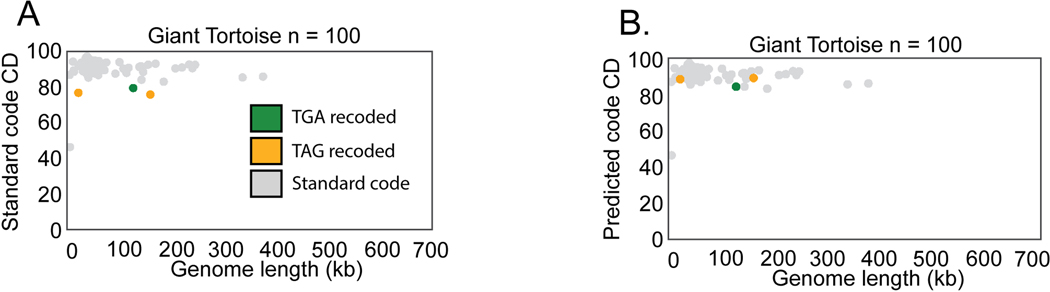
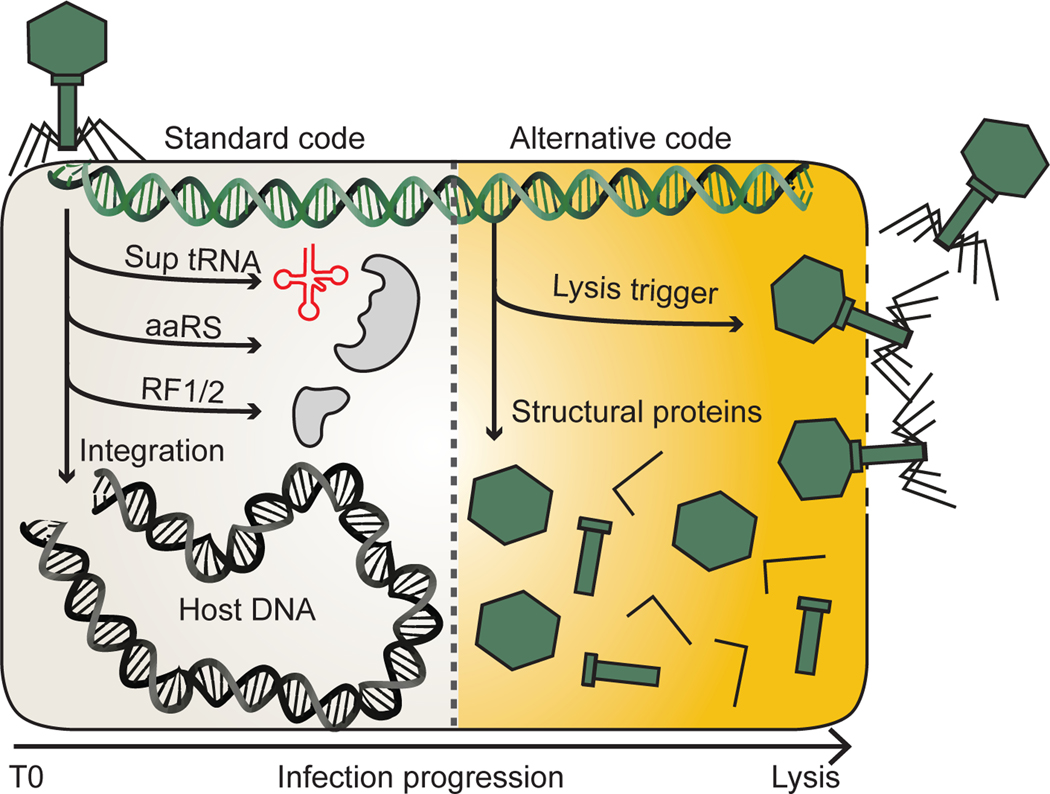
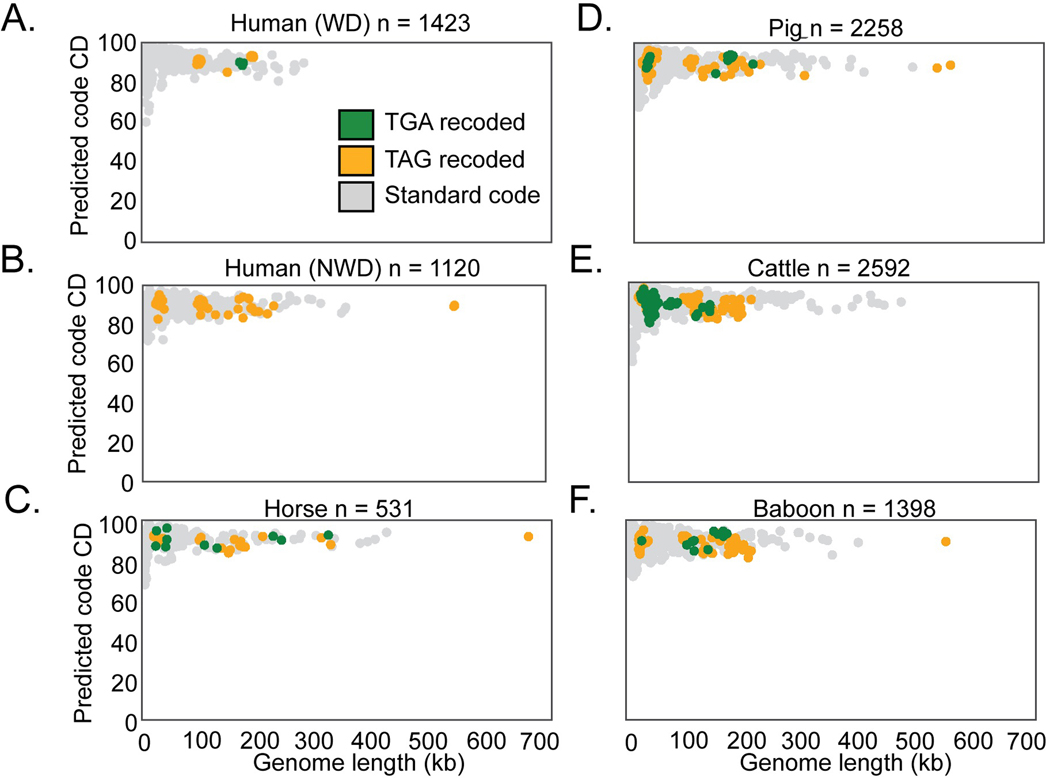
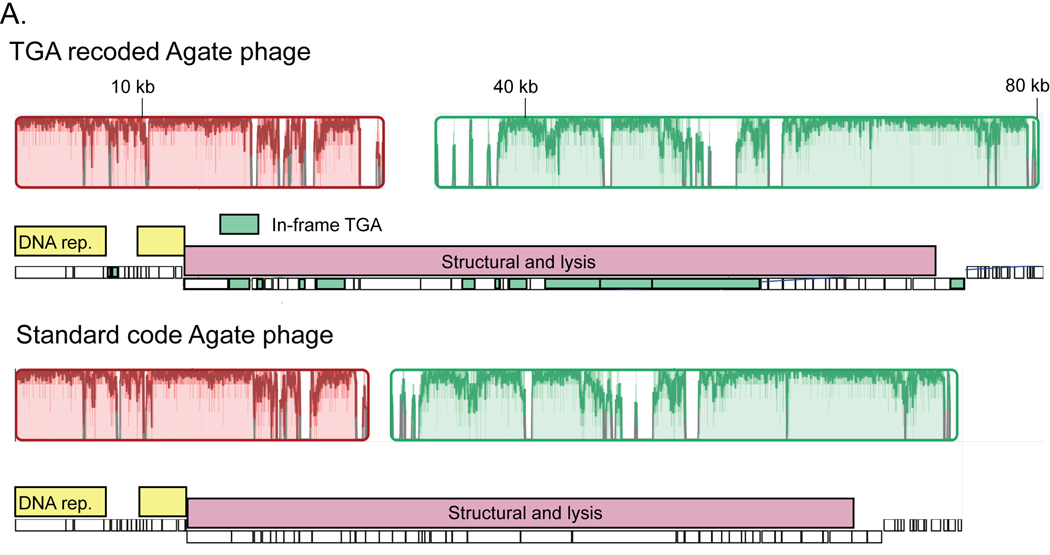
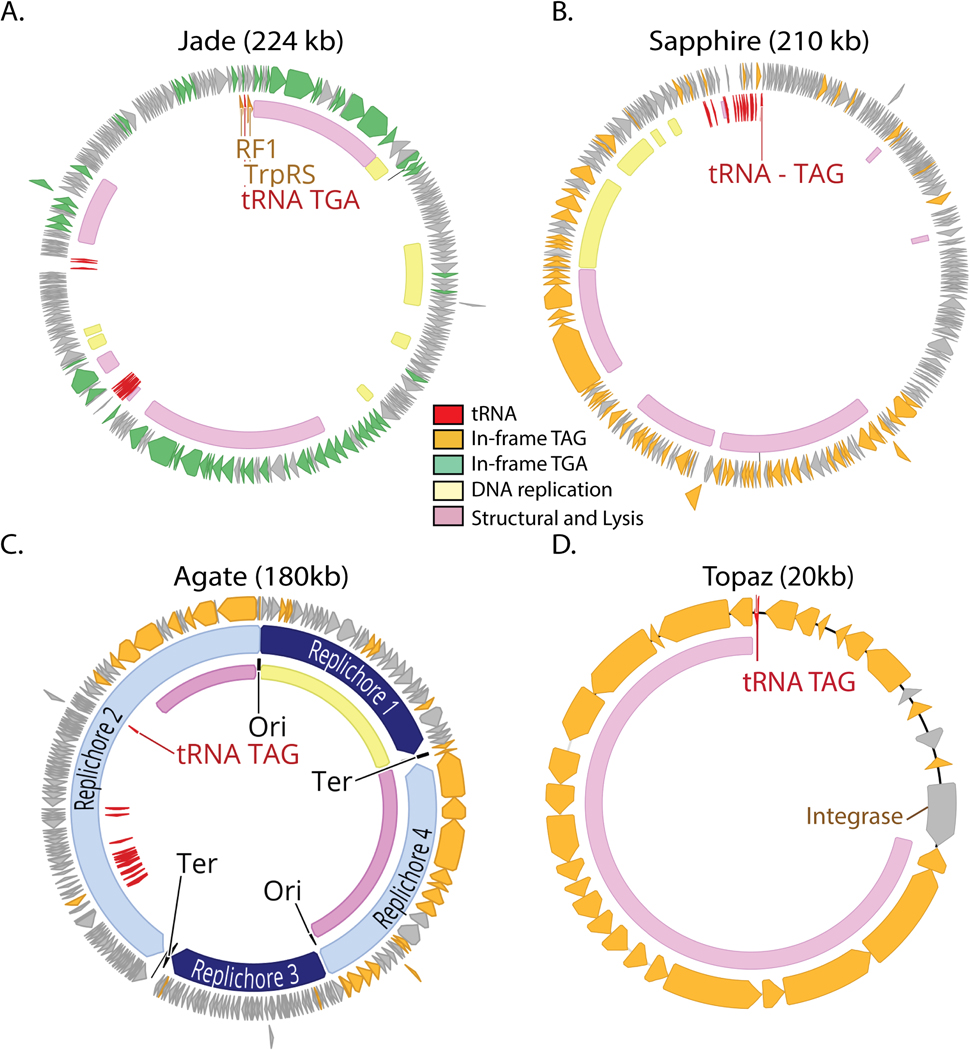
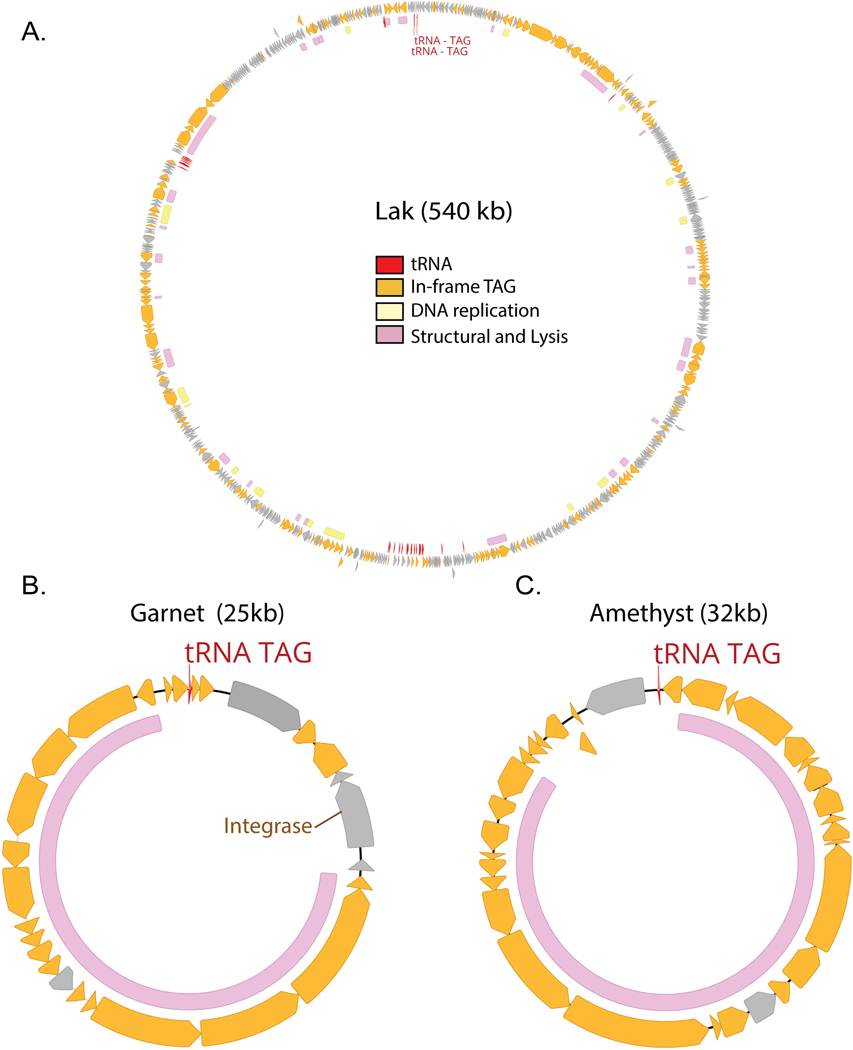
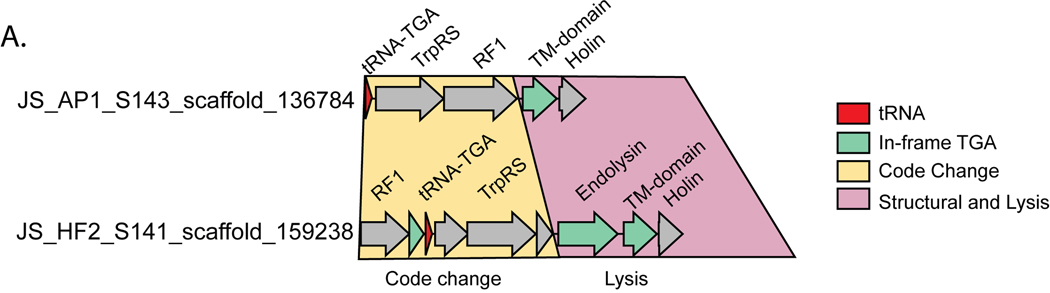
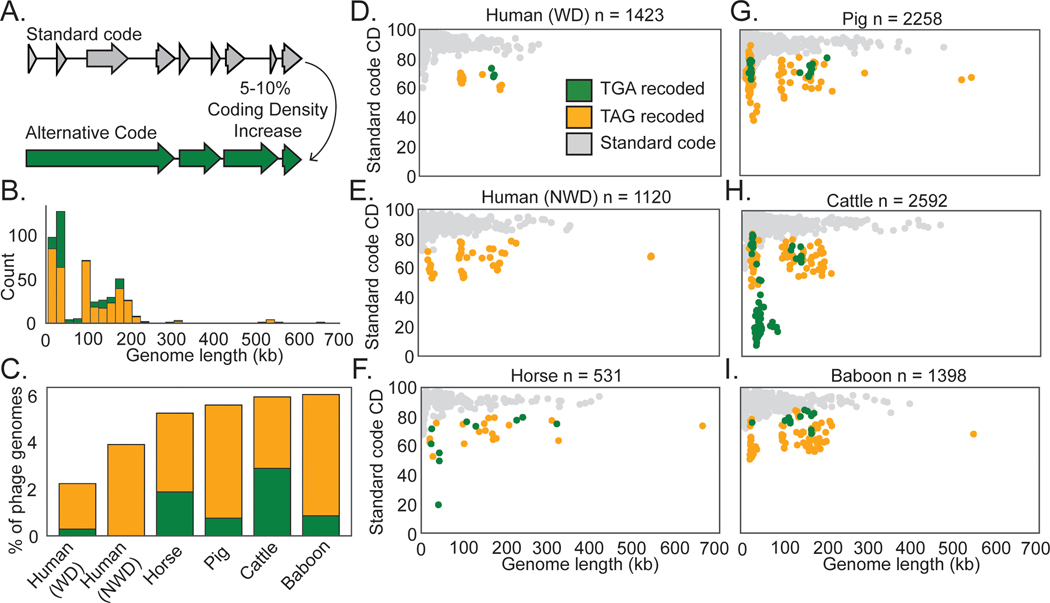
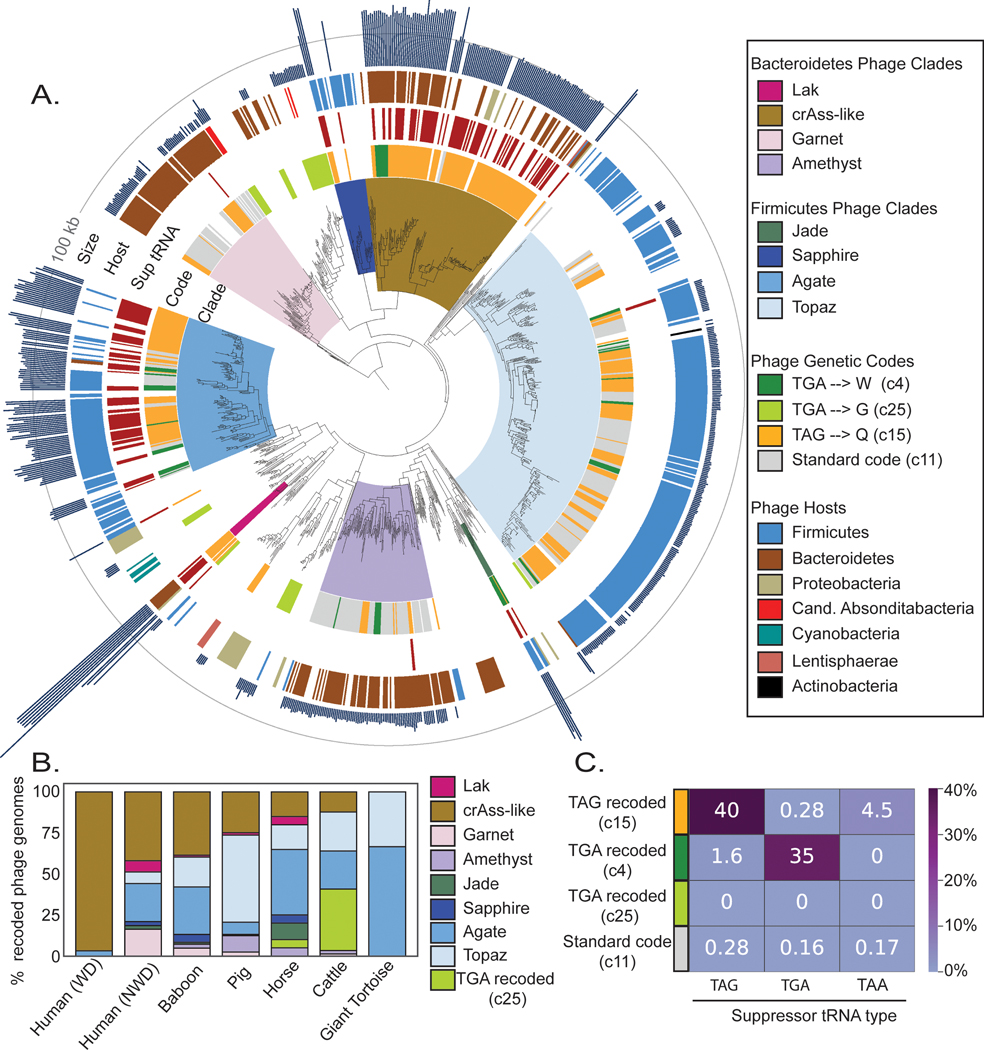
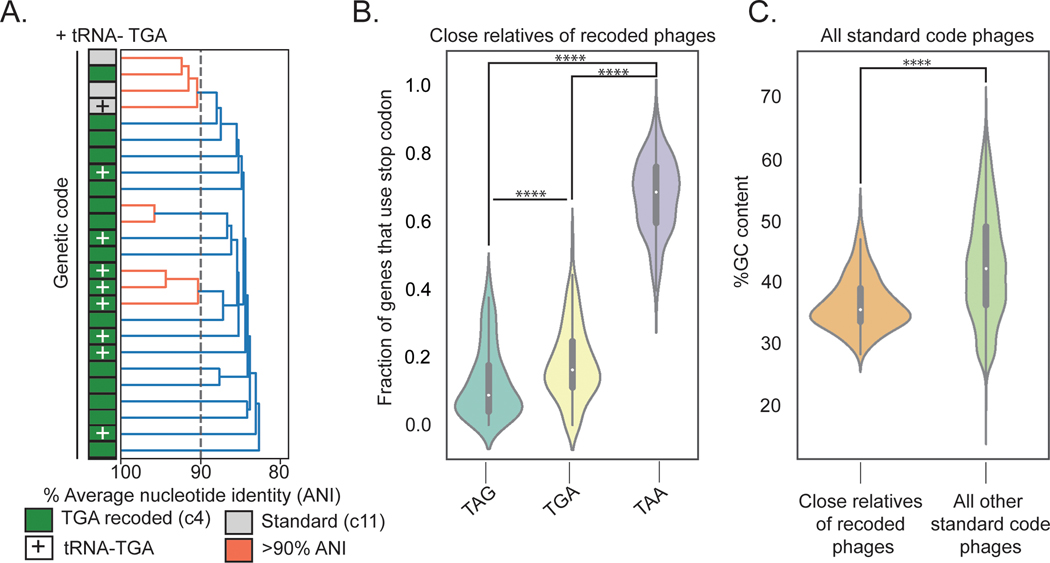
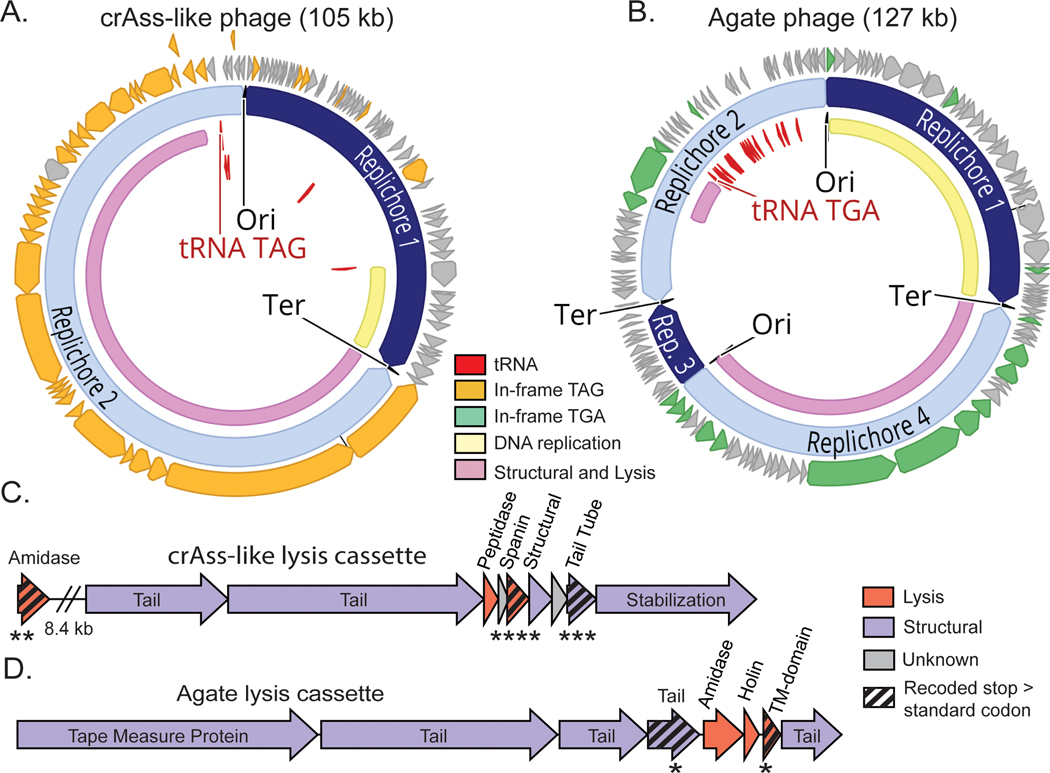
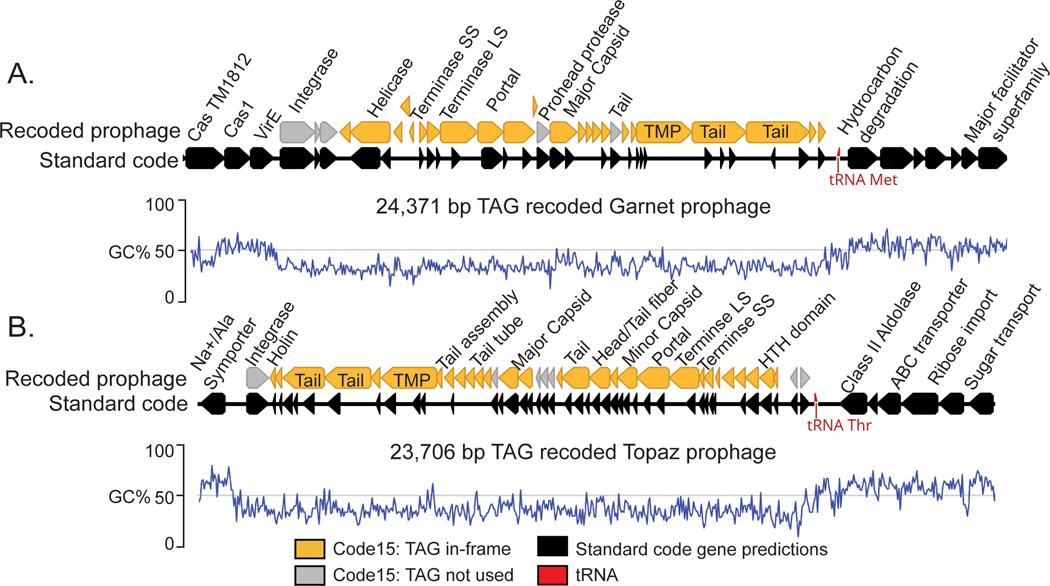
Bacteriophages (phages) are obligate parasites that use host bacterial translation machinery to produce viral proteins. However, some phages have alternative genetic codes with reassigned stop codons that are predicted to be incompatible with bacterial translation systems. We analysed 9,422 phage genomes and found that stop-codon recoding has evolved in diverse clades of phages that infect bacteria present in both human and animal gut microbiota. Recoded stop codons are particularly over-represented in phage structural and lysis genes. We propose that recoded stop codons might function to prevent premature production of late-stage proteins. Stop-codon recoding has evolved several times in closely related lineages, which suggests that adaptive recoding can occur over very short evolutionary timescales.
噬菌体(phages)是专性寄生的,它们利用宿主细菌的翻译机制来产生病毒蛋白。然而,一些噬菌体具有替代的遗传密码,其中的终止密码子被重新分配,预计与细菌翻译系统不兼容。我们分析了 9422 个噬菌体基因组,发现终止密码子重编码在感染人类和动物肠道微生物群中细菌的噬菌体的不同进化枝中进化。重编码的终止密码子在噬菌体的结构和裂解基因中特别多。我们提出,重编码的终止密码子可能有助于防止晚期蛋白过早产生。终止密码子重编码在密切相关的谱系中已经进化了多次,这表明适应性重编码可以在非常短的进化时间尺度上发生。