Department of Psychiatry, Autism Research Centre, University of Cambridge, 18b Trumpington Road, Autism Research Centre, Douglas House, Cambridge, CB2 8AH, UK.
Mol Autism. 2022 May 26;13(1):23. doi: 10.1186/s13229-022-00501-w.
Recent research suggests that autistic individuals have shorter lifespans and experience worse health (greater health burden) than non-autistic individuals. Small, qualitative studies suggest that autistic adults also experience poor self-reported healthcare quality.
An anonymized, cross-sectional, self-report questionnaire was administered to n = 4158 individuals. The study assessed prevalence of chronic health conditions, healthcare quality, differences in overall health inequality score, and effects of the coronavirus pandemic on healthcare quality. We used Fisher's exact tests, binomial logistic regression, and predictive machine learning tools, as appropriate.
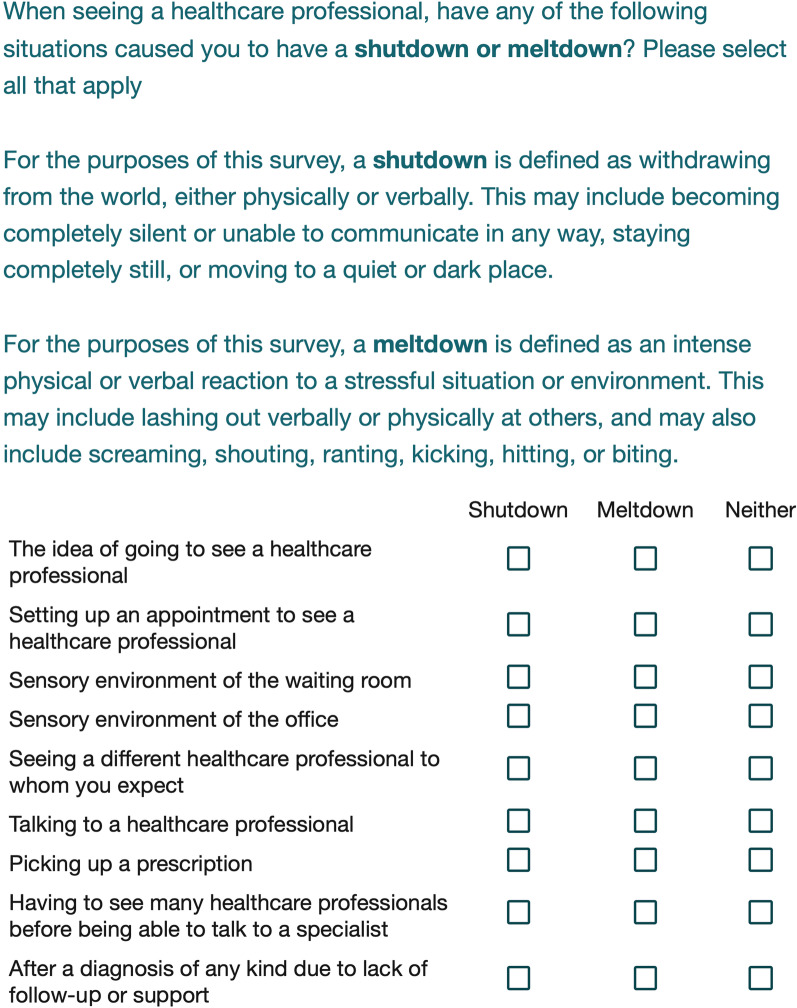
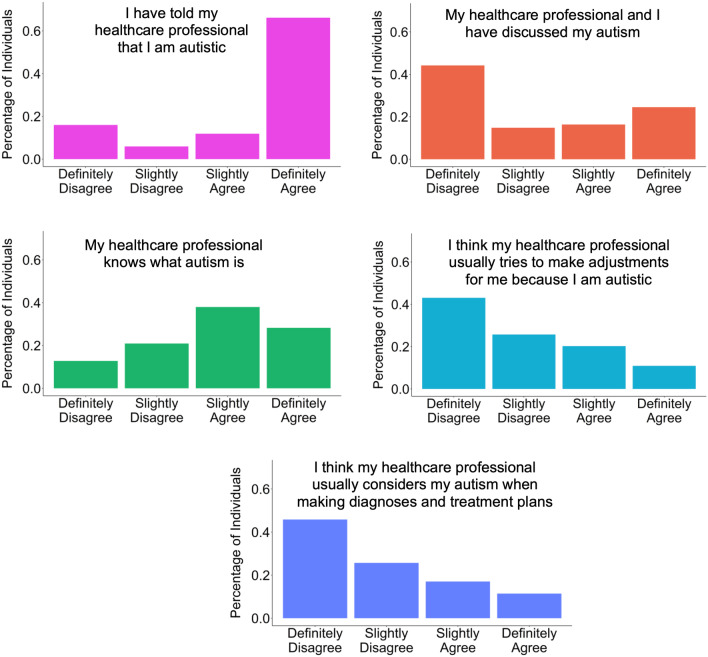
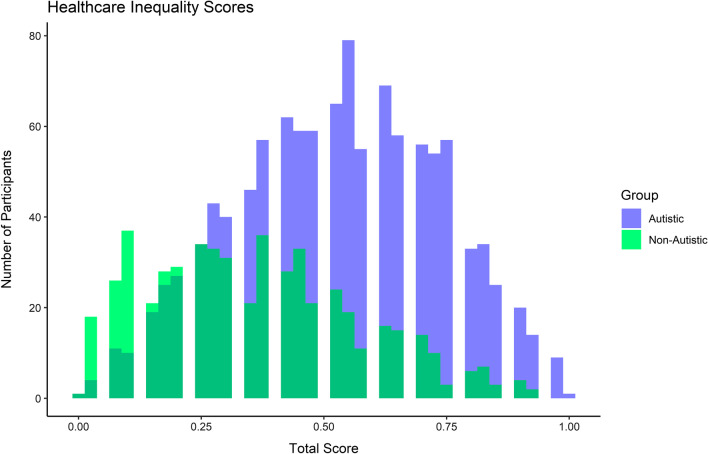
The final sample included n = 2649 participants (n = 1285 autistic) aged 16-96 years. Autistic adults reported lower quality healthcare than non-autistic adults across 50/51 items, including poorer access to healthcare and poorer communication, alongside increased anxiety, sensory sensitivity, system-level problems, shutdowns, and meltdowns. Differences between groups were stark: aggregated health inequality scores predicted autism diagnosis, even after stratifying by sex. Autistic adults were also more likely to have chronic health conditions than non-autistic adults. There were no significant differences in healthcare quality for autistic adults before and during the pandemic, although they received relatively poorer quality healthcare than non-autistic adults across both periods.
The study's sampling methods are not likely to capture the perspectives of all autistic individuals, especially those with intellectual disability. Both the autistic and control samples are biased towards UK residents, white individuals, those assigned female at birth, and those who completed an undergraduate degree or higher education. As such, these results may limit their generalizability to other groups. Finally, these results relate to self-reported differences in healthcare quality between autistic and non-autistic adults. The observed group differences may in part reflect differences in perception and communication rather than differences in actual healthcare quality.
Autistic adults are more likely to have chronic health conditions alongside self-reported lower quality healthcare than others. Health inequalities between these groups are widespread and dramatic; unfortunately, they existed before and have persisted after the onset of the coronavirus pandemic.
最近的研究表明,自闭症患者的寿命比非自闭症患者更短,健康状况更差(健康负担更大)。小型定性研究表明,自闭症成年人也报告了较差的自我医疗保健质量。
对 n = 4158 名个体进行了匿名、横断面、自我报告问卷调查。该研究评估了慢性健康状况的患病率、医疗保健质量、整体健康不平等评分的差异,以及冠状病毒大流行对医疗保健质量的影响。我们使用 Fisher 确切检验、二项逻辑回归和适当的预测机器学习工具。
最终样本包括 n = 2649 名参与者(n = 1285 名自闭症患者),年龄为 16-96 岁。自闭症成年人在 50/51 项中报告的医疗保健质量低于非自闭症成年人,包括更难获得医疗保健和沟通不畅,以及更高的焦虑、感官敏感、系统问题、关闭和崩溃。两组之间的差异明显:聚合健康不平等评分预测了自闭症诊断,即使在按性别分层后也是如此。自闭症成年人也比非自闭症成年人更容易患有慢性健康状况。在大流行之前和期间,自闭症成年人的医疗保健质量没有显著差异,尽管他们在两个时期都比非自闭症成年人接受的医疗保健质量较差。
该研究的抽样方法不太可能捕捉到所有自闭症患者的观点,尤其是那些有智力残疾的患者。自闭症和对照组都偏向于英国居民、白人、出生时被分配为女性的人以及完成本科或更高学历的人。因此,这些结果可能限制了它们在其他群体中的适用性。最后,这些结果涉及自闭症和非自闭症成年人之间自我报告的医疗保健质量差异。观察到的组间差异部分可能反映了感知和沟通上的差异,而不是实际医疗保健质量上的差异。
自闭症成年人比其他人更有可能患有慢性健康状况,同时自我报告的医疗保健质量较低。这些群体之间的健康不平等现象普遍存在且巨大;不幸的是,这些不平等现象在冠状病毒大流行之前就存在,并且在大流行之后仍然存在。