Department of Microbiology and Immunology, University of Texas Medical Branch, Galveston, Texas, United States of America.
Galveston National Laboratory, University of Texas Medical Branch, Galveston, Texas, United States of America.
PLoS Negl Trop Dis. 2022 May 27;16(5):e0010433. doi: 10.1371/journal.pntd.0010433. eCollection 2022 May.
Marburg virus (MARV), an Ebola-like virus, remains an eminent threat to public health as demonstrated by its high associated mortality rate (23-90%) and recent emergence in West Africa for the first time. Although a recombinant vesicular stomatitis virus (rVSV)-based vaccine (Ervebo) is licensed for Ebola virus disease (EVD), no approved countermeasures exist against MARV. Results from clinical trials indicate Ervebo prevents EVD in 97.5-100% of vaccinees 10 days onwards post-immunization.
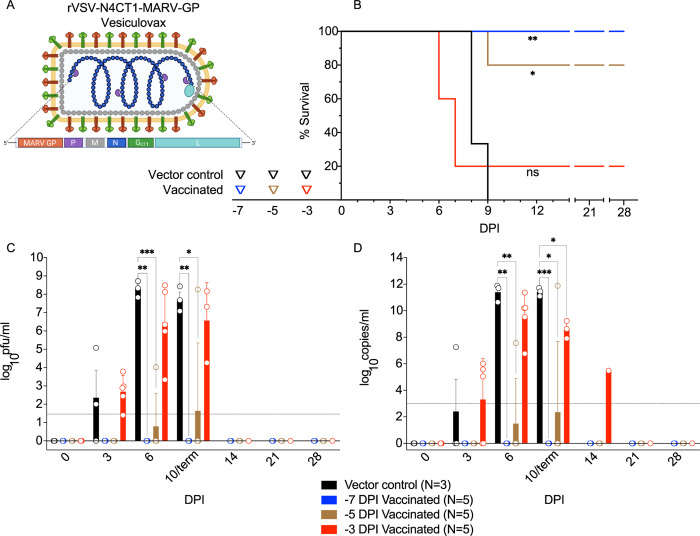
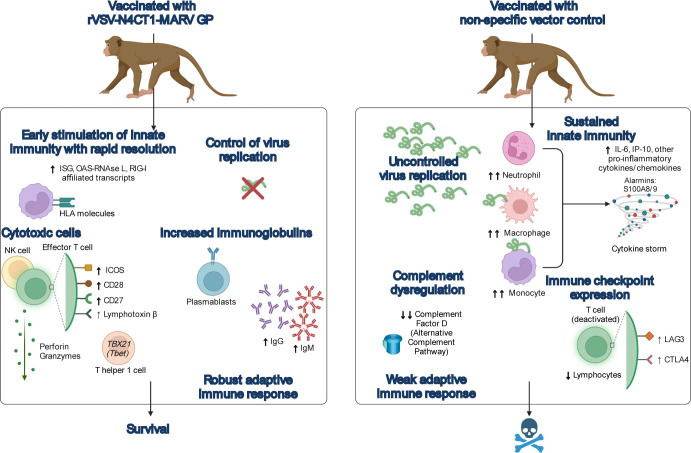
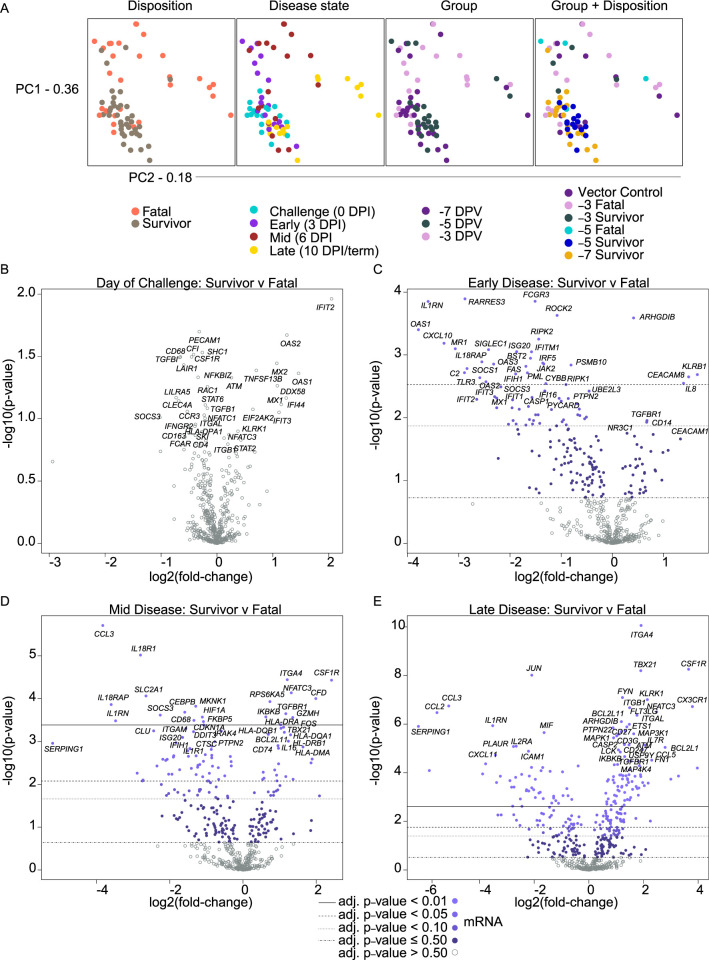
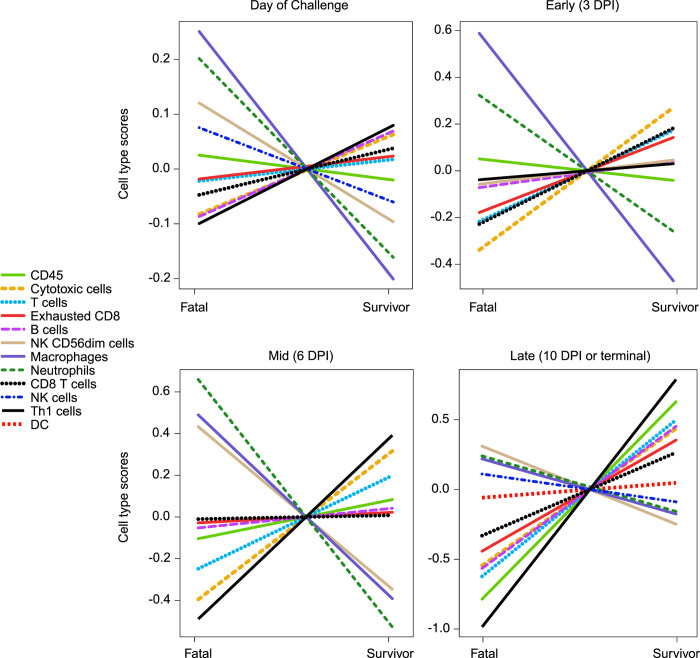
METHODOLOGY/FINDINGS: Given the rapid immunogenicity of the Ervebo platform against EVD, we tested whether a similar, but highly attenuated, rVSV-based Vesiculovax vector expressing the glycoprotein (GP) of MARV (rVSV-N4CT1-MARV-GP) could provide swift protection against Marburg virus disease (MVD). Here, groups of cynomolgus monkeys were vaccinated 7, 5, or 3 days before exposure to a lethal dose of MARV (Angola variant). All subjects (100%) immunized one week prior to challenge survived; 80% and 20% of subjects survived when vaccinated 5- and 3-days pre-exposure, respectively. Lethality was associated with higher viral load and sustained innate immunity transcriptional signatures, whereas survival correlated with development of MARV GP-specific antibodies and early expression of predicted NK cell-, B-cell-, and cytotoxic T-cell-type quantities.
CONCLUSIONS/SIGNIFICANCE: These results emphasize the utility of Vesiculovax vaccines for MVD outbreak management. The highly attenuated nature of rVSV-N4CT1 vaccines, which are clinically safe in humans, may be preferable to vaccines based on the same platform as Ervebo (rVSV "delta G" platform), which in some trial participants induced vaccine-related adverse events in association with viral replication including arthralgia/arthritis, dermatitis, and cutaneous vasculitis.
马尔堡病毒(MARV)是一种类似于埃博拉病毒的病毒,其高死亡率(23-90%)和最近首次在西非出现,这表明它仍然对公共卫生构成严重威胁。尽管一种基于重组水疱性口炎病毒(rVSV)的疫苗(Ervebo)已获得许可用于治疗埃博拉病毒病(EVD),但尚无针对 MARV 的批准对策。临床试验结果表明,在接种疫苗后 10 天,Ervebo 可预防 97.5-100%的疫苗接种者发生 EVD。
方法/发现:鉴于 Ervebo 平台对 EVD 的快速免疫原性,我们测试了是否可以使用类似但高度减毒的基于 rVSV 的 Vesiculovax 载体来表达 MARV 的糖蛋白(GP)(rVSV-N4CT1-MARV-GP),从而快速提供针对马尔堡病毒病(MVD)的保护。在这里,一组食蟹猴在暴露于致命剂量的 MARV(安哥拉变体)前 7、5 或 3 天接受了疫苗接种。所有在一周前接受免疫接种的实验对象(100%)均存活;在暴露前 5 天和 3 天接受疫苗接种的实验对象中,分别有 80%和 20%存活。死亡率与更高的病毒载量和持续的固有免疫转录特征相关,而存活与 MARV GP 特异性抗体的发展和预测的 NK 细胞、B 细胞和细胞毒性 T 细胞类型的早期表达相关。
结论/意义:这些结果强调了 Vesiculovax 疫苗在 MVD 暴发管理中的应用。rVSV-N4CT1 疫苗的高度减毒特性使其在人类中具有临床安全性,可能优于基于 Ervebo(rVSV“delta G”平台)的疫苗,在某些试验参与者中,该平台的疫苗与病毒复制相关的不良事件相关,包括关节痛/关节炎、皮疹和皮肤血管炎。