Jakubiak Grzegorz K, Cieślar Grzegorz, Stanek Agata
Department and Clinic of Internal Medicine, Angiology, and Physical Medicine, Faculty of Medical Sciences in Zabrze, Medical University of Silesia, Batorego 15 St., 41-902 Bytom, Poland.
Antioxidants (Basel). 2022 Apr 27;11(5):856. doi: 10.3390/antiox11050856.
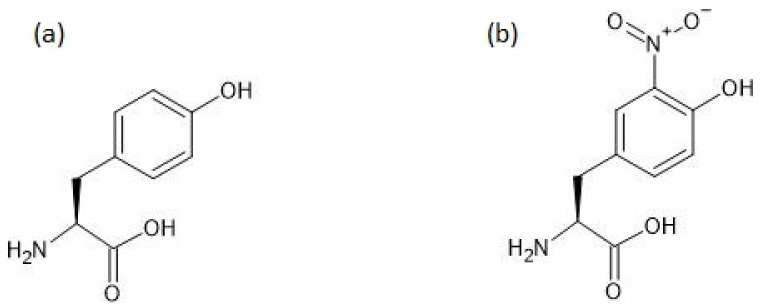
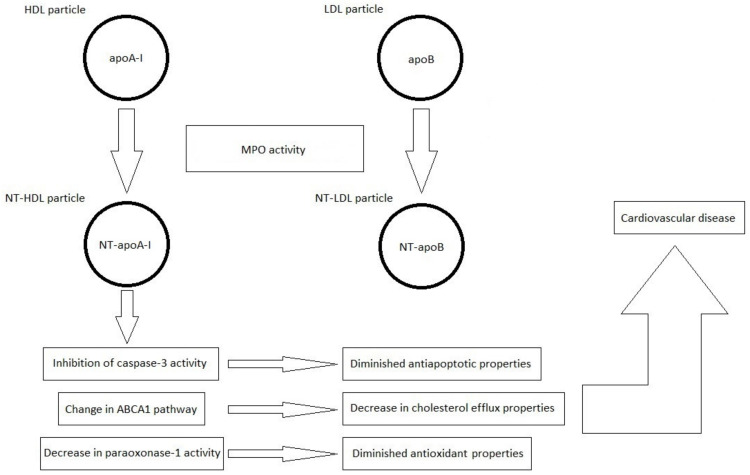
Diabetes mellitus (DM) is a strong risk factor for the development of cardiovascular diseases (CVDs), which are the most important cause of morbidity and mortality in the population of patients living with DM. DM is associated with lipid metabolism disorders characterized by a decrease in the high-density lipoprotein blood concentration, an increase in the triglyceride blood concentration, and the presence of modified lipoproteins not routinely measured in clinical practice. Nitrated lipoproteins are produced by the nitration of the tyrosyl residues of apolipoproteins by myeloperoxidase. There is some evidence from the research conducted showing that nitrated lipoproteins may play a role in the development of cardiovascular dysfunction, but this issue requires further investigation. It was found that the nitration of HDL particles was associated with a decrease in caspase-3 and paraoxonase-1 activity, as well as a decrease in the activity of cholesterol transport via ABCA1, which reduces the protective effect of HDL particles on the cardiovascular system. Less information has been collected about the role of nitrated LDL particles. Thus far, much more information has been obtained on the relationship of nitrotyrosine expression with the presence of cardiovascular risk factors and the development of cardiovascular dysfunction. The purpose of this paper is to provide an extensive review of the literature and to present the most important information on the current state of knowledge on the association between nitrotyrosine and nitrated lipoproteins with dysfunction of the cardiovascular system, especially in patients living with DM. Moreover, directions for future research in this area were discussed.
糖尿病(DM)是心血管疾病(CVDs)发生的一个重要危险因素,而心血管疾病是糖尿病患者群体发病和死亡的最重要原因。糖尿病与脂质代谢紊乱相关,其特征为血液中高密度脂蛋白浓度降低、甘油三酯浓度升高,以及存在临床实践中通常不检测的修饰脂蛋白。硝化脂蛋白是由髓过氧化物酶对载脂蛋白的酪氨酸残基进行硝化作用产生的。已开展的研究有一些证据表明,硝化脂蛋白可能在心血管功能障碍的发生中起作用,但这个问题需要进一步研究。研究发现,高密度脂蛋白颗粒的硝化作用与半胱天冬酶 - 3和对氧磷酶 - 1活性降低有关,以及通过ABCA1的胆固醇转运活性降低,这会降低高密度脂蛋白颗粒对心血管系统的保护作用。关于硝化低密度脂蛋白颗粒的作用收集到的信息较少。到目前为止,关于硝基酪氨酸表达与心血管危险因素的存在以及心血管功能障碍的发生之间的关系,已经获得了更多信息。本文的目的是对文献进行广泛综述,并介绍关于硝基酪氨酸和硝化脂蛋白与心血管系统功能障碍之间关联的当前知识状态的最重要信息,特别是在糖尿病患者中。此外,还讨论了该领域未来的研究方向。