Cardoso Beatriz D, Cardoso Vanessa F, Lanceros-Méndez Senetxu, Castanheira Elisabete M S
Physics Centre of Minho and Porto Universities (CF-UM-UP), University of Minho, Campus de Gualtar, 4710-057 Braga, Portugal.
LaPMET-Laboratory of Physics for Materials and Emergent Technologies, University of Minho, 4710-057 Braga, Portugal.
Biomedicines. 2022 May 23;10(5):1207. doi: 10.3390/biomedicines10051207.
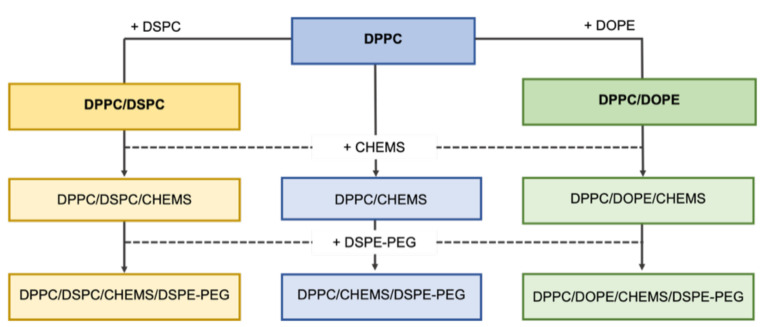
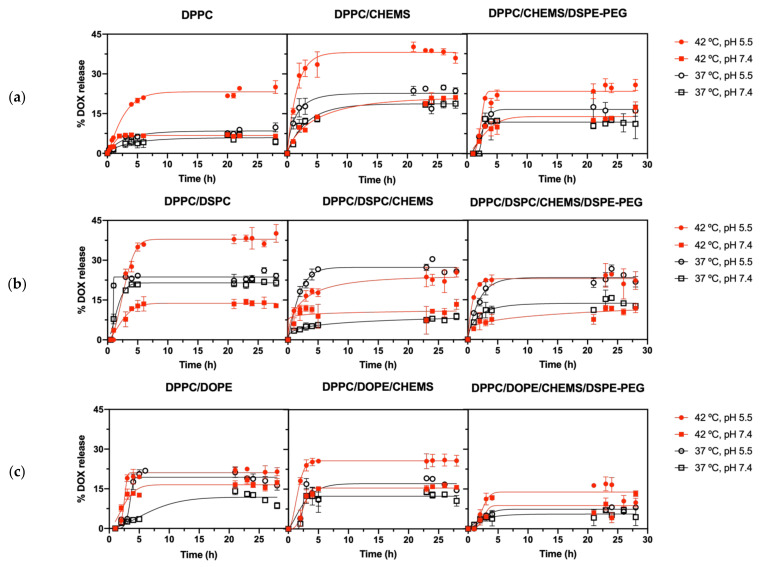
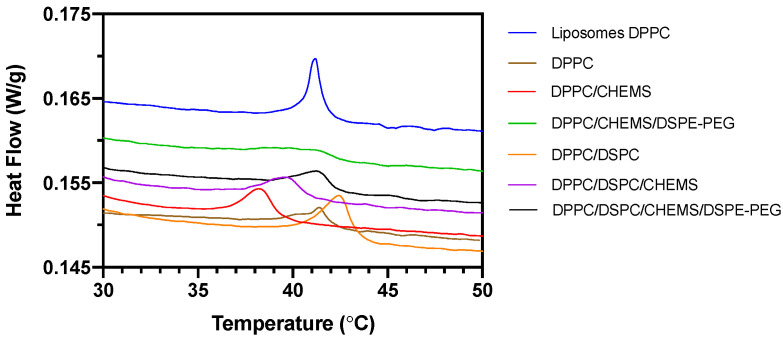
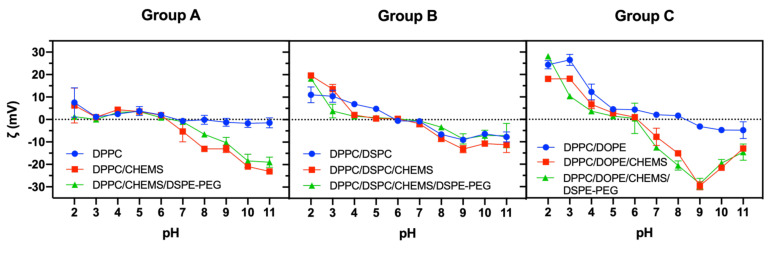
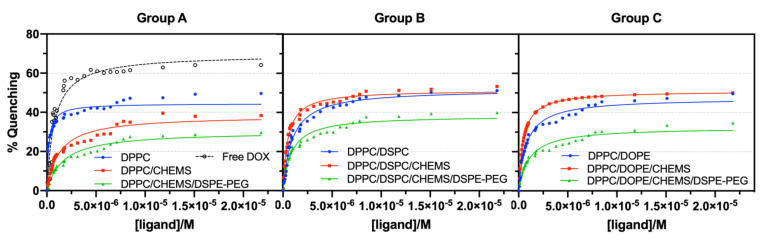
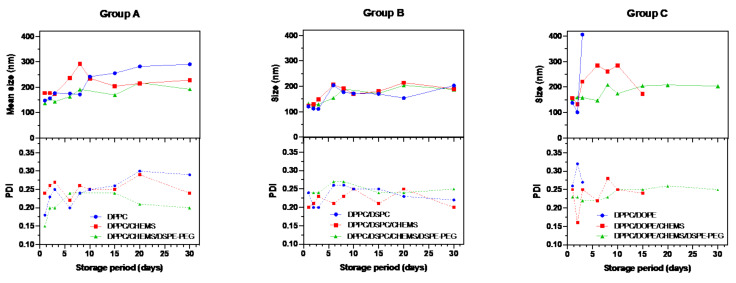
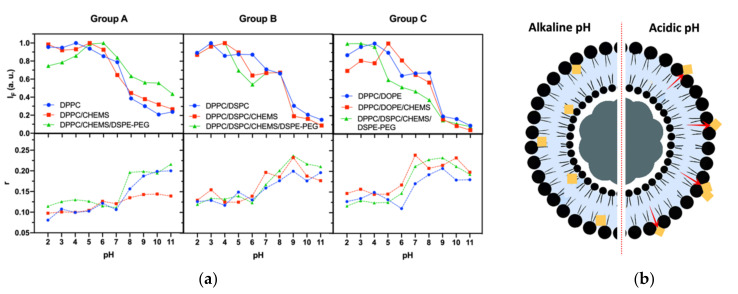
Stimuli-responsive liposomes are a class of nanocarriers whose drug release occurs, preferentially, when exposed to a specific biological environment, to an external stimulus, or both. This work is focused on the design of solid magnetoliposomes (SMLs) as lipid-based nanosystems aiming to obtain multi-stimuli-responsive vesicles for doxorubicin (DOX) controlled release in pathological areas under the action of thermal, magnetic, and pH stimuli. The effect of lipid combinations on structural, colloidal stability, and thermodynamic parameters were evaluated. The results confirmed the reproducibility for SMLs synthesis based on nine lipid formulations (combining DPPC, DSPC, CHEMS, DOPE and/or DSPE-PEG), with structural and colloidal properties suitable for biological applications. A loss of stability and thermosensitivity was observed for formulations containing dioleoylphosphatidylethanolamine (DOPE) lipid. SMLs PEGylation is an essential step to enhance both their long-term storage stability and stealth properties. DOX encapsulation (encapsulation efficiency ranging between 87% and 96%) in the bilayers lowered its pK, which favors the displacement of DOX from the acyl chains to the surface when changing from alkaline to acidic pH. The release profiles demonstrated a preferential release at acidic pH, more pronounced under mimetic mild-hyperthermia conditions (42 °C). Release kinetics varied with the lipid formulation, generally demonstrating hyperthermia temperatures and acidic pH as determining factors in DOX release; PEGylation was shown to act as a diffusion barrier on the SMLs surface. The integrated assessment and characterization of SMLs allows tuning lipid formulations that best respond to the needs for specific controlled release profiles of stimuli-responsive nanosystems as a multi-functional approach to cancer targeting and therapy.
刺激响应性脂质体是一类纳米载体,其药物释放优先发生在暴露于特定生物环境、外部刺激或两者同时存在时。这项工作专注于设计固体磁脂质体(SMLs)作为基于脂质的纳米系统,旨在获得多刺激响应性囊泡,用于在热、磁和pH刺激作用下在病理区域实现阿霉素(DOX)的控释。评估了脂质组合对结构、胶体稳定性和热力学参数的影响。结果证实了基于九种脂质配方(结合DPPC、DSPC、CHEMS、DOPE和/或DSPE-PEG)合成SMLs的可重复性,其结构和胶体性质适用于生物应用。观察到含有二油酰磷脂酰乙醇胺(DOPE)脂质的配方稳定性和热敏感性丧失。SMLs的聚乙二醇化是提高其长期储存稳定性和隐身性能的关键步骤。双层中DOX的包封(包封效率在87%至96%之间)降低了其pK,这有利于在从碱性pH变为酸性pH时DOX从酰基链向表面的位移。释放曲线表明在酸性pH下优先释放,在模拟温和热疗条件(42°C)下更明显。释放动力学随脂质配方而变化,通常表明热疗温度和酸性pH是DOX释放的决定因素;聚乙二醇化被证明在SMLs表面起到扩散屏障的作用。对SMLs的综合评估和表征允许调整脂质配方,以最佳响应刺激响应性纳米系统特定控释曲线的需求,作为癌症靶向和治疗的多功能方法。