Doctor Thomas, Witkowski Olaf, Solomonova Elizaveta, Duane Bill, Levin Michael
Centre for Buddhist Studies, Rangjung Yeshe Institute, Kathmandu University, Kathmandu 44600, Nepal.
Center for the Study of Apparent Selves, Rangjung Yeshe Institute, Kathmandu 44600, Nepal.
Entropy (Basel). 2022 May 16;24(5):710. doi: 10.3390/e24050710.
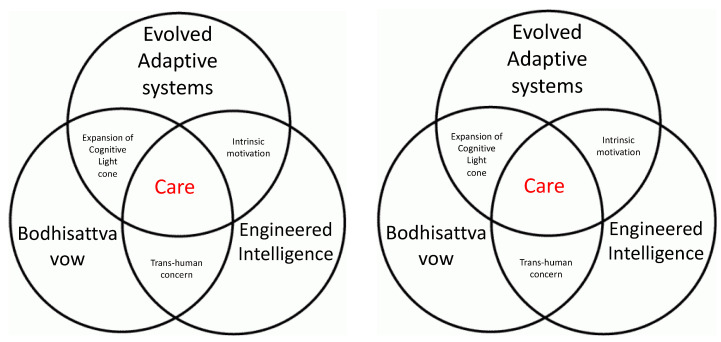
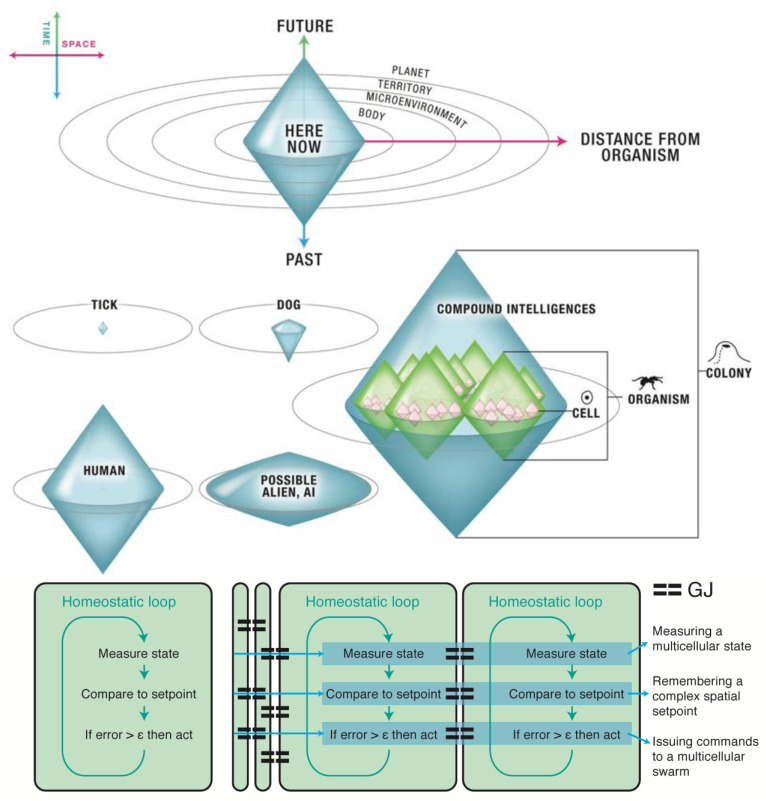
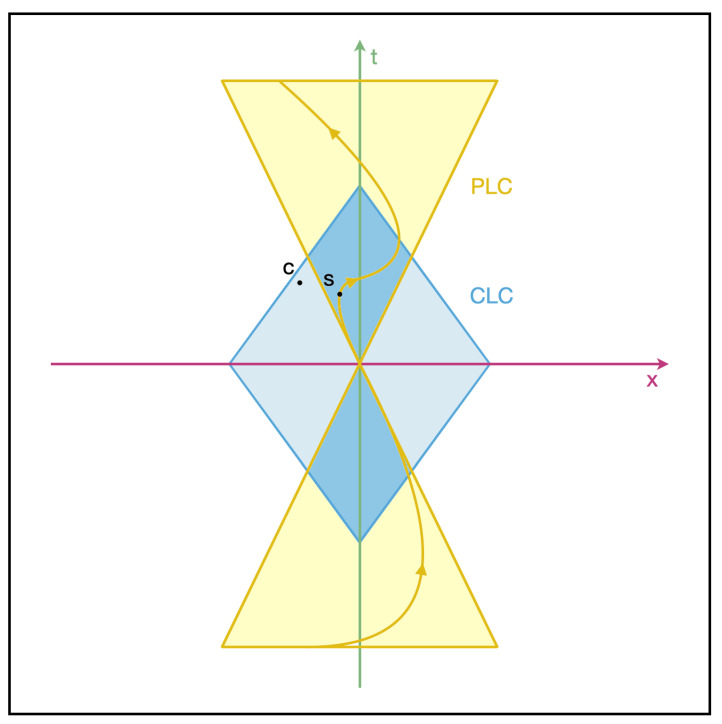
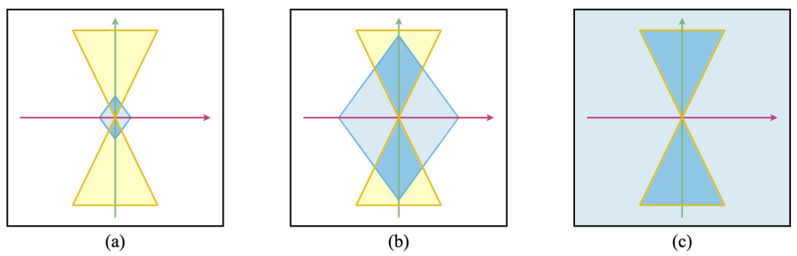
Intelligence is a central feature of human beings' primary and interpersonal experience. Understanding how intelligence originated and scaled during evolution is a key challenge for modern biology. Some of the most important approaches to understanding intelligence are the ongoing efforts to build new intelligences in computer science (AI) and bioengineering. However, progress has been stymied by a lack of multidisciplinary consensus on what is central about intelligence regardless of the details of its material composition or origin (evolved vs. engineered). We show that Buddhist concepts offer a unique perspective and facilitate a consilience of biology, cognitive science, and computer science toward understanding intelligence in truly diverse embodiments. In coming decades, chimeric and bioengineering technologies will produce a wide variety of novel beings that look nothing like familiar natural life forms; how shall we gauge their moral responsibility and our own moral obligations toward them, without the familiar touchstones of standard evolved forms as comparison? Such decisions cannot be based on what the agent is made of or how much design vs. natural evolution was involved in their origin. We propose that the scope of our potential relationship with, and so also our moral duty toward, any being can be considered in the light of Care-a robust, practical, and dynamic lynchpin that formalizes the concepts of goal-directedness, stress, and the scaling of intelligence; it provides a rubric that, unlike other current concepts, is likely to not only survive but thrive in the coming advances of AI and bioengineering. We review relevant concepts in basal cognition and Buddhist thought, focusing on the size of an agent's goal space (its cognitive light cone) as an invariant that tightly links intelligence and compassion. Implications range across interpersonal psychology, regenerative medicine, and machine learning. The Bodhisattva's vow ("for the sake of all sentient life, I shall achieve awakening") is a practical design principle for advancing intelligence in our novel creations and in ourselves.
智力是人类主要和人际体验的核心特征。理解智力在进化过程中如何起源和发展是现代生物学面临的关键挑战。一些理解智力的最重要方法是计算机科学(人工智能)和生物工程领域正在进行的构建新智能的努力。然而,由于缺乏关于智力核心要素的多学科共识,无论其物质构成或起源细节(进化而来还是设计而来)如何,进展都受到了阻碍。我们表明,佛教概念提供了独特的视角,并促进了生物学、认知科学和计算机科学在理解真正多样化实体中的智力方面的融合。在未来几十年里,嵌合体和生物工程技术将产生各种各样与熟悉的自然生命形式毫无相似之处的新生物;在没有标准进化形式这一熟悉参照的情况下,我们应如何衡量它们的道德责任以及我们对它们的道德义务?这样的决策不能基于主体的构成材料或其起源中涉及多少设计与自然进化。我们提出,可以根据“关怀”来考虑我们与任何生物潜在关系的范围以及相应的道德责任,“关怀”是一个强大、实用且动态的关键要素,它将目标导向性、压力和智力发展等概念形式化;它提供了一个准则,与其他当前概念不同,这个准则不仅可能在人工智能和生物工程的未来发展中存续,而且还会蓬勃发展。我们回顾了基础认知和佛教思想中的相关概念,重点关注主体目标空间的大小(其认知光锥),它是一个将智力与慈悲紧密联系的不变量。其影响涵盖人际心理学、再生医学和机器学习等领域。菩萨誓愿(“为了一切有情众生,我将证得觉醒”)是在我们的新创造物以及我们自身中提升智力的一项实用设计原则。