Levin Michael
Allen Discovery Center at Tufts University, Medford, MA, United States.
Wyss Institute for Biologically Inspired Engineering at Harvard University, Cambridge, MA, United States.
Front Syst Neurosci. 2022 Mar 24;16:768201. doi: 10.3389/fnsys.2022.768201. eCollection 2022.
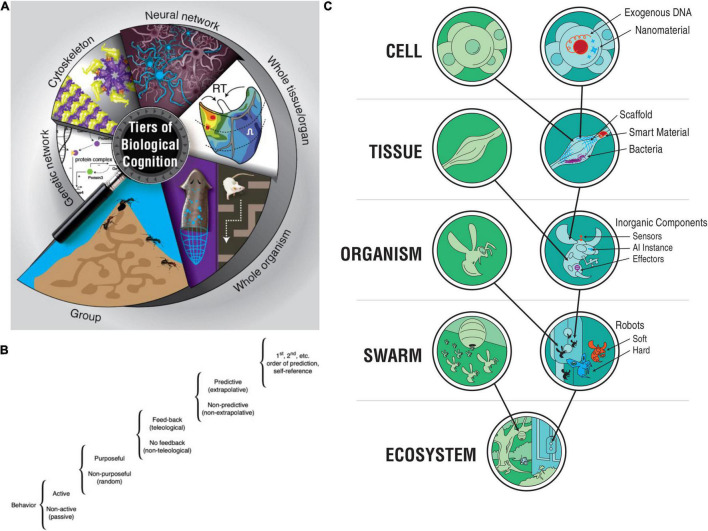
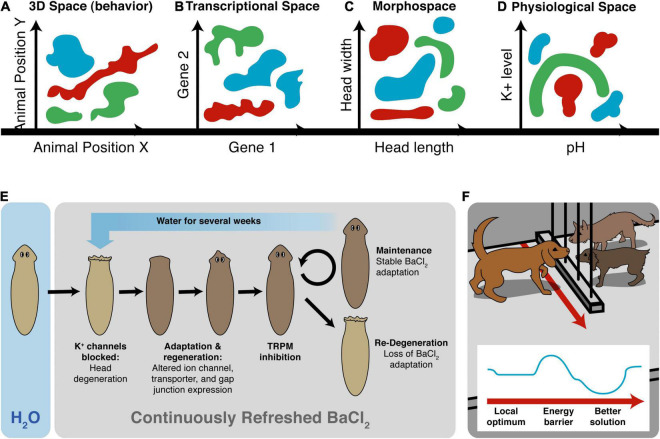
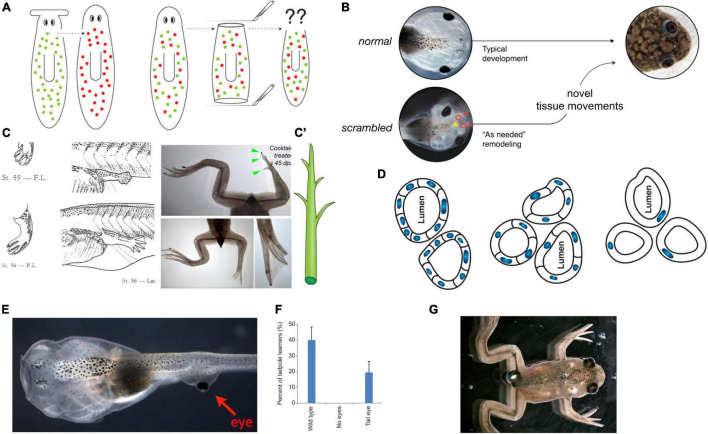
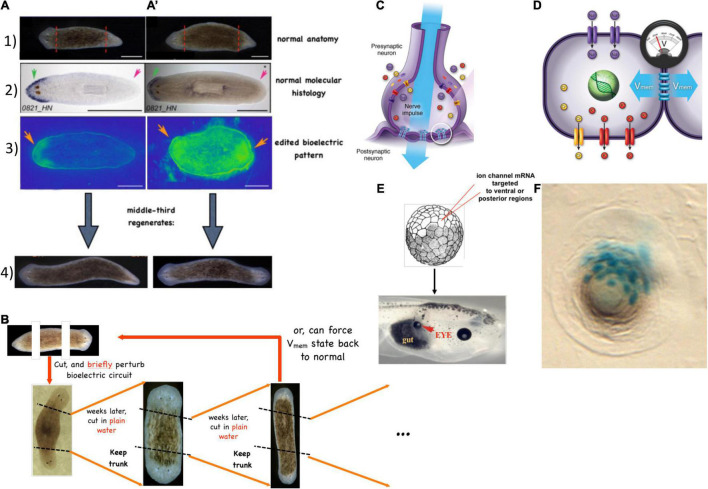
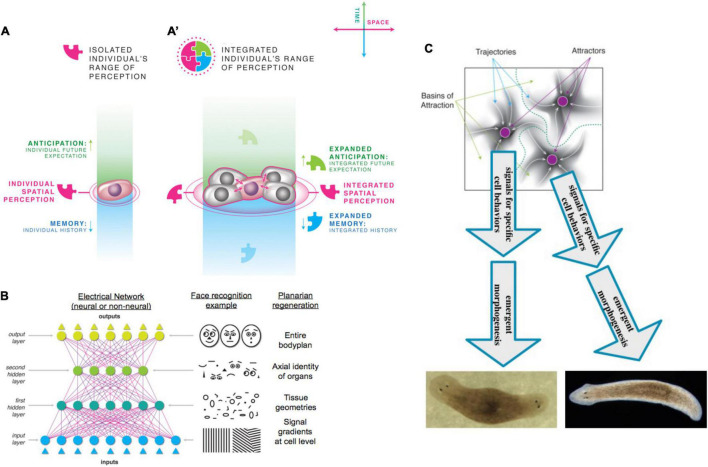
Synthetic biology and bioengineering provide the opportunity to create novel embodied cognitive systems (otherwise known as minds) in a very wide variety of chimeric architectures combining evolved and designed material and software. These advances are disrupting familiar concepts in the philosophy of mind, and require new ways of thinking about and comparing truly diverse intelligences, whose composition and origin are not like any of the available natural model species. In this Perspective, I introduce TAME-Technological Approach to Mind Everywhere-a framework for understanding and manipulating cognition in unconventional substrates. TAME formalizes a non-binary (continuous), empirically-based approach to strongly embodied agency. TAME provides a natural way to think about animal sentience as an instance of collective intelligence of cell groups, arising from dynamics that manifest in similar ways in numerous other substrates. When applied to regenerating/developmental systems, TAME suggests a perspective on morphogenesis as an example of basal cognition. The deep symmetry between problem-solving in anatomical, physiological, transcriptional, and 3D (traditional behavioral) spaces drives specific hypotheses by which cognitive capacities can increase during evolution. An important medium exploited by evolution for joining active subunits into greater agents is developmental bioelectricity, implemented by pre-neural use of ion channels and gap junctions to scale up cell-level feedback loops into anatomical homeostasis. This architecture of multi-scale competency of biological systems has important implications for plasticity of bodies and minds, greatly potentiating evolvability. Considering classical and recent data from the perspectives of computational science, evolutionary biology, and basal cognition, reveals a rich research program with many implications for cognitive science, evolutionary biology, regenerative medicine, and artificial intelligence.
合成生物学和生物工程学提供了在各种各样的嵌合架构中创建新型具身认知系统(即心灵)的机会,这些架构结合了进化而来的和设计的材料与软件。这些进展正在颠覆心灵哲学中常见的概念,并且需要新的方式来思考和比较真正多样化的智能,其组成和起源与任何现有的自然模型物种都不同。在这篇观点文章中,我介绍了TAME——无处不在的心灵技术方法——一个用于理解和操纵非常规基质中认知的框架。TAME将一种基于经验的非二元(连续)方法形式化,用于强具身能动性。TAME提供了一种自然的方式来将动物的感知视为细胞群体集体智能的一个实例,这种集体智能源于在许多其他基质中以类似方式表现出来的动力学。当应用于再生/发育系统时,TAME提出了一种将形态发生视为基础认知示例的观点。解剖学、生理学、转录学和3D(传统行为)空间中解决问题的深度对称性驱动了特定假设,通过这些假设,认知能力在进化过程中得以增强。进化用于将活跃亚单位连接成更大智能体的一个重要媒介是发育生物电,它通过神经前对离子通道和缝隙连接的利用来实现,从而将细胞水平的反馈回路扩展为解剖学上的稳态。生物系统这种多尺度能力的架构对身心的可塑性具有重要意义,极大地增强了可进化性。从计算科学、进化生物学和基础认知的角度考虑经典和最新数据,揭示了一个丰富的研究计划,对认知科学、进化生物学、再生医学和人工智能都有许多启示。