Department of Anesthesiology and Critical Care, Medical Center-University of Freiburg, Faculty of Medicine, University of Freiburg, 79106 Freiburg, Germany.
Department of Anesthesiology, Perioperative and Pain Medicine, Brigham and Woman's Hospital, Harvard Medical School, Boston, MA 02115, USA.
Int J Mol Sci. 2022 May 15;23(10):5519. doi: 10.3390/ijms23105519.
Neuronal ischemia-reperfusion injury (IRI), such as it can occur in glaucoma or strokes, is associated with neuronal cell death and irreversible loss of function of the affected tissue. Hydrogen sulfide (HS) is considered a potentially neuroprotective substance, but the most effective route of application and the underlying mechanism remain to be determined.
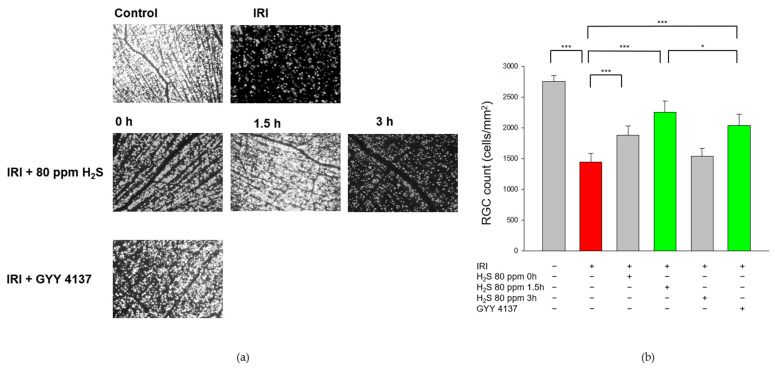
Ischemia-reperfusion injury was induced in rats by a temporary increase in intraocular pressure (1 h). HS was then applied by inhalation (80 ppm at 0, 1.5, and 3 h after reperfusion) or by intravenous administration of the slow-releasing HS donor GYY 4137. After 24 h, the retinas were harvested for Western blotting, qPCR, and immunohistochemical staining. Retinal ganglion cell survival was evaluated 7 days after ischemia.
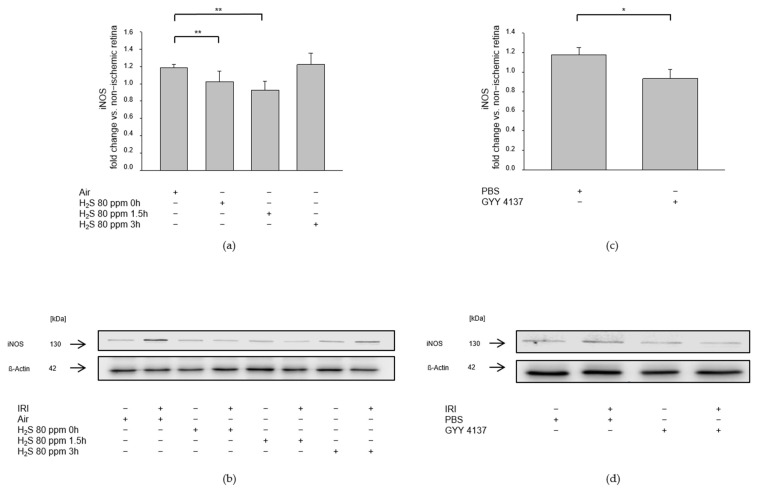
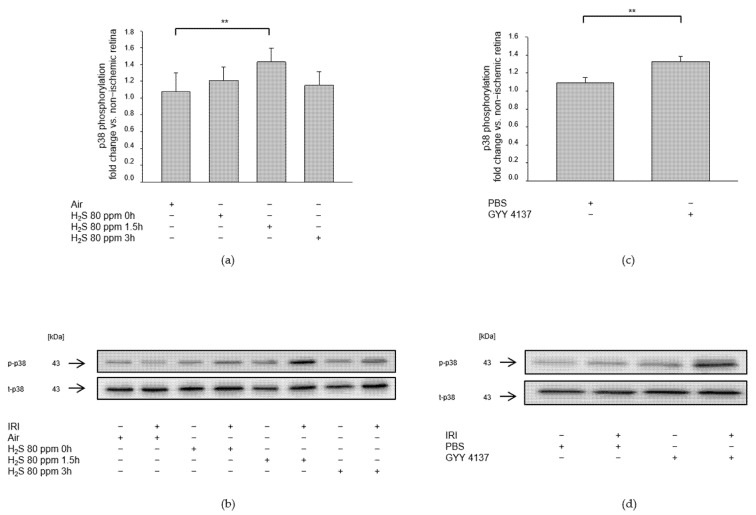
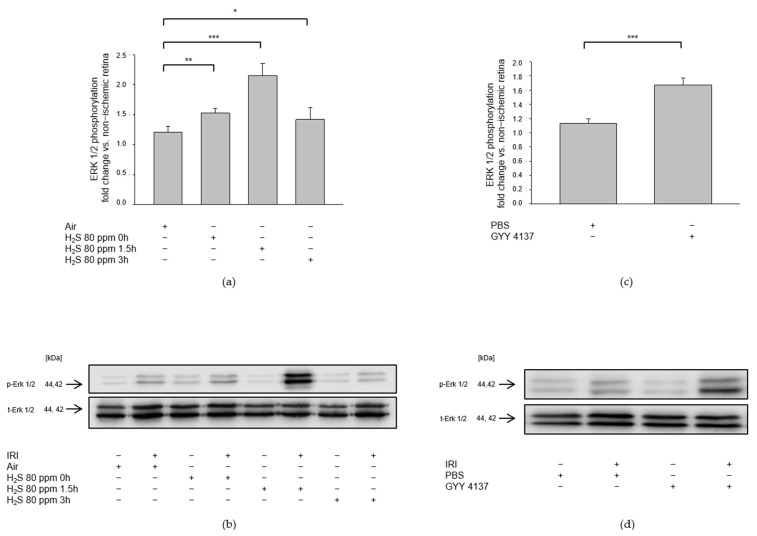
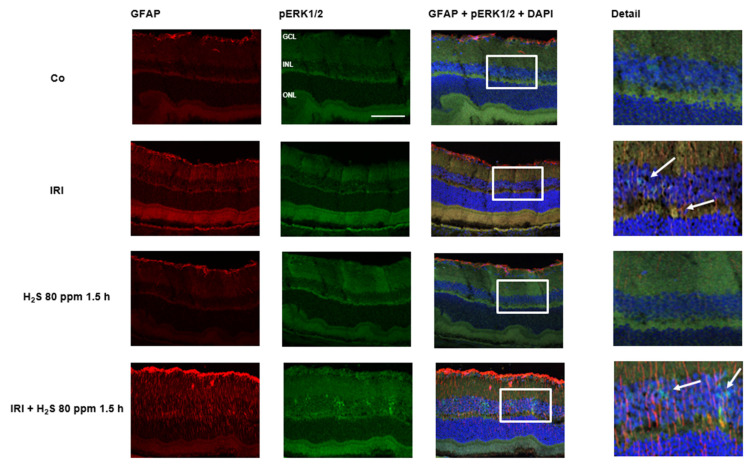
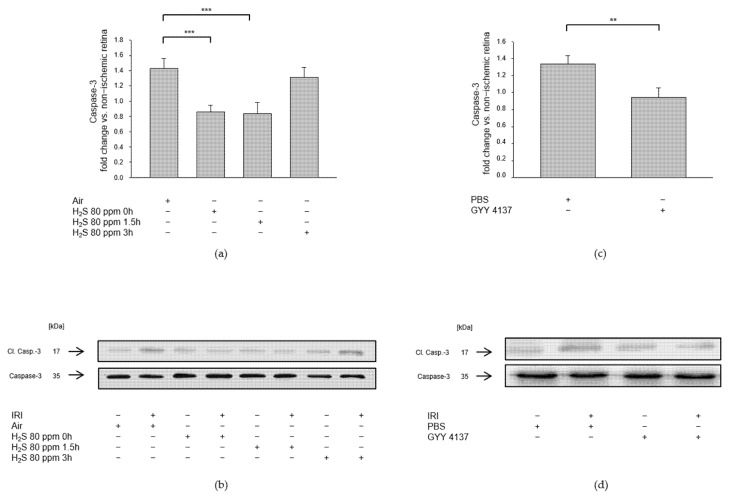
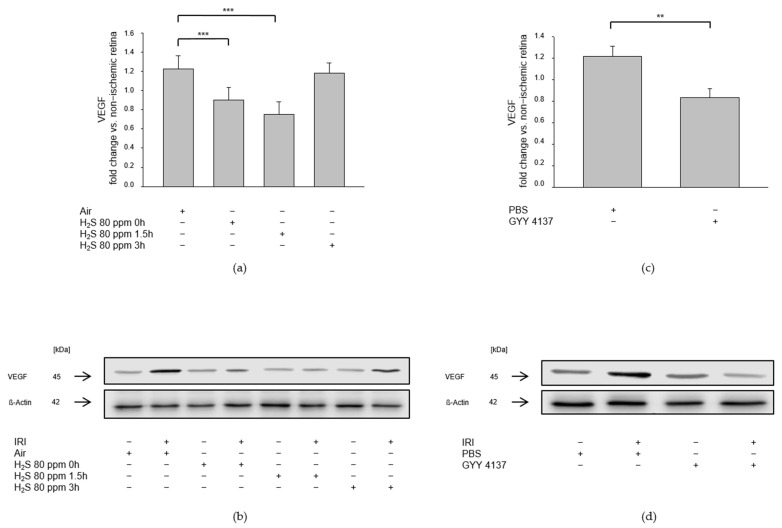
Both inhalative and intravenously delivered HS reduced retinal ganglion cell death with a better result from inhalative application. HS inhalation for 1.5 h, as well as GYY 4137 treatment, increased p38 phosphorylation. Both forms of application enhanced the extracellular signal-regulated kinase 1/2 (ERK1/2) phosphorylation, and inhalation showed a significant increase at all three time points. HS treatment also reduced apoptotic and inflammatory markers, such as caspase-3, intracellular adhesion molecule 1 (ICAM-1), vascular endothelial growth factor (VEGF), and inducible nitric oxide synthase (iNOS). The protective effect of HS was partly abolished by the ERK1/2 inhibitor PD98059. Inhalative HS also reduced the heat shock response including heme oxygenase (HO-1) and heat shock protein 70 (HSP-70) and the expression of radical scavengers such as superoxide dismutases (SOD1, SOD2) and catalase.
Hydrogen sulfide acts, at least in part, via the mitogen-activated protein kinase (MAPK) ERK1/2 to reduce apoptosis and inflammation. Both inhalative HS and intravenous GYY 4137 administrations can improve neuronal cell survival.
神经元缺血再灌注损伤(IRI),如在青光眼或中风中发生的损伤,与神经元细胞死亡和受影响组织的功能不可逆转丧失有关。硫化氢(HS)被认为是一种有潜在神经保护作用的物质,但最有效的应用途径和潜在的机制仍有待确定。
通过暂时增加眼内压(1 小时)在大鼠中诱导缺血再灌注损伤。然后通过吸入(再灌注后 0、1.5 和 3 小时给予 80ppm 的 HS)或静脉内给予缓慢释放的 HS 供体 GYY 4137 来应用 HS。24 小时后,收获视网膜进行 Western blot、qPCR 和免疫组织化学染色。缺血后 7 天评估视网膜神经节细胞的存活情况。
吸入和静脉给予的 HS 均可减少视网膜神经节细胞死亡,吸入的效果更好。HS 吸入 1.5 小时以及 GYY 4137 治疗均可增加 p38 磷酸化。两种应用形式均增强细胞外信号调节激酶 1/2(ERK1/2)磷酸化,吸入在所有三个时间点均显示出显著增加。HS 处理还降低了细胞凋亡和炎症标志物,如半胱氨酸天冬氨酸蛋白酶-3(caspase-3)、细胞间黏附分子 1(ICAM-1)、血管内皮生长因子(VEGF)和诱导型一氧化氮合酶(iNOS)。ERK1/2 抑制剂 PD98059 部分消除了 HS 的保护作用。吸入性 HS 还降低了热休克反应,包括血红素加氧酶(HO-1)和热休克蛋白 70(HSP-70)以及自由基清除剂如超氧化物歧化酶 1(SOD1)、超氧化物歧化酶 2(SOD2)和过氧化氢酶的表达。
硫化氢至少部分通过丝裂原活化蛋白激酶(MAPK)ERK1/2 发挥作用,以减少细胞凋亡和炎症。吸入性 HS 和静脉内 GYY 4137 给药均可改善神经元细胞存活。