Department of Pharmacological and Biomolecular Sciences, Università degli Studi di Milano, 20133 Milan, Italy.
Genologica Medica, 29015 Malaga, Spain.
Int J Mol Sci. 2022 May 18;23(10):5632. doi: 10.3390/ijms23105632.
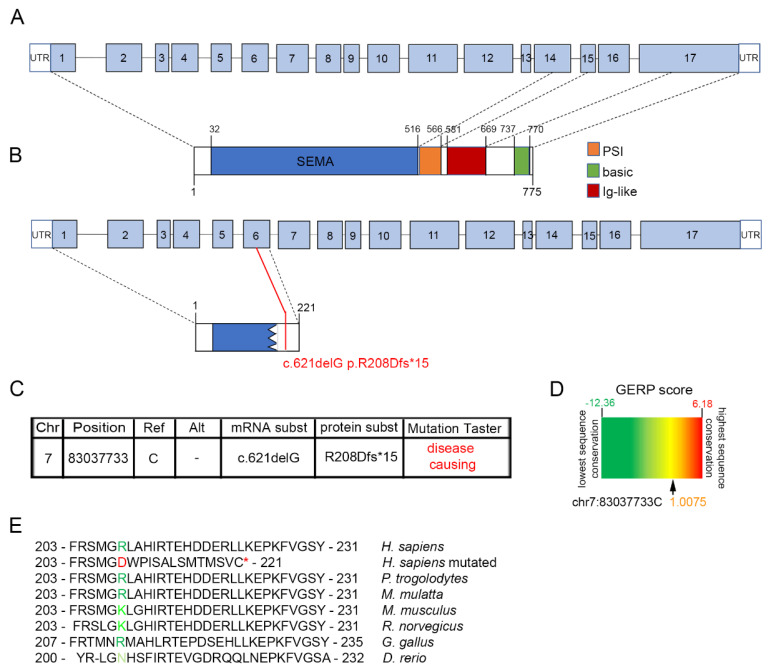
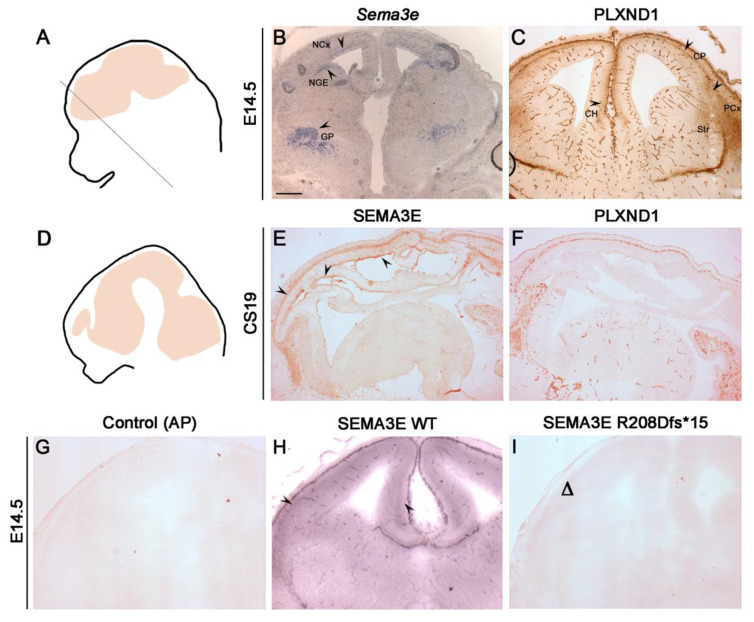
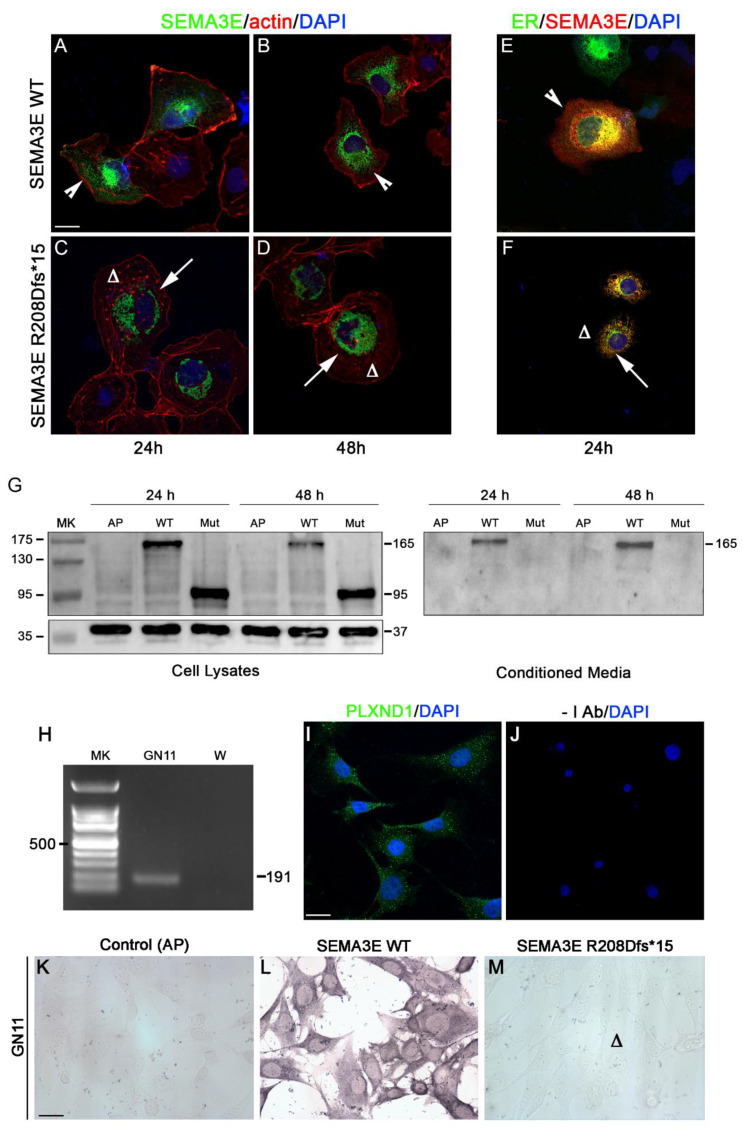
Intellectual disability (ID) is a neurological disorder arising from early neurodevelopmental defects. The underlying genetic and molecular mechanisms are complex, but are thought to involve, among others, alterations in genes implicated in axon guidance and/or neural circuit formation as demonstrated by studies on mouse models. Here, by combining exome sequencing with in silico analyses, we identified a patient affected by severe ID and cognitive regression, carrying a novel loss-of-function variant in the semaphorin 3E () gene, which encodes for a key secreted cue that controls mouse brain development. By performing ad hoc in vitro and ex vivo experiments, we found that the identified variant impairs protein secretion and hampers the binding to both embryonic mouse neuronal cells and tissues. Further, we revealed SEMA3E expression during human brain development. Overall, our findings demonstrate the pathogenic impact of the identified variant and provide evidence that clinical neurological features of the patient might be due to a defective SEMA3E signaling in the brain.
智力障碍 (ID) 是一种由早期神经发育缺陷引起的神经系统疾病。其潜在的遗传和分子机制很复杂,但据对小鼠模型的研究表明,可能涉及到参与轴突导向和/或神经回路形成的基因的改变。在这里,我们通过结合外显子组测序和计算机分析,发现了一名患有严重 ID 和认知能力衰退的患者,他携带了一个新的 semaphorin 3E () 基因的功能丧失变异,该基因编码一种关键的分泌信号,控制着小鼠大脑的发育。通过进行专门的体外和离体实验,我们发现鉴定出的变异会影响蛋白分泌,并阻碍与胚胎小鼠神经元细胞和组织的结合。此外,我们还揭示了 SEMA3E 在人类大脑发育过程中的表达。总的来说,我们的研究结果证明了所鉴定的变异具有致病性,并为患者的临床神经特征可能是由于大脑中 SEMA3E 信号的缺陷提供了证据。