Institute of Pharmaceutical Sciences of Western Switzerland, University of Geneva, Rue Michel-Servet 1, 1211 Geneva, Switzerland.
School of Pharmaceutical Sciences, University of Geneva, Rue Michel-Servet 1, 1211 Geneva, Switzerland.
Int J Mol Sci. 2022 May 20;23(10):5706. doi: 10.3390/ijms23105706.
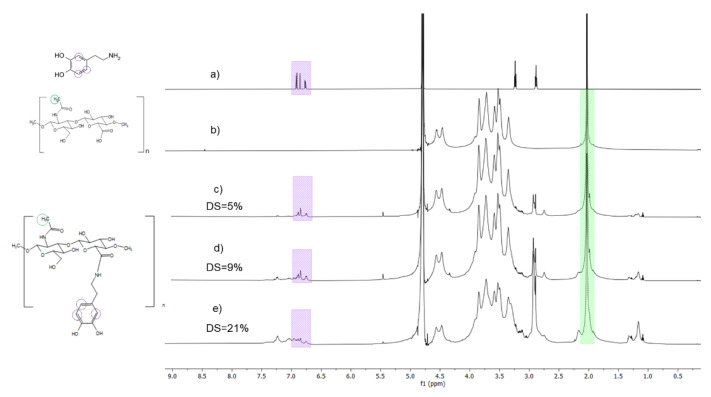
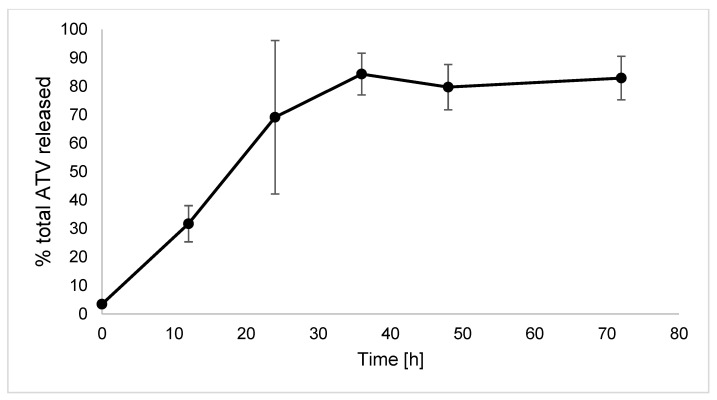
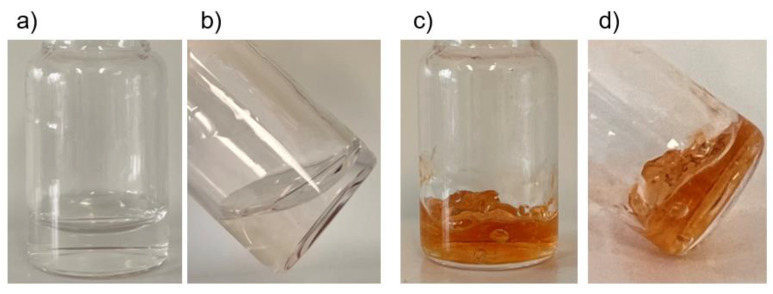
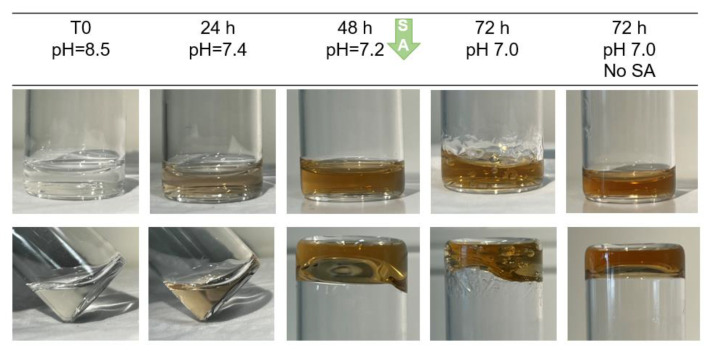
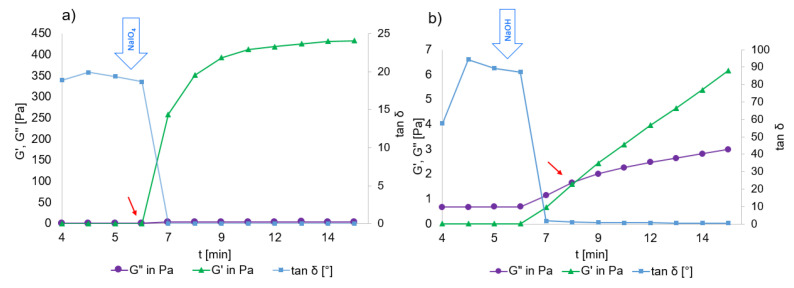
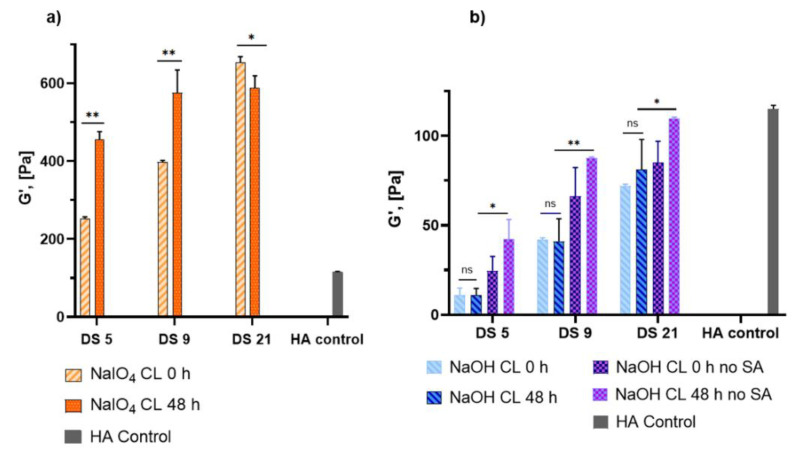
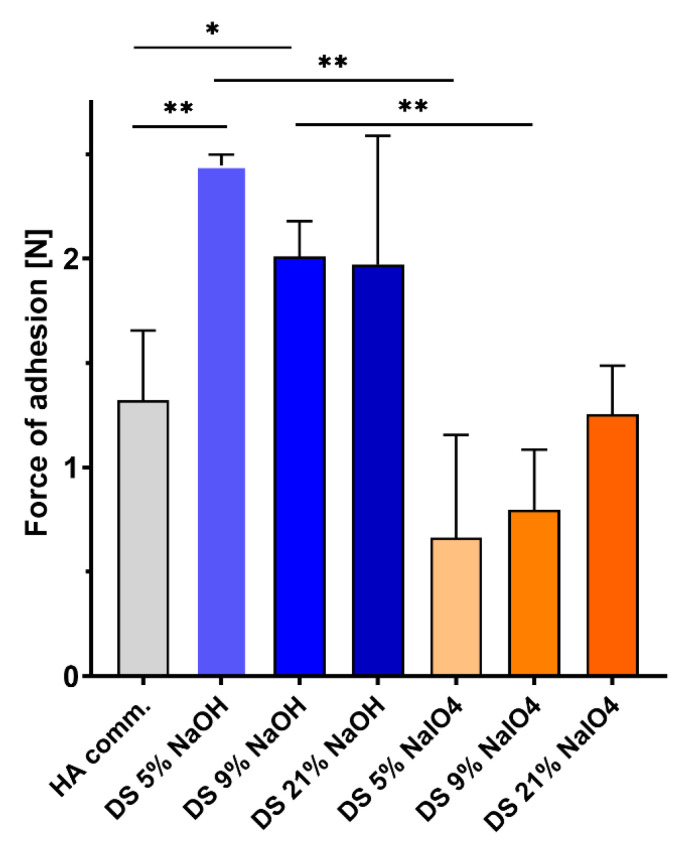
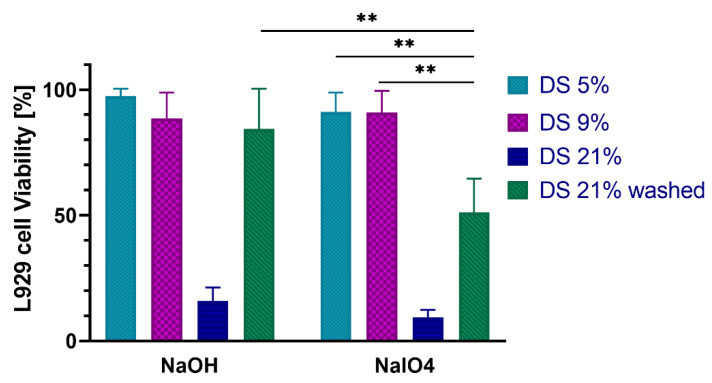
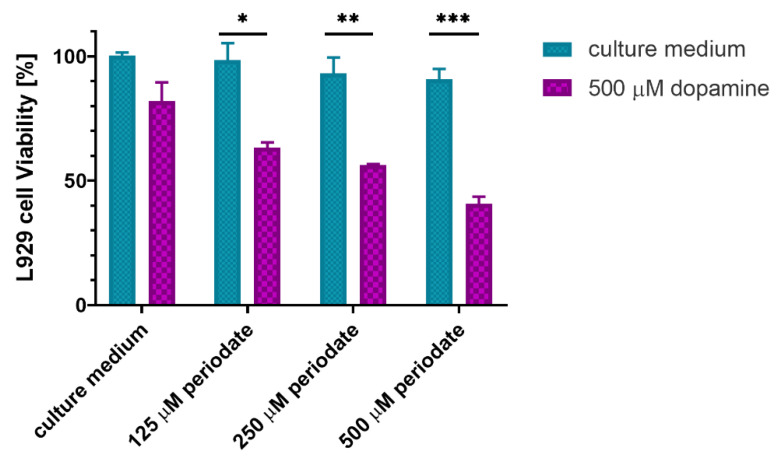
Intimal hyperplasia, a vascular pathology characterized by vessel wall thickening, is implicated in vein graft failures. For efficient prevention, a biodegradable drug delivery system should be applied externally to the graft for an extended time. Finding a gel suitable for such a system is challenging. We have synthesized HA-Dopamine conjugates (HA-Dop) with several degrees of substitution (DS) and used two crosslinking methods: initiator-free crosslinking by basic pH shift or commonly used crosslinking by a strong oxidizer, sodium periodate. The rheological properties, bioadhesion to vascular tissue, cytocompatibility with fibroblasts have been compared for both methods. Our results suggest that initiator-free crosslinking provides HA-Dop gels with more adequate properties with regards to vascular application than crosslinking by strong oxidizer. We have also established the cytocompatibility of the initiator-free crosslinked HA-Dop gels and the cytotoxicity of dopamine-sodium periodate combinations. Furthermore, we have incorporated a drug with anti-restenotic effect in perivascular application, atorvastatin, into the gel, which showed adequate release profile for intimal hyperplasia prevention. The oxidizer-free formulation with improved bioadhesion holds promise as an efficient and safe drug delivery system for vascular applications.
内膜增生是一种血管病理学特征,表现为血管壁增厚,与静脉移植物失败有关。为了有效地预防,应该将可生物降解的药物输送系统外部应用于移植物上以延长时间。寻找适合这种系统的凝胶是具有挑战性的。我们已经合成了具有不同取代度(DS)的 HA-多巴胺缀合物(HA-Dop),并使用了两种交联方法:通过碱性 pH 值变化的无引发剂交联或常用的强氧化剂-高碘酸钠交联。已经比较了两种方法的流变性能、对血管组织的生物黏附性以及对成纤维细胞的细胞相容性。我们的结果表明,与强氧化剂交联相比,无引发剂交联为 HA-Dop 凝胶提供了更适合血管应用的性能。我们还确定了无引发剂交联的 HA-Dop 凝胶的细胞相容性和多巴胺-高碘酸钠组合的细胞毒性。此外,我们已经将具有抗再狭窄作用的药物阿托伐他汀(atorvastatin)纳入了血管周围应用的凝胶中,该凝胶显示出可预防内膜增生的适当释放特性。具有改善的生物黏附性的无氧化剂制剂有望成为用于血管应用的高效和安全的药物输送系统。