Department of Medicine, Surgery and Dentistry "Scuola Medica Salernitana", Medicina Traslazionale dello Sviluppo e dell'Invecchiamento Attivo, University of Salerno, Via S. Allende, 84081 Baronissi, Italy.
Clinical Pharmacology Unit, San Giovanni di Dio e Ruggi d'Aragona University Hospital, Via San Leonardo 1, 84131 Salerno, Italy.
Nutrients. 2022 May 17;14(10):2092. doi: 10.3390/nu14102092.
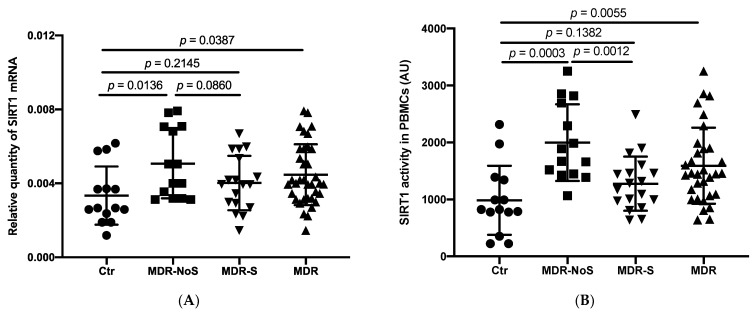
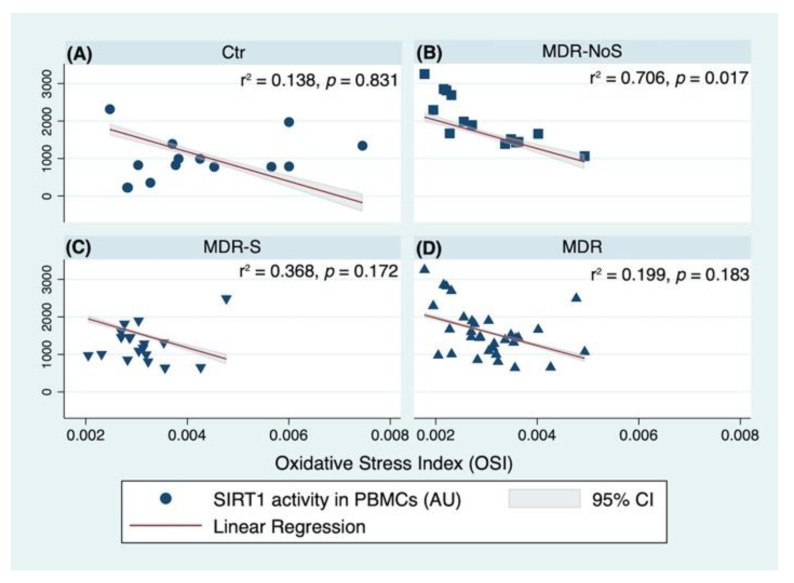
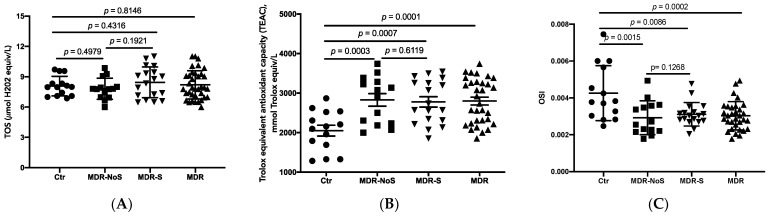
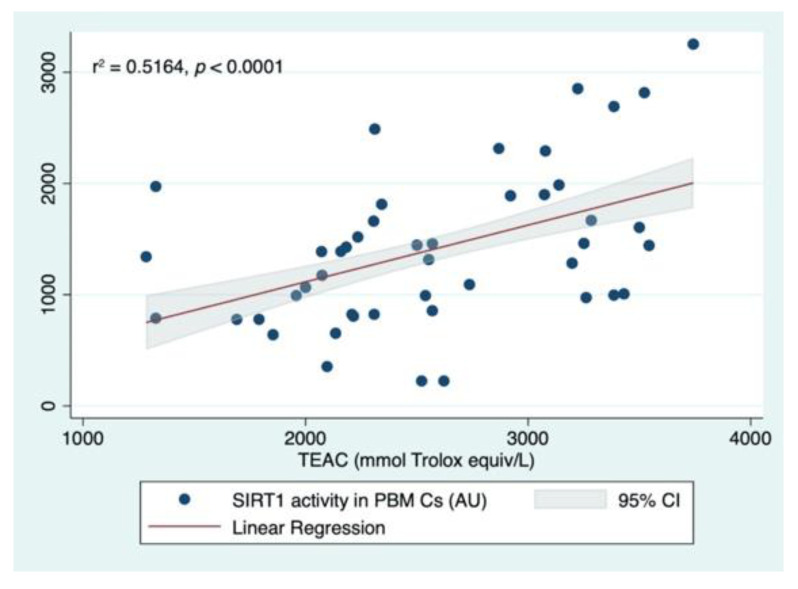
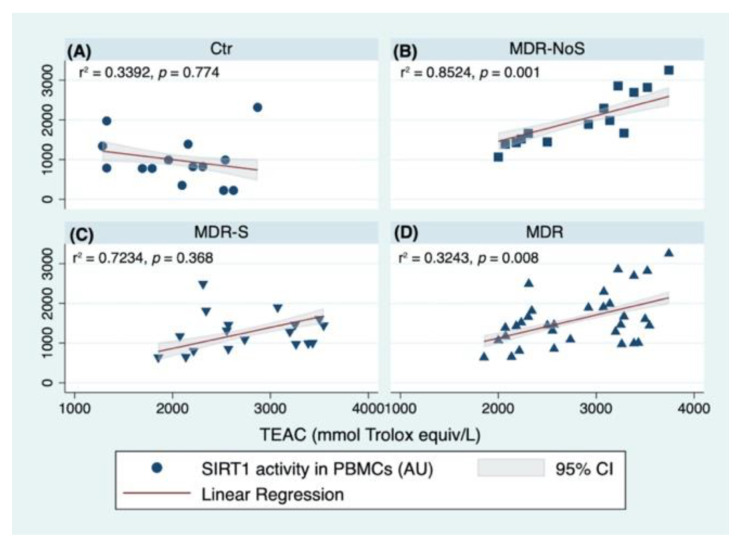
Exercise training (ET) is a natural activator of silent mating type information regulation 2 homolog 1 (SIRT1), a stress-sensor able to increase the endogenous antioxidant system. SIRT1 activators include polyphenols and vitamins, the antioxidant properties of which are well-known. Antioxidant supplements are used to improve athletic performance. However, they might blunt ET-related benefits. Middle-distance runners (MDR) taking (MDR-S) or not taking antioxidant supplements (MDR-NoS) were compared with each other and with sedentary subjects (CTR) to evaluate the ET effects on SIRT1 levels and oxidative stress, and to investigate whether an exogenous source of antioxidants could interfere with such effects. Thirty-two MDR and 14 CTR were enrolled. MDR-S took 240 mg vitamin C and 15 mg vitamin E together with mineral salts. SIRT1 mRNA and activity were measured in PBMCs. Total oxidative status (TOS) and total antioxidant capacity (TEAC) were determined in plasma. MDR showed higher levels of SIRT1 mRNA (p = 0.0387) and activity (p = 0.0055) than did CTR. MDR-NoS also showed higher levels than did MDR-S without reaching statistical significance. SIRT1 activity was higher (p = 0.0012) in MDR-NoS (1909 ± 626) than in MDR-S (1276 ± 474). TOS did not differ among the groups, while MDR showed higher TEAC levels than did CTR (2866 ± 581 vs. 2082 ± 560, p = 0.0001) as did MDR-S (2784 ± 643) and MDR-NoS (2919 ± 551) (MDR-S vs. CTR, p = 0.0007 and MDR-NoS vs. CTR, p = 0.003). TEAC (β = 0.4488356, 95% CI 0.2074645 0.6902067; p < 0.0001) and the MDR-NoS group (β = 744.6433, 95% CI 169.9954 1319.291; p= 0.012) predicted SIRT1 activity levels. Antioxidant supplementation seems to hinder the role of ET as a natural activator of SIRT1.
运动训练(ET)是沉默交配型信息调节 2 同源物 1(SIRT1)的天然激活剂,SIRT1 是一种能够增加内源性抗氧化系统的应激传感器。SIRT1 的激活剂包括多酚和维生素,它们的抗氧化特性是众所周知的。抗氧化补充剂用于提高运动表现。然而,它们可能会削弱 ET 相关的益处。比较了服用(MDR-S)或不服用抗氧化补充剂(MDR-NoS)的中长跑运动员(MDR)与久坐不动的受试者(CTR),以评估 ET 对 SIRT1 水平和氧化应激的影响,并研究外源性抗氧化剂是否会干扰这种影响。招募了 32 名 MDR 和 14 名 CTR。MDR-S 一起服用 240 毫克维生素 C 和 15 毫克维生素 E 以及矿物质盐。在 PBMC 中测量 SIRT1 mRNA 和活性。在血浆中测定总氧化状态(TOS)和总抗氧化能力(TEAC)。MDR 的 SIRT1 mRNA 水平(p=0.0387)和活性(p=0.0055)均高于 CTR。MDR-NoS 也高于 MDR-S,但无统计学意义。MDR-NoS 的 SIRT1 活性(p=0.0012)高于 MDR-S(1909±626)比 MDR-S(1276±474)高。三组间 TOS 无差异,而 MDR 的 TEAC 水平高于 CTR(2866±581 比 2082±560,p=0.0001),MDR-S(2784±643)和 MDR-NoS(2919±551)也是如此(MDR-S 与 CTR,p=0.0007,MDR-NoS 与 CTR,p=0.003)。TEAC(β=0.4488356,95%CI 0.2074645-0.6902067;p<0.0001)和 MDR-NoS 组(β=744.6433,95%CI 169.9954-1319.291;p=0.012)预测了 SIRT1 活性水平。抗氧化补充剂似乎阻碍了 ET 作为 SIRT1 天然激活剂的作用。