Choi Na Ri, Park Jongwon, Ko Seok-Jae, Kim Jeong Nam, Choi Woogyun, Park Jae-Woo, Kim Byung Joo
Division of Longevity and Biofunctional Medicine, School of Korean Medicine, Pusan National University, Yangsan 50612, Korea.
Department of Clinical Korean Medicine, Graduate School of Kyung Hee University, Seoul 02447, Korea.
Plants (Basel). 2022 May 19;11(10):1348. doi: 10.3390/plants11101348.
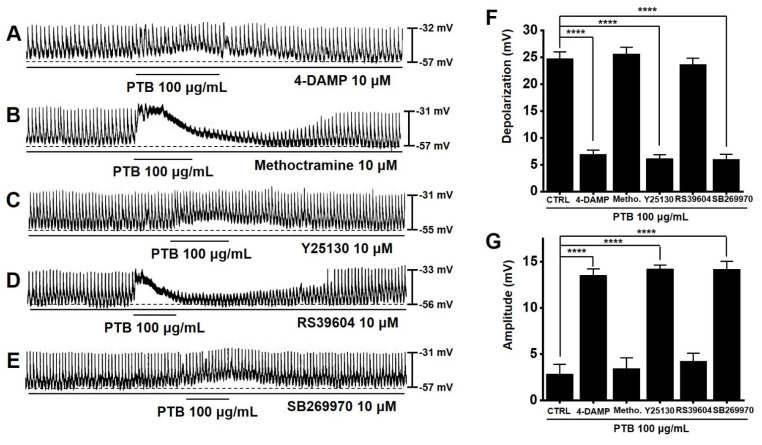
(PTB) is a widely used herbal medicine in China, Japan, and South Korea. It has antiemetic, anti-inflammatory, antitussive, and sedative properties. The raw material is toxic, but can be made safer using alum solution or by boiling it for a long time. In addition, PTB seems to be effective for gastrointestinal motility disorders (GMDs), but this is yet to be conclusively proven. Herein, PTB compounds, targets, and related diseases were investigated using the traditional Chinese medical systems pharmacology database and an analysis platform. Information on target genes was confirmed using the UniProt database. Using Cytoscape 3.8.2, a network was established and GMD-related genes were searched using the Cytoscape stringApp. The effects of the PTB extract on the pacemaker potential of interstitial cells of Cajal and GMD mouse models were investigated. In total, 12 compounds were found to target 13 GMD-related genes. In animal experiments, PTB was found to better regulate pacemaker potential in vitro and inhibit GMD signs compared to control groups in vivo. Animal studies showed that the mechanism underlying the effects of PTB is closely related to gastrointestinal motility. The results obtained demonstrated that PTB offers a potential means to treat GMDs, and we suggested that the medicinal mechanism of GMDs can be explained by the relationship between 12 major components of PTB, including oleic acid, and 13 GMD-related genes.
(PTB) 是一种在中国、日本和韩国广泛使用的草药。它具有止吐、抗炎、镇咳和镇静作用。其原材料有毒,但可通过明矾溶液处理或长时间煮沸使其更安全。此外,PTB 似乎对胃肠动力障碍 (GMDs) 有效,但这尚未得到确凿证实。在此,利用中医系统药理学数据库和分析平台对 PTB 的化合物、靶点和相关疾病进行了研究。使用 UniProt 数据库确认了靶基因的信息。使用 Cytoscape 3.8.2 建立了一个网络,并使用 Cytoscape stringApp 搜索了与 GMD 相关的基因。研究了 PTB 提取物对 Cajal 间质细胞的起搏电位和 GMD 小鼠模型的影响。总共发现 12 种化合物靶向 13 个与 GMD 相关的基因。在动物实验中,发现与对照组相比,PTB 在体外能更好地调节起搏电位,并在体内抑制 GMD 体征。动物研究表明,PTB 作用的机制与胃肠动力密切相关。所得结果表明,PTB 为治疗 GMDs 提供了一种潜在手段,并且我们认为 GMDs 的药用机制可以通过 PTB 的 12 种主要成分(包括油酸)与 13 个与 GMD 相关的基因之间的关系来解释。