
用于无人水面舰艇的圆形阵列合成孔径声纳的三维成像
Three-Dimensional Imaging of Circular Array Synthetic Aperture Sonar for Unmanned Surface Vehicle.
作者信息
Zeng Sai, Fan Wei, Du Xuanmin
机构信息
National Key Laboratory of Science and Technology on Underwater Acoustic Antagonizing, Shanghai 201108, China.
Shanghai Marine Electronic Equipment Research Institute, Shanghai 201108, China.
出版信息
Sensors (Basel). 2022 May 17;22(10):3797. doi: 10.3390/s22103797.
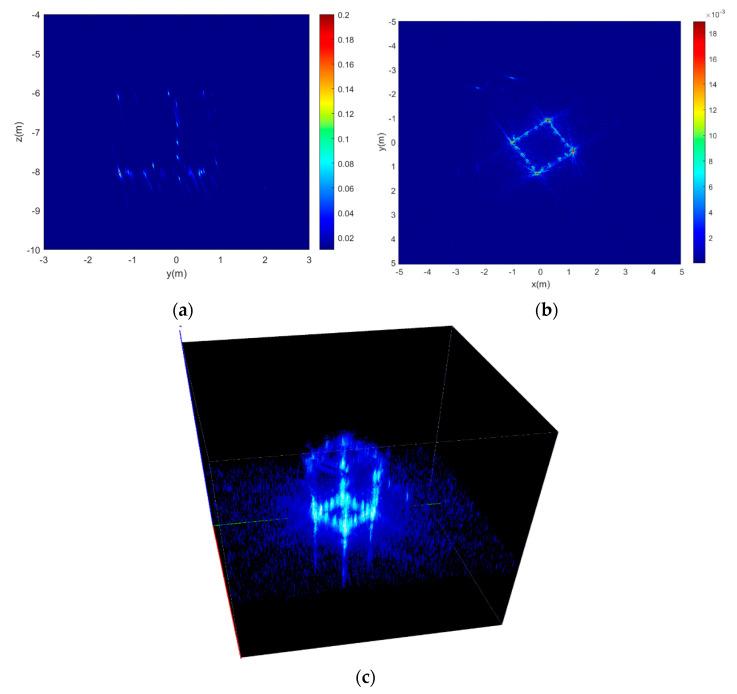
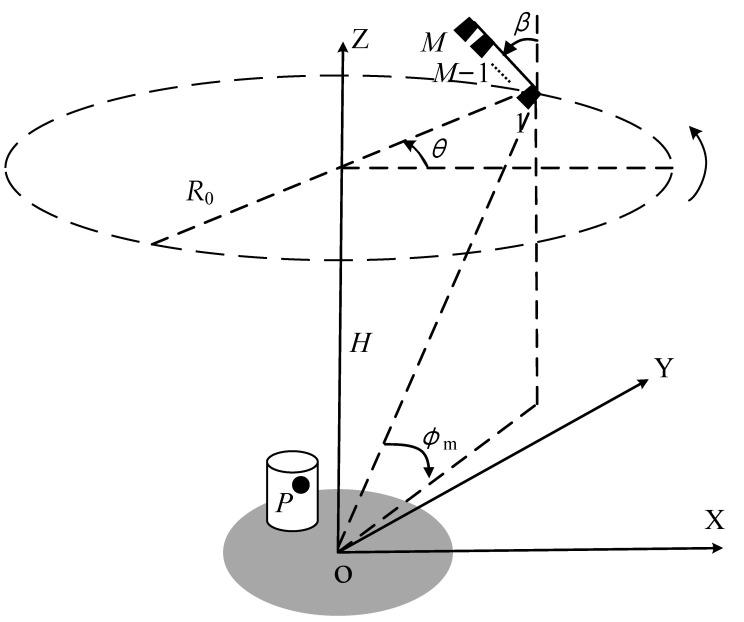
Synthetic aperture sonar (SAS) and interferometric synthetic aperture sonar (InSAS) have a range layover phenomenon during underwater observation, the AUV-mounted circular synthetic aperture sonar (CSAS) system, that insonifies targets using multiple circular scans that vary in height and can eliminate the layover phenomenon. However, this observation method is time-consuming and difficult to compensate. To solve this problem, the circular array synthetic aperture sonar (CASAS) based on the equivalent phase center was established for unmanned surface vehicles. Corresponding to the echo signal model of circular array synthetic aperture sonar, a novel three-dimensional imaging algorithm was derived. Firstly, the echo datacube was processed by signal calibration with near-field to far-field transformation and grid interpolation. Then, the sparse recover method was adopted to achieve the scattering coefficient in the height direction by sparse Bayesian learning. Thirdly, the Fourier slice theorem was adopted to obtain the 2D image of the ground plane. After the reconstruction of all height slice cells was accomplished, the final 3D image was obtained. Numerical simulations and experiments using the USV-mounted CASAS system were performed. The imaging results verify the effectiveness of the 3D imaging algorithm for the proposed model and validate the feasibility of CASAS applied in underwater target imaging and detection.
合成孔径声纳(SAS)和干涉合成孔径声纳(InSAS)在水下观测时存在距离向叠掩现象,而安装在自主水下航行器(AUV)上的圆形合成孔径声纳(CSAS)系统,通过使用高度不同的多个圆形扫描对目标进行声纳探测,能够消除叠掩现象。然而,这种观测方法耗时且难以补偿。为了解决这个问题,基于等效相位中心的圆形阵列合成孔径声纳(CASAS)被应用于无人水面舰艇。针对圆形阵列合成孔径声纳的回波信号模型,推导了一种新颖的三维成像算法。首先,通过近场到远场变换和网格插值的信号校准对回波数据立方体进行处理。然后,采用稀疏恢复方法通过稀疏贝叶斯学习获得高度方向上的散射系数。第三,采用傅里叶切片定理获得地平面的二维图像。在完成所有高度切片单元的重建后,得到最终的三维图像。利用安装在无人水面舰艇上的CASAS系统进行了数值模拟和实验。成像结果验证了所提模型的三维成像算法的有效性,并验证了CASAS应用于水下目标成像和探测的可行性。


 Zotero 插件