Regional Climate Change and Health, Faculty of Medicine, University of Augsburg, Universitätsstraße 2, 86159 Augsburg, Germany.
Faculty of Design, Hochschule München, Lothstraße 34, 80335 Munich, Germany.
Sensors (Basel). 2022 May 18;22(10):3830. doi: 10.3390/s22103830.
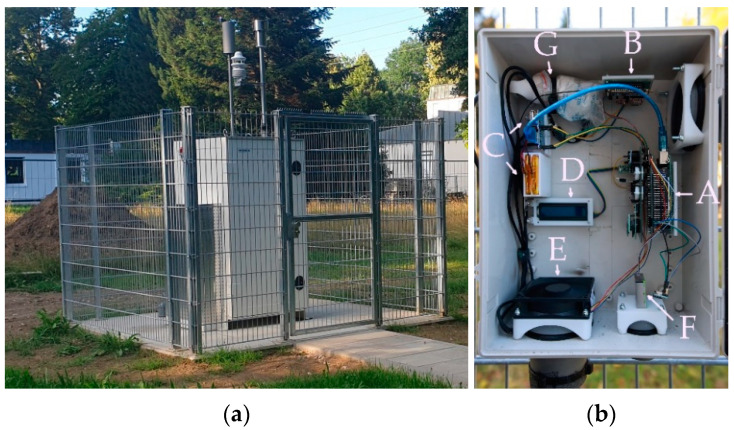
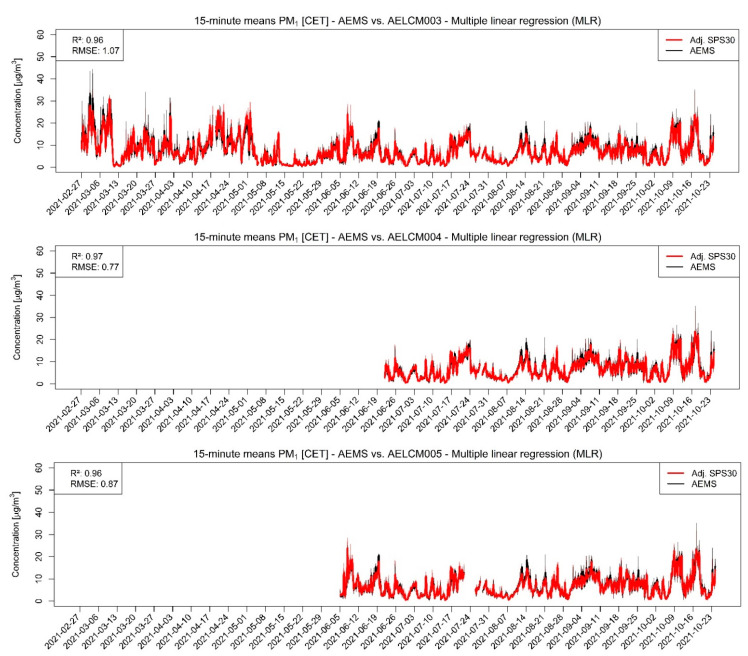
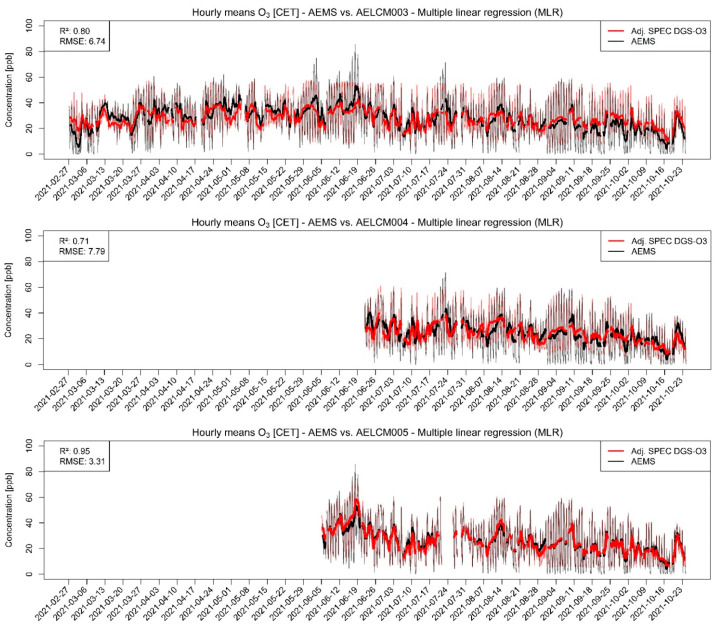
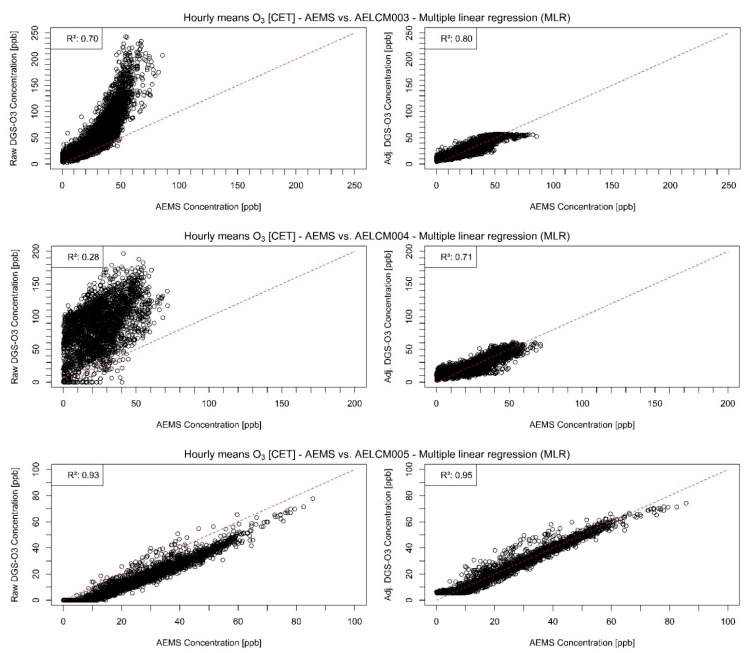
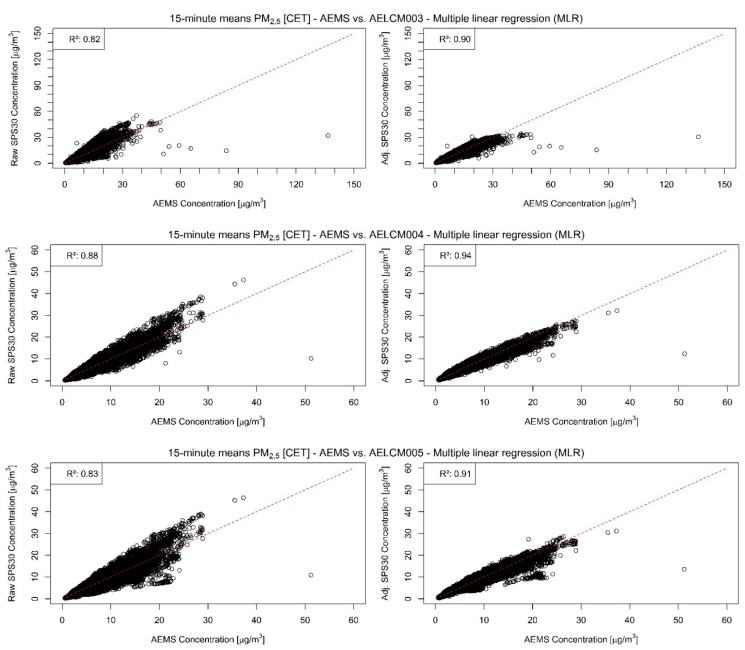
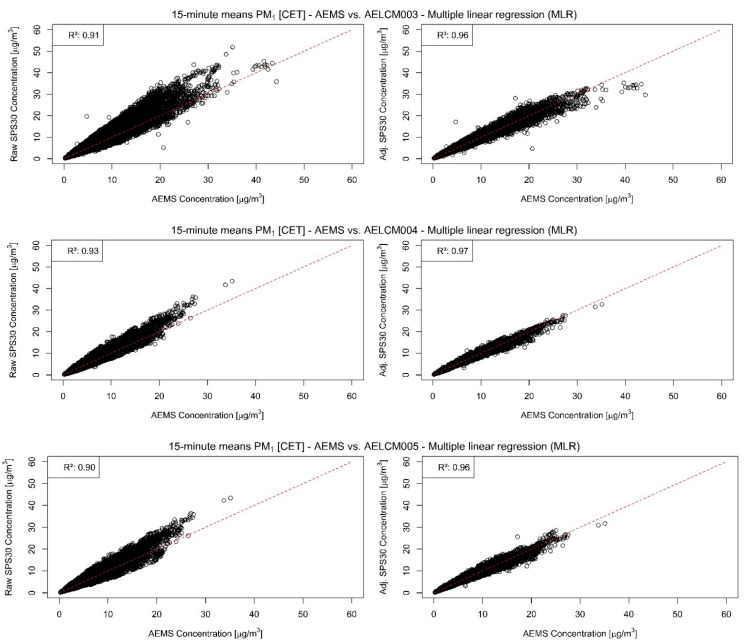
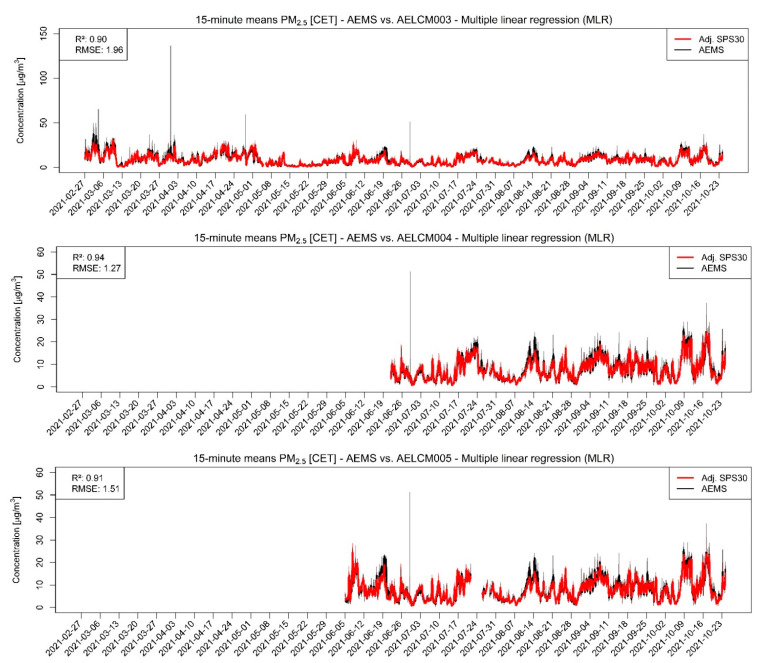
Analyses of the relationships between climate, air substances and health usually concentrate on urban environments because of increased urban temperatures, high levels of air pollution and the exposure of a large number of people compared to rural environments. Ongoing urbanization, demographic ageing and climate change lead to an increased vulnerability with respect to climate-related extremes and air pollution. However, systematic analyses of the specific local-scale characteristics of health-relevant atmospheric conditions and compositions in urban environments are still scarce because of the lack of high-resolution monitoring networks. In recent years, low-cost sensors (LCS) became available, which potentially provide the opportunity to monitor atmospheric conditions with a high spatial resolution and which allow monitoring directly at vulnerable people. In this study, we present the atmospheric exposure low-cost monitoring (AELCM) system for several air substances like ozone, nitrogen dioxide, carbon monoxide and particulate matter, as well as meteorological variables developed by our research group. The measurement equipment is calibrated using multiple linear regression and extensively tested based on a field evaluation approach at an urban background site using the high-quality measurement unit, the atmospheric exposure monitoring station (AEMS) for meteorology and air substances, of our research group. The field evaluation took place over a time span of 4 to 8 months. The electrochemical ozone sensors (SPEC DGS-O3: R: 0.71-0.95, RMSE: 3.31-7.79 ppb) and particulate matter sensors (SPS30 PM1/PM2.5: R: 0.96-0.97/0.90-0.94, RMSE: 0.77-1.07 µg/m/1.27-1.96 µg/m) showed the best performances at the urban background site, while the other sensors underperformed tremendously (SPEC DGS-NO2, SPEC DGS-CO, MQ131, MiCS-2714 and MiCS-4514). The results of our study show that meaningful local-scale measurements are possible with the former sensors deployed in an AELCM unit.
分析气候、空气物质与健康之间的关系通常集中在城市环境中,因为与农村环境相比,城市环境中的温度升高、空气污染水平更高,而且有大量的人暴露在其中。不断的城市化、人口老龄化和气候变化导致城市环境中与气候有关的极端情况和空气污染的脆弱性增加。然而,由于缺乏高分辨率监测网络,对城市环境中与健康相关的大气条件和成分的具体局部尺度特征进行系统分析仍然很少。近年来,低成本传感器 (LCS) 变得可用,这为以高空间分辨率监测大气条件提供了潜在机会,并允许在脆弱人群中直接监测。在这项研究中,我们展示了我们研究小组开发的用于监测臭氧、二氧化氮、一氧化碳和颗粒物等几种空气物质以及气象变量的大气暴露低成本监测 (AELCM) 系统。该测量设备使用多元线性回归进行校准,并根据在使用我们研究小组的气象和空气物质大气暴露监测站 (AEMS) 的高质量测量单元的城市背景站点进行的现场评估方法进行广泛测试。现场评估持续了 4 到 8 个月。电化学臭氧传感器 (SPEC DGS-O3: R: 0.71-0.95,RMSE: 3.31-7.79 ppb) 和颗粒物传感器 (SPS30 PM1/PM2.5: R: 0.96-0.97/0.90-0.94,RMSE: 0.77-1.07 µg/m/1.27-1.96 µg/m) 在城市背景站点表现出最佳性能,而其他传感器则表现极差 (SPEC DGS-NO2、SPEC DGS-CO、MQ131、MiCS-2714 和 MiCS-4514)。我们的研究结果表明,使用部署在 AELCM 单元中的前传感器可以进行有意义的局部尺度测量。