Joint International Research Laboratory of Agriculture and Agri-Product Safety, The Ministry of Education of China, Yangzhou University, Yangzhou 225009, China.
Jiangsu Co-Innovation Center for the Prevention and Control of Animal Infectious Disease and Zoonoses, College of Veterinary Medicine, Yangzhou University, Yangzhou 225009, China.
Viruses. 2022 May 9;14(5):1003. doi: 10.3390/v14051003.
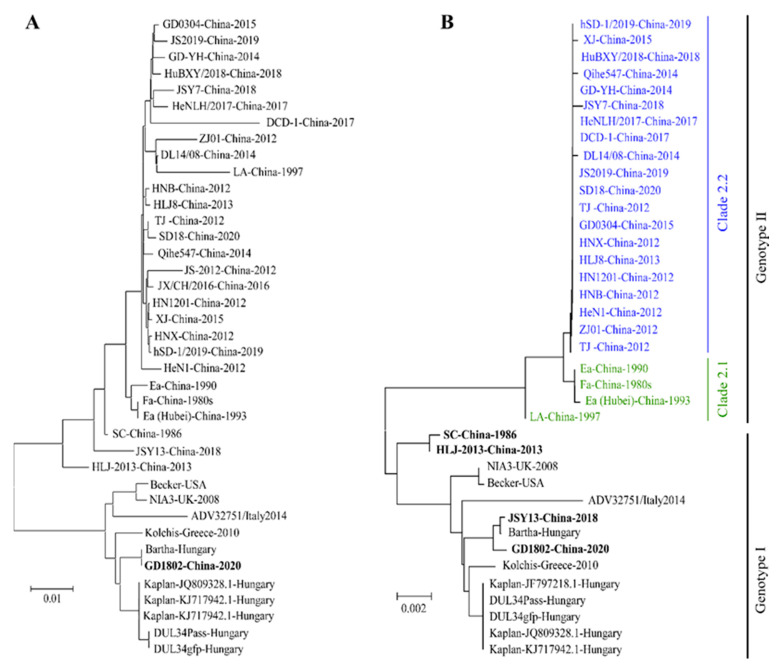
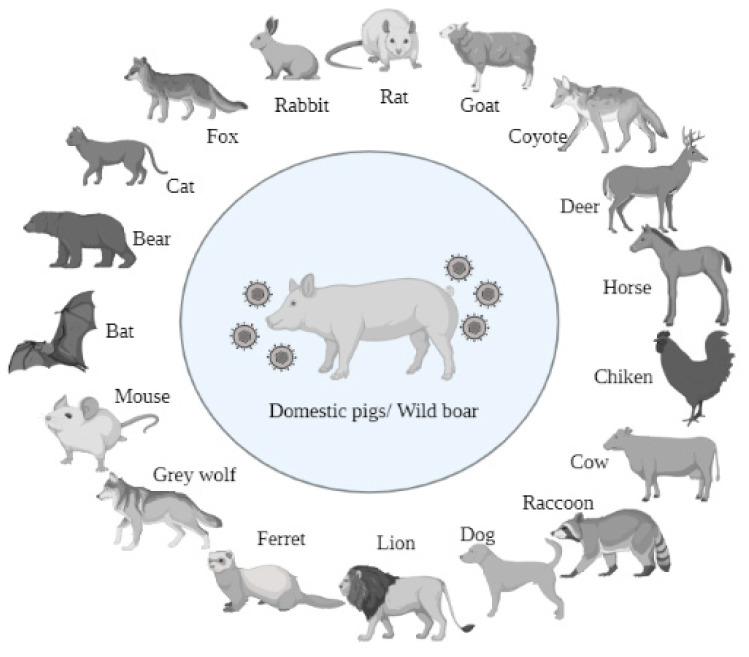
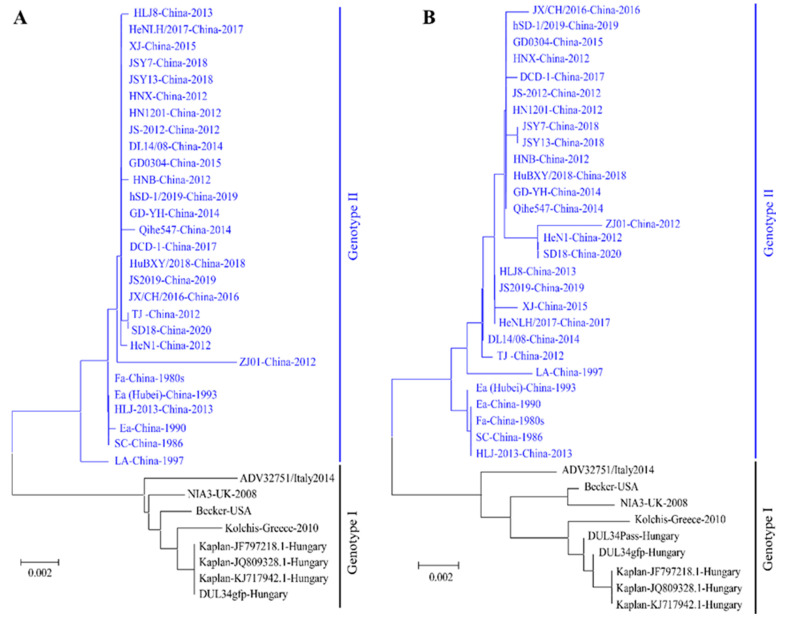
Pseudorabies virus (PRV), the causative agent of Aujeszky's disease, has a broad host range including most mammals and avian species. In 2011, a PRV variant emerged in many Bartha K61-vaccinated pig herds in China and has attracted more and more attention due to its serious threat to domestic and wild animals, and even human beings. The PRV variant has been spreading in China for more than 10 years, and considerable research progresses about its molecular biology, pathogenesis, transmission, and host-virus interactions have been made. This review is mainly organized into four sections including outbreak and genomic evolution characteristics of PRV variants, progresses of PRV variant vaccine development, the pathogenicity and transmission of PRV variants among different species of animals, and the zoonotic potential of PRV variants. Considering PRV has caused a huge economic loss of animals and is a potential threat to public health, it is necessary to extensively explore the mechanisms involved in its replication, pathogenesis, and transmission in order to ultimately eradicate it in China.
伪狂犬病病毒(PRV)是引起猪伪狂犬病的病原体,其宿主范围广泛,包括大多数哺乳动物和禽类。2011 年,在中国许多接种巴氏 K61 疫苗的猪群中出现了一种 PRV 变异株,由于其对家畜和野生动物,甚至人类构成了严重威胁,因此引起了越来越多的关注。这种 PRV 变异株在中国已经传播了 10 多年,其分子生物学、发病机制、传播和宿主-病毒相互作用等方面的研究取得了相当大的进展。本综述主要分为四个部分,包括 PRV 变异株的爆发和基因组进化特征、PRV 变异株疫苗的开发进展、不同动物物种间 PRV 变异株的致病性和传播,以及 PRV 变异株的人畜共患潜力。考虑到 PRV 已经给动物造成了巨大的经济损失,并且对公共卫生构成了潜在威胁,有必要广泛探索其复制、发病机制和传播的相关机制,以便最终在中国将其根除。