Heilongjiang Provincial Key Laboratory of the Prevention and Control of Bovine Diseases, College of Animal Science and Veterinary Medicine, Heilongjiang Bayi Agricultural University, No. 5 Xinfeng Road, Sartu District, Daqing 163319, China.
Institute of Veterinary Medicine, Jiangsu Academy of Agricultural Sciences, Key Laboratory of Veterinary Biological Engineering and Technology, Ministry of Agriculture, Nanjing 210014, China.
Viruses. 2022 May 21;14(5):1109. doi: 10.3390/v14051109.
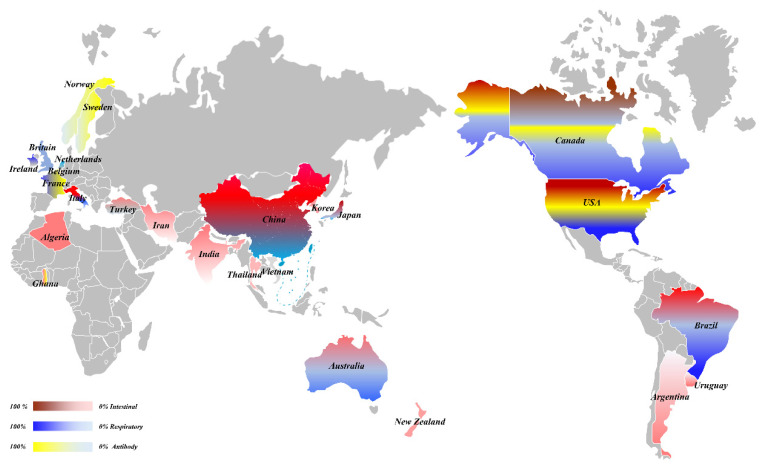
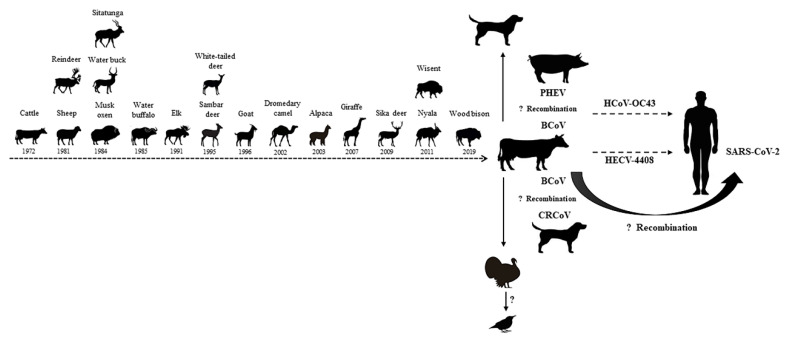
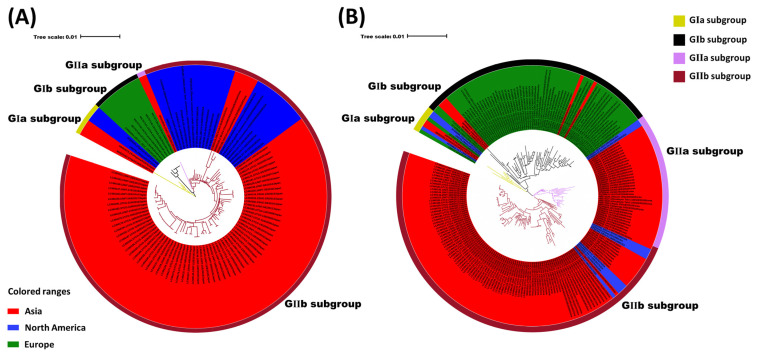
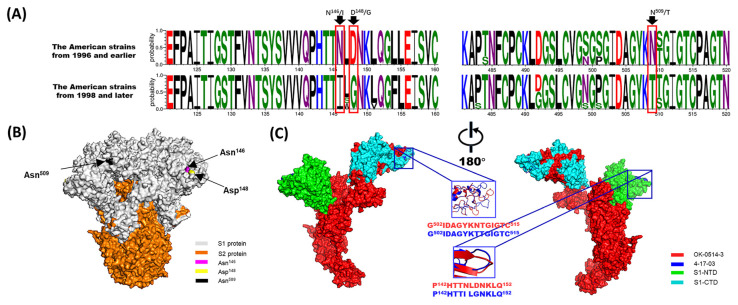
Bovine coronavirus (BCoV) is a causative agent of enteric and respiratory disease in cattle. BCoV has also been reported to cause a variety of animal diseases and is closely related to human coronaviruses, which has attracted extensive attention from both cattle farmers and researchers. However, there are few comprehensive epidemiological reviews, and key information regarding the effect of S-gene differences on tissue tendency and potential cross-species transmission remain unclear. In this review, we summarize BCoV epidemiology, including the transmission, infection-associated factors, co-infection, pathogenicity, genetic evolution, and potential cross-species transmission. Furthermore, the potential two-receptor binding motif system for BCoV entry and the association between BCoV and SARS-CoV-2 are also discussed in this review. Our aim is to provide valuable information for the prevention and treatment of BCoV infection throughout the world.
牛冠状病毒(BCoV)是引起牛肠道和呼吸道疾病的病原体。BCoV 也被报道可引起多种动物疾病,并且与人类冠状病毒密切相关,这引起了牛饲养者和研究人员的广泛关注。然而,目前关于该病毒的综合流行病学综述较少,并且有关 S 基因差异对组织倾向和潜在跨物种传播的影响的关键信息尚不清楚。在本综述中,我们总结了 BCoV 的流行病学,包括传播、感染相关因素、合并感染、致病性、遗传进化和潜在的跨物种传播。此外,我们还讨论了 BCoV 进入宿主细胞的潜在双受体结合基序系统以及 BCoV 与 SARS-CoV-2 之间的关联。我们的目的是为全球预防和治疗 BCoV 感染提供有价值的信息。